
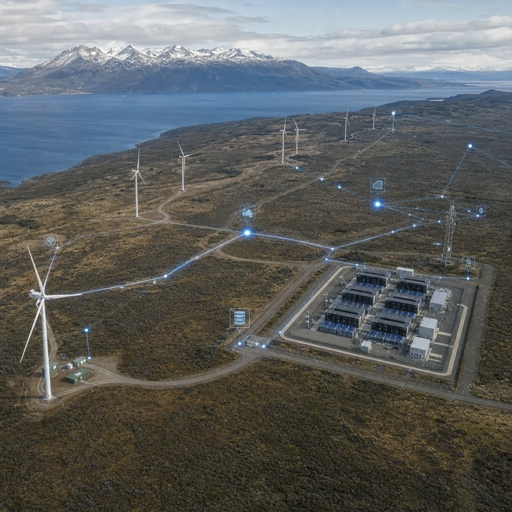
Argentina’s Patagonia is emerging as a serious contender in the race for hyperscale AI infrastructure, as energy companies, cloud developers, and public agencies examine large-scale data center development across Neuquén, Chubut, and nearby energy corridors. The region’s appeal is straightforward: cooler temperatures, renewable power potential, access to Vaca Muerta gas, and large tracts of land are turning Patagonia into a closely watched data center location for investors seeking capacity beyond saturated global markets.
Why is Patagonia drawing hyperscale data center interest?
Patagonia is attracting attention because hyperscale operators need power, land, cooling advantages, and connectivity planning at a scale many established markets are struggling to provide. Reuters reported on September 7, 2026, that technology companies and investors are studying Argentina’s windswept south for mega data centers, with interest tied to cool climate, renewable energy, shale gas, and open land. The timing matters: the International Energy Agency said data center electricity demand rose 17% in 2025 and is set to double by 2030, making access to secure energy one of the defining constraints for AI infrastructure growth.
That makes the phrase “Patagonia as the New Hyperscale Data Center Hub” less of a finished reality and more of a live market thesis. The region is not yet a mature data center hub on the level of Northern Virginia, São Paulo, or Santiago. Instead, it is becoming a candidate for the next generation of data center solutions built around energy-first site selection, where electricity supply is evaluated before real estate, tax incentives, or even proximity to existing cloud regions.
Projects are moving from concept to early-stage planning
Several proposals have pushed Patagonia data center conversations into the mainstream. In Neuquén, Pampa Energía is studying a data center near its Loma de la Lata thermal power plant, with potential consumption of up to 500 MW from nearby Vaca Muerta resources, according to Reuters. The company has been quoting energy prices to interested parties and is targeting initial agreements by the end of 2026, while investors are reportedly considering smaller pilots of 20 MW to 40 MW before any full-scale expansion.
OpenAI and Sur Energy also placed Argentina on the global AI infrastructure map in October 2025 when they signed a letter of intent to explore Stargate Argentina, a large-scale data center project that could reach up to 500 MW. Sur Energy said the project could involve up to $25 billion at full scale, with Sur Energy acting as the energy and infrastructure developer and OpenAI potentially becoming an offtaker. OpenAI separately described the project as a clean-energy-backed initiative that could become the first Stargate project in Latin America.
Other proposals point to a wider patagonia infrastructure build-out. Reuters reported that U.S.-based FlexDomes is seeking investors for a Neuquén campus whose first phase would include 120 MW of IT load, while Poland’s Green Capital has outlined a Chubut data center plan that could begin at 300 MW and eventually scale far beyond that if financing and approvals line up.
Key developments now shaping the story include:
- Neuquén’s energy advantage: Projects are being evaluated close to Vaca Muerta gas and existing generation assets, reducing some dependence on long-distance transmission.
- Chubut’s connectivity ambitions: The province and Argentina’s communications agency have announced collaboration on digital infrastructure, including a proposed second international submarine cable landing point.
- AI-driven demand: The IEA says data center power consumption is rising quickly, especially for AI-focused facilities, intensifying demand for regions that can offer scalable electricity.
- Early-stage risk: Many projects remain in planning, financing, or site-definition phases rather than final construction, making execution the central question for investors and communities.
Energy is the opportunity and the bottleneck
For developers, Patagonia’s strongest selling point is also its biggest test. Hyperscale and AI campuses can require hundreds of megawatts, and that demand changes the economics of data center development. A successful patagonia data center market would need dependable generation, high-voltage infrastructure, backup power strategies, and the ability to manage large, variable computing loads without undermining local reliability.
The IEA has warned that data center expansion is running into physical bottlenecks, including grid connections, transformers, gas turbines, advanced chips, and regulatory approvals. That global constraint explains why investors are looking at energy-rich regions, but it also shows why “available power” is not the same as “bankable capacity.” Developers still need transmission studies, power purchase structures, cooling designs, fiber routes, permits, and clear community engagement before Patagonia can function as a dependable data center hub.
Cooling could become another advantage. DCD reported that Patagonia’s relatively low temperatures may help reduce refrigeration needs, while hydroelectric, wind, and natural gas resources give developers multiple energy-sourcing options. But water use, land impact, Indigenous community concerns, and public scrutiny could grow as proposals move from investor decks to construction plans.
Connectivity will decide how far the hub can scale
Energy alone will not make Patagonia a hyperscale destination. Large cloud and AI workloads also require resilient long-haul fiber, international routes, redundancy, low-latency network design, and carrier diversity. Argentina’s international subsea cable traffic is currently concentrated around Las Toninas, while Chubut is pushing for a second landing point to strengthen international connectivity and support future telecommunications, data center, and AI infrastructure.
That connectivity effort could be pivotal. A new cable landing ecosystem would not automatically deliver hyperscale capacity, but it would address one of the main questions customers ask when evaluating any remote data center location: how reliably can the site connect to users, cloud regions, and global networks? If Chubut and Neuquén can pair energy access with stronger fiber diversity, Patagonia’s case becomes more credible for AI training, high-performance computing, and wholesale colocation campuses.
What happens next
The next phase will likely be defined by financing, pilot deployments, grid commitments, and regulatory clarity. Reuters reported that some investors are watching Argentina’s 2027 presidential election and proposed incentive frameworks before committing to larger projects, while Pampa Energía aims for initial agreements by the end of 2026.
For now, Patagonia is best understood as an emerging data center development frontier rather than an established market. Its potential is real because the ingredients are visible: energy resources, climate advantages, land, and political interest in digital infrastructure. Whether those ingredients become bankable data center solutions will depend on execution, connectivity, environmental safeguards, and whether early pilots can prove that Patagonia can support hyperscale operations at global standards.