
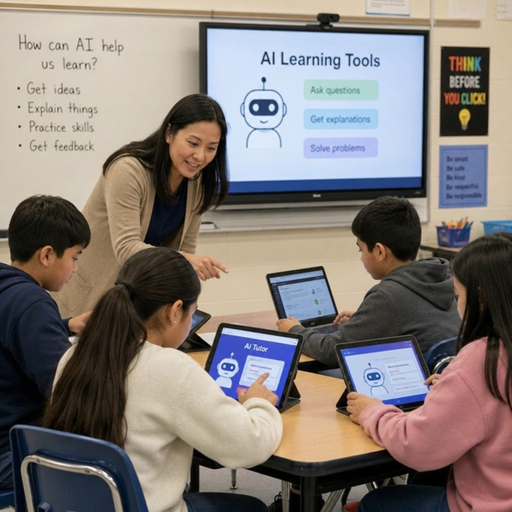
Artificial intelligence is becoming part of how schools teach, support, assess, and prepare learners for a technology-shaped world. Integrating AI into modern education systems is not about replacing teachers with software; it is about using well-chosen tools, thoughtful policies, and practical training to improve learning while protecting student trust, privacy, and equity. This guide explains what AI in schools can look like, how educators can use it responsibly, and what education leaders should consider before adoption.
What does AI integration in education actually mean?
AI integration in education means embedding artificial intelligence tools, concepts, and skills into the learning environment in a purposeful way. It includes classroom applications such as adaptive practice, tutoring support, feedback tools, lesson planning assistance, and administrative automation, as well as broader artificial intelligence education that helps students understand how AI works and how to use it critically.
A modern approach treats AI as both a tool and a subject. As a tool, AI can help teachers personalize instruction, create learning materials, analyze patterns, and support students who need extra practice. As a subject, AI helps learners understand algorithms, data, automation, ethics, and the limits of machine-generated output.
This distinction matters. A school can buy an AI platform without building meaningful AI literacy. It can also teach machine learning concepts without giving teachers safe, practical tools for daily work. Strong integration connects both sides: students learn about AI, educators learn how to use it, and the school creates guardrails for responsible use.
The role of AI in schools today
AI in schools can support many parts of the education experience, but its value depends on how clearly each use case is defined. The most successful applications usually solve a specific instructional or operational problem rather than chasing novelty.
For example, AI learning platforms may adjust practice questions based on student responses. Writing support tools may help students brainstorm, revise, or compare drafts. Translation and accessibility tools may help multilingual learners or students with different communication needs. For educators, AI can assist with creating examples, generating discussion prompts, differentiating assignments, or summarizing patterns in student work.
These benefits are practical, but they require human judgment. AI can suggest, sort, draft, and analyze; it should not be treated as the final authority on student ability, academic integrity, disciplinary decisions, or curriculum quality. Teachers remain responsible for context, care, interpretation, and the relationships that make learning possible.
Common classroom uses
Useful classroom applications often include:
- Personalized practice: Students receive tasks that adapt to their progress, helping them review concepts at an appropriate level.
- Formative feedback: AI tools can offer quick comments on structure, grammar, problem-solving steps, or areas for revision.
- Content generation support: Educators can draft lesson ideas, examples, reading questions, rubrics, or extension activities more efficiently.
- Accessibility assistance: Speech-to-text, text-to-speech, captioning, translation, and reading-level adjustments can help remove barriers.
- Student inquiry: Learners can use AI to explore questions, compare viewpoints, test explanations, or refine research prompts.
The goal is not to make every activity AI-powered. The goal is to choose moments where AI improves access, practice, creativity, or feedback without weakening deep thinking.
Why does AI literacy matter for students and educators?
AI literacy matters because students and teachers increasingly encounter automated systems in school, work, media, and everyday life. Learners need to know how AI tools generate answers, why outputs can be biased or inaccurate, how data affects results, and when human expertise is essential.
For students, AI literacy is part of digital citizenship. They should learn how to question a chatbot’s response, cite assistance appropriately when required, protect personal information, and recognize when AI-generated content may be misleading. These skills are as much about judgment as they are about technology.
For educators, AI literacy supports better teaching decisions. Teachers do not need to become software engineers, but they should understand the basics of prompts, data privacy, model limitations, hallucinations, bias, accessibility, and academic integrity. When educators understand these concepts, they can guide students with confidence instead of relying on fear or blanket bans.
Core AI literacy skills
A strong AI literacy program should help learners and staff develop the ability to:
- Explain what AI can and cannot do. Students should understand that AI systems identify patterns and generate likely outputs, not guaranteed truth.
- Evaluate responses critically. Learners should compare AI output with reliable sources, classroom materials, and expert guidance.
- Use prompts effectively. Clear instructions, context, examples, and constraints can improve output quality, but they do not remove the need for review.
- Recognize ethical risks. Bias, privacy, misinformation, intellectual property, and overreliance should be regular discussion points.
- Apply AI responsibly. Students should know when AI use is allowed, when it must be disclosed, and when it undermines the learning goal.
AI literacy should not be isolated in one technology class. It can appear in writing, science, social studies, career education, arts, mathematics, and project-based learning.
Building an AI-ready curriculum
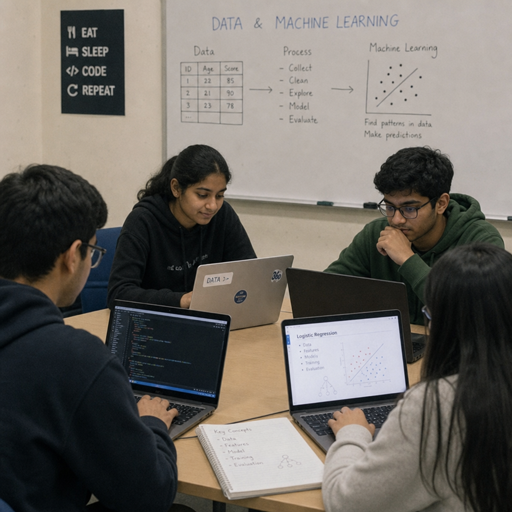
A thoughtful curriculum introduces AI in stages. Younger learners may begin with pattern recognition, sorting activities, simple automation examples, and conversations about helpful technology. Older students can explore data, algorithms, machine learning courses, ethics, coding, robotics, and real-world applications.
The curriculum should balance conceptual understanding with hands-on exploration. Students should not only hear definitions; they should test outputs, compare results, identify errors, and discuss consequences. This turns artificial intelligence education into active learning rather than a vocabulary exercise.
From awareness to application
Schools can structure AI learning across three broad levels:
- Awareness: Students learn where AI appears in daily life, such as recommendations, search tools, maps, translation, and image recognition.
- Understanding: Students explore how data, models, prompts, and algorithms shape outputs.
- Application: Students use AI tools to support research, design, analysis, coding, writing, or problem-solving under clear expectations.
This progression helps avoid two common mistakes: introducing advanced tools before students understand the risks, or limiting AI education to abstract discussion without practical skill-building.
Connecting AI to existing subjects
AI does not need to become a separate silo. In English classes, students can evaluate AI-generated arguments and revise them for evidence and voice. In science, they can discuss how models are used to classify data or simulate systems. In mathematics, they can examine probability, patterns, and data sets. In social studies, they can debate the civic implications of automation, surveillance, and misinformation.
Career and technical education can go further with machine learning courses, data projects, cybersecurity connections, robotics, design thinking, or industry-focused AI training programs. The key is alignment: AI activities should serve the learning objective, not distract from it.
AI for educators and instructional planning
AI for educators can reduce routine workload and open more time for feedback, planning, and student support. A teacher might use AI to generate multiple reading passages at different levels, draft exit tickets, create sample problems, rephrase instructions, or brainstorm project options.
However, teachers should review everything before using it. AI-generated materials may include errors, oversimplifications, biased examples, or content that does not match the curriculum. Educators should treat AI drafts as starting points, not finished resources.
Practical ways teachers can use AI
Educators may find AI especially useful for:
- Drafting lesson hooks, discussion questions, or formative checks
- Creating differentiated versions of practice tasks
- Generating examples and non-examples for difficult concepts
- Translating family communication drafts for review
- Summarizing long notes or organizing planning ideas
- Producing scenarios for debate, role-play, or problem-based learning
- Developing feedback stems that teachers can personalize
These uses are strongest when teachers bring their own expertise to the process. A prompt can produce a worksheet, but a teacher knows whether the task is age-appropriate, culturally responsive, aligned to standards, and useful for the students in front of them.
Responsible adoption requires clear governance
AI adoption should be guided by policy, not improvised one classroom at a time. Without shared expectations, students may receive mixed messages, teachers may feel unsupported, and families may be unsure how student data or academic work is being handled.
Governance does not need to be complicated, but it should be clear. Schools should define acceptable use, data protection expectations, review processes for tools, disclosure rules, accessibility considerations, and consequences for misuse. Policies should also leave room for instructional judgment because AI use in a brainstorming activity is different from AI use on a final assessment.
Key questions for school leaders
Before implementing a new AI tool or program, leaders should ask:
- What instructional or operational problem does this solve?
- What student data does the tool collect, store, or process?
- How will teachers review AI-generated outputs before use?
- How will the school address bias, accuracy, and accessibility?
- What guidance will students receive about disclosure and integrity?
- How will families be informed about AI use?
- What training will staff need before implementation?
- How will the school evaluate whether the tool is helping?
A responsible process may feel slower than simply adopting the newest platform, but it protects learning quality and builds trust.
How can schools adopt AI responsibly?
Schools can adopt AI responsibly by starting with learning goals, training educators, protecting student data, setting clear rules, and reviewing outcomes regularly. The best approach is gradual: pilot a limited number of tools, gather feedback, refine policies, and expand only when the benefits and risks are well understood.
Responsible adoption also means acknowledging that AI affects different learners differently. Some students may benefit from extra practice and accessibility support. Others may be tempted to outsource thinking or rely too heavily on automated answers. Equity depends on ensuring that all students receive guidance, access, and high expectations.
A practical implementation roadmap
A school or district can begin with these steps:
- Define the purpose. Identify whether the priority is teacher planning, student support, AI literacy, career preparation, accessibility, or administrative efficiency.
- Create an AI use policy. Set expectations for privacy, academic integrity, disclosure, teacher review, and approved tools.
- Train educators first. Give teachers time to explore AI tools, discuss risks, and practice classroom-ready uses.
- Pilot in focused settings. Start with a department, grade level, or specific use case before scaling across the system.
- Teach students how to use AI. Pair access with explicit instruction in prompting, verification, ethics, and responsible use.
- Communicate with families. Explain why AI is being used, what safeguards are in place, and how students will be supported.
- Review and adjust. Collect teacher and student feedback, examine learning impact, and revise guidance as tools evolve.
This roadmap keeps the conversation centered on education rather than technology alone.
Professional development and AI training programs
Teacher readiness is one of the most important factors in successful AI integration. If educators are expected to use new tools without training, adoption becomes inconsistent and stressful. Well-designed AI training programs should give teachers practical experience, not just policy documents.
Professional development should include examples from different grade levels and subjects. A mathematics teacher, a language arts teacher, a special education teacher, and a school counselor may all use AI differently. Training should respect those differences while building shared language and expectations.
What effective training should include
Useful professional learning often covers:
- Basic AI concepts in plain language
- Prompt writing and output evaluation
- Privacy and student data considerations
- Bias, accuracy, and hallucination risks
- Classroom norms for student use
- Assessment design in an AI-rich environment
- Accessibility and differentiation strategies
- Time for teachers to test tools and revise materials
The most valuable training is ongoing. AI learning should become part of curriculum planning, coaching, technology support, and professional collaboration rather than a one-time workshop.
Rethinking assessment in an AI-rich environment
AI challenges schools to rethink what assessment is meant to measure. If a student can use a tool to produce a polished essay, solve a routine problem, or summarize a reading, teachers need clearer ways to evaluate process, understanding, and original thinking.
This does not mean abandoning essays, projects, or take-home work. It means designing assessments that make learning visible. Teachers might ask students to submit outlines, drafts, reflections, annotated sources, oral explanations, in-class writing, revision notes, or comparisons between AI output and their own reasoning.
Assessment practices that still work
Strong assessment in an AI-rich environment may include:
- In-class performance tasks where students explain their thinking
- Draft-based assignments that show revision and decision-making
- Oral conferences or short presentations
- Project logs documenting process and sources
- Reflections on how AI was or was not used
- Rubrics that value reasoning, evidence, creativity, and transfer
- Clear disclosure requirements for AI assistance
The point is not to catch students using technology. The point is to preserve meaningful evidence of learning.
Equity, access, and student wellbeing
AI can widen gaps if some students have better tools, faster devices, stronger internet access, or more adult guidance than others. It can also support inclusion when schools use it to improve accessibility, translation, practice opportunities, and differentiated instruction.
Equity requires planning. Schools should consider which tools are available to all students, how paid features affect access, and whether students understand the same rules. They should also monitor whether AI systems produce biased content or lower expectations for certain groups.
Student wellbeing matters too. AI tools can make learning feel efficient, but efficiency should not replace curiosity, struggle, collaboration, or creativity. Students need space to think slowly, make mistakes, and develop confidence in their own abilities.
Best practices for sustainable AI integration
Sustainable AI integration is less about rapid transformation and more about steady, reflective improvement. Schools should avoid adopting too many tools at once or treating AI as a shortcut for deeper instructional work.
A balanced approach includes:
- Keep pedagogy first and technology second.
- Use AI where it improves feedback, access, practice, or planning.
- Require human review for instructional materials and important decisions.
- Teach students to verify, question, and disclose AI use.
- Protect privacy by limiting unnecessary data sharing.
- Involve teachers, students, families, and technology staff in planning.
- Revisit policies as tools and classroom needs change.
- Preserve non-AI learning experiences that build memory, discussion, writing, and problem-solving.
When these habits are in place, AI becomes part of a thoughtful learning ecosystem instead of a disruptive add-on.
The future of artificial intelligence education
The future of artificial intelligence education will likely involve stronger connections between digital literacy, career readiness, ethics, and subject-area learning. Students will need to understand not only how to use AI tools but also how to question them, design with them, and make responsible decisions around them.
Schools do not need to predict every future technology to prepare learners well. They need adaptable systems: teachers who are supported, students who are critical thinkers, policies that protect trust, and curricula that connect technical skills with human judgment.
AI can help modern education systems become more responsive and inclusive, but only when integration is intentional. The schools that benefit most will be those that treat AI as a shared learning challenge: practical enough for daily teaching, rigorous enough for future careers, and ethical enough to serve students well.