
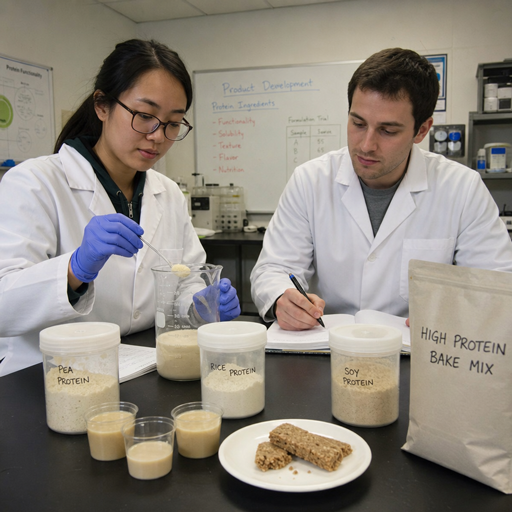
Precision fermentation is changing how food, nutrition, and ingredient companies think about protein production. Instead of relying only on animals, crops, or conventional extraction, this approach uses fermentation technology to make specific proteins with high consistency and a smaller resource footprint. For readers exploring sustainable proteins, this guide explains what precision fermented proteins are, how they are made, where they fit in the alternative proteins landscape, and what to consider before using or investing in them.
What are precision fermented proteins?
Precision fermented proteins are proteins produced by microorganisms that have been programmed or selected to make a specific target molecule during fermentation. In simple terms, the process turns microbes into tiny production systems: they are fed nutrients in a controlled environment, they create the desired protein, and the protein is then separated, purified, and prepared for use in food, beverages, supplements, or other applications.
This is different from traditional fermentation, where the whole fermented food is usually the product. Yogurt, sourdough, kimchi, tempeh, and beer all depend on microbial activity, but the goal is often flavor, preservation, texture, or transformation of the base ingredient. Precision fermentation is more targeted. The goal is to make a defined ingredient, such as a dairy-like protein, an egg-like protein, an enzyme, or a functional nutrition ingredient.
It also differs from plant protein extraction. Plant-based protein ingredients typically begin with soy, peas, wheat, oats, rice, or other crops. The protein is separated from the plant material and then formulated into end products. Precision fermentation can produce proteins that are difficult to extract from plants or that have specific sensory, nutritional, or functional properties.
Precision fermentation as a protein production platform
At its core, precision fermentation is a controlled manufacturing process. It combines biology, food science, ingredient processing, and industrial operations. The result is not one single product category but a platform that can be used to make many types of alternative proteins.
A typical process includes several stages:
- Protein selection The producer identifies the protein they want to make. This might be chosen for nutrition, taste, foaming, binding, melting, emulsification, solubility, or another functional property.
- Microorganism development A production microbe is selected and optimized so it can produce the target protein efficiently. Common production organisms in fermentation industries include yeasts, fungi, and bacteria, though the right organism depends on the desired ingredient and process.
- Fermentation The microorganism grows in a fermentation vessel under controlled conditions. Inputs such as sugars, minerals, water, temperature, oxygen, and pH are managed to support protein production.
- Separation and purification Once fermentation is complete, the target protein is separated from the fermentation broth and other materials. The level of purification depends on the intended application and regulatory requirements.
- Formulation The protein is dried, blended, stabilized, or combined with other ingredients. This is where the protein becomes useful for finished foods, beverages, supplements, or ingredient systems.
This platform matters because it can be designed around the protein itself. Instead of asking, “What protein can we get from this raw material?” precision fermentation asks, “What protein do we need, and how can we produce it consistently?” That shift has major implications for protein sustainability and product development.
Why does protein sustainability matter?
Protein sustainability matters because the global food system needs reliable ways to provide nutrition while reducing pressure on land, water, biodiversity, and supply chains. Protein is essential in human diets, but the way protein is produced can vary widely in its resource demands, emissions profile, scalability, and resilience. Sustainable proteins aim to improve that balance without asking consumers to compromise on taste, performance, or accessibility.
Conventional protein production includes animal agriculture, crop agriculture, fishing, aquaculture, and ingredient processing. Each system has strengths and trade-offs. Livestock can provide highly valued foods but often requires significant land, feed, and infrastructure. Plant proteins can be efficient and widely available but may face challenges in texture, flavor, allergen perception, or functionality. Wild-caught seafood depends on healthy ecosystems, while aquaculture requires careful management of feed, water, and waste.
Alternative proteins expand the set of options. This broad category includes plant-based proteins, cultivated meat, mycoprotein, algae proteins, insect proteins, and precision fermented proteins. None of these replaces every other source of protein. Instead, they give food companies more tools to design products that meet nutritional, environmental, operational, and sensory goals.
For precision fermented proteins, the sustainability opportunity comes from controlled production. Fermentation can be located near demand centers, scaled in modular ways, and designed to produce specific ingredients without raising whole animals or cultivating large amounts of protein crops for every use case. The practical benefit is flexibility: protein production can become less dependent on climate-sensitive agricultural cycles, long animal supply chains, or limited specialty ingredients.
Still, protein sustainability is not automatic. The actual footprint of precision fermentation depends on feedstocks, energy sources, facility efficiency, downstream processing, water use, transportation, and waste management. A well-designed process powered by cleaner energy and efficient inputs will have a different sustainability profile than one with energy-intensive purification or high-input raw materials. That is why serious evaluation should look at the full production system, not just the technology label.
How precision fermented proteins compare with other alternative proteins
Precision fermented proteins sit alongside other sustainable proteins rather than replacing them outright. Their best role is often ingredient-level performance: making proteins that provide a particular taste, texture, nutrition profile, or functional behavior inside a product.
Plant-based proteins
Plant proteins are familiar, scalable, and already widely used. They can be effective in meat alternatives, protein powders, dairy alternatives, baked goods, snacks, and beverages. Their advantages include broad agricultural supply, established processing systems, and consumer recognition.
However, some plant proteins can bring flavor notes, color, texture limitations, or solubility challenges that require careful formulation. Precision fermented proteins can help where a product needs a more specific function, such as creamy mouthfeel, clean protein fortification, foaming, binding, or a dairy-like performance attribute. In many products, the strongest approach may be a blend of plant proteins and precision fermented proteins.
Conventional fermentation and mycoprotein
Conventional fermentation often uses the whole microbial biomass or a fermented substrate as the ingredient. Mycoprotein, for example, is valued for texture and nutritional properties. These products can be sustainable and compelling, especially when the goal is a whole-food-like protein base.
Precision fermentation is narrower and more targeted. It usually focuses on producing a defined protein rather than using the whole organism as the primary food. This makes it especially useful for high-value functional ingredients, where small amounts can have a large effect on performance.
Cultivated meat
Cultivated meat uses animal cells grown in controlled systems to create meat-like tissue or ingredients. It addresses a different challenge: producing animal-like meat without raising and slaughtering animals. Precision fermentation may support cultivated meat by producing growth factors, functional proteins, fats, or flavor-related ingredients, but the two technologies are not the same.
For many companies, precision fermentation may reach ingredient applications before fully structured cultivated products are broadly available. That is because purified proteins can be used in existing food formats, while cultivated meat often requires additional advances in cell growth, structure, cost, and scale.
Key benefits of precision fermentation
The promise of precision fermented proteins is practical, not futuristic. Companies are interested because the technology can solve specific formulation and supply problems.
Important potential benefits include:
- Targeted functionality: Proteins can be chosen for specific properties, such as emulsification, gelling, foaming, binding, solubility, or nutrition.
- Consistent quality: Controlled fermentation can reduce variability that sometimes comes from agricultural raw materials, seasonal shifts, or animal-based supply chains.
- Efficient ingredient design: Instead of producing a whole animal or crop to obtain one useful protein, the process can focus on the ingredient of interest.
- Supply chain flexibility: Fermentation facilities can be located strategically, potentially reducing dependence on distant production regions.
- Animal-free production: Some precision fermented proteins can deliver familiar functional benefits without relying on animals as the production system.
- Compatibility with existing products: These proteins can be formulated into familiar categories such as beverages, dairy alternatives, bakery products, nutritional powders, sauces, and snacks.
The strongest use cases are usually not about novelty. They are about improving a product that already has a clear consumer need. If a protein helps a dairy alternative taste creamier, a nutrition drink stay smoother, or a bakery product hold structure better, the technology becomes meaningful at the product level.
Product applications and real-world use cases
Precision fermentation can support many parts of the food and ingredient market. The best applications are those where a specific protein delivers value that is hard to match with existing ingredients.
Dairy-style ingredients
Dairy is one of the most discussed categories for precision fermentation because milk contains proteins with valuable functional properties. Casein and whey-like proteins can contribute to creaminess, stretch, foam, nutrition, and mouthfeel. In animal-free dairy-style products, these proteins may help create cheese alternatives, beverages, yogurts, desserts, or creamers that behave more like conventional dairy.
The consumer benefit is straightforward: better taste and texture in products that are not dependent on animal-based milk. The business benefit is equally clear: formulators gain access to protein functionality that can be difficult to reproduce with plants alone.
Egg-style functionality
Egg proteins play many roles in food. They can bind, foam, emulsify, thicken, and support structure. Precision fermented proteins may help create alternatives for baked goods, sauces, dressings, breakfast products, and prepared foods where egg functionality is important.
This does not mean every egg use can be replaced by one ingredient. Whole eggs are complex. But targeted proteins can address specific jobs in a recipe, which allows formulators to build more reliable animal-free or lower-allergen systems where appropriate.
Nutrition and performance products
Protein beverages, powders, bars, and medical or active nutrition products often need proteins that are digestible, soluble, neutral in taste, and stable in processing. Precision fermentation can be used to create ingredients designed for those performance requirements.
In this category, the value is not only sustainability. It is also product experience. A sustainable protein that tastes chalky, clumps in liquid, or breaks down during processing will struggle. Precision fermented proteins can be engineered and processed with end-use performance in mind.
Specialty ingredients
Beyond headline categories, fermentation technology can produce enzymes, binding proteins, flavor-related proteins, and other specialty ingredients. These may be used in small amounts but still influence the quality of finished products. In some cases, specialty applications may be commercially attractive because they do not require the same volumes as commodity protein markets.
What should companies evaluate before using precision fermented proteins?
Companies should evaluate precision fermented proteins by looking at performance, cost, regulatory readiness, sourcing, scalability, sustainability data, and consumer communication. A promising ingredient is only useful if it works in the product, can be supplied reliably, and fits the brand’s quality, compliance, and market expectations.
A practical evaluation checklist includes:
- Function in the finished product: Does the protein improve taste, texture, structure, nutrition, stability, or processing behavior in a measurable way?
- Ingredient compatibility: Does it work with fats, starches, sweeteners, flavors, minerals, stabilizers, and processing conditions already used in the formula?
- Regulatory pathway: Is the ingredient approved or approvable for the intended market and application?
- Labeling and positioning: How will the ingredient be named, explained, and understood by consumers?
- Cost-in-use: Does the protein deliver enough value at the inclusion level required?
- Supply assurance: Can the producer deliver consistent quality, volume, documentation, and lead times?
- Sustainability evidence: Are claims supported by credible assessments of energy, feedstock, water, waste, and logistics?
- Sensory performance: Does the ingredient improve the product without adding unwanted flavor, aroma, color, or texture?
This checklist helps avoid a common mistake: treating precision fermentation as a marketing feature rather than an ingredient strategy. The technology should serve a product goal. If it does not improve the final experience or support a clear sustainability and supply chain case, it may not be the right fit.
Barriers that still need to be solved
Precision fermentation has strong potential, but it also faces real challenges. Understanding those challenges makes the opportunity more credible.
Scaling production
Laboratory success does not automatically translate into commercial supply. Large-scale fermentation requires capital, skilled operators, equipment, process control, and reliable input streams. The protein must be produced at a yield and cost that make sense for the target market.
Downstream processing can also be demanding. Separating and purifying proteins may require energy, filtration, drying, and quality controls. For some ingredients, these steps can influence both cost and sustainability.
Cost and market fit
Many food categories are price-sensitive. If a precision fermented protein is too expensive, it may only work in premium products, specialty nutrition, or low-inclusion applications. That is not necessarily a failure. Early markets often begin where the ingredient’s value is highest.
Over time, costs may improve through better strains, larger facilities, improved feedstocks, process optimization, and more efficient purification. But companies should avoid assuming that every precision fermented protein will quickly become a commodity ingredient.
Consumer understanding
Precision fermentation can be hard to explain. Consumers may be familiar with fermentation as a traditional food process, but the “precision” aspect can raise questions. Clear communication matters.
Brands should focus on benefits people can understand: animal-free production, consistent quality, improved taste or texture, and a more sustainable approach to protein production. Overly technical messaging can create confusion. Overpromising can create distrust.
Best practices for communicating precision fermentation
Good communication should be accurate, simple, and benefit-led. The goal is not to turn every shopper into a bioprocess engineer. The goal is to explain why the ingredient exists and why it improves the product.
Useful messaging principles include:
- Start with the product benefit: Lead with creamier texture, better nutrition, reliable performance, or animal-free formulation before explaining the production method.
- Use familiar context: Fermentation is already part of many foods. Position precision fermentation as a more targeted form of a known process.
- Avoid vague sustainability claims: Say less if you cannot substantiate more. “Designed to reduce reliance on animal-based inputs” is stronger than unsupported sweeping claims.
- Be transparent without overwhelming: Explain that microorganisms produce the target protein in a controlled fermentation process, then the protein is separated and used as an ingredient.
- Respect different consumer values: Some consumers care most about climate, others about animals, allergens, nutrition, taste, or food technology. Messaging should not assume a single motivation.
For B2B audiences, communication can be more technical. Ingredient buyers may want information about specifications, processing stability, allergen status, documentation, regulatory status, and sustainability methodology. For consumer audiences, clarity and relevance matter more than process detail.
The future of sustainable protein production
Precision fermentation is likely to become one part of a more diverse protein system. The future will not be built on a single solution. It will combine better animal agriculture, improved crop systems, plant-based innovation, microbial proteins, cultivated technologies, and more efficient ingredient manufacturing.
In that future, precision fermented proteins may be especially important where performance matters most. They can help close the gap between sustainable ambitions and consumer expectations. People may want lower-impact products, but they still expect food to taste good, cook properly, nourish well, and fit daily routines.
For producers, the opportunity is to use fermentation technology with discipline. Choose the right protein, prove the product benefit, document the sustainability case, and communicate clearly. For buyers and brands, the key is to evaluate precision fermentation not as a trend but as a tool: one that can strengthen product quality, broaden the alternative proteins toolbox, and support more resilient protein production.
Precision-fermented sustainable proteins are not a complete answer to every food system challenge. They are, however, a powerful development in how proteins can be designed and made. Used well, they can help create foods that are more functional, more flexible, and better aligned with the long-term need for sustainable proteins.