
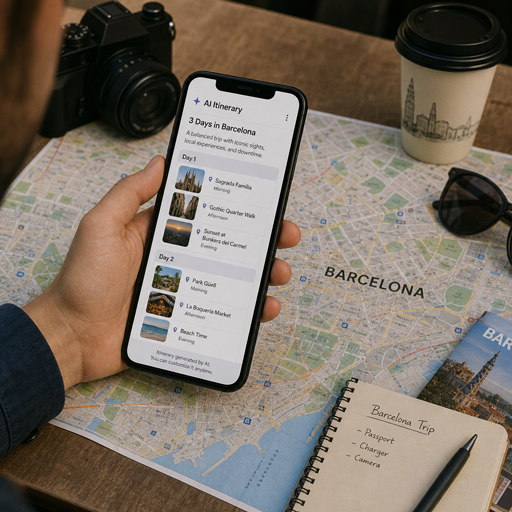
Plan trips that adapt to the way you actually travel. Our context-aware AI travel planners help turn your destination, timing, interests, budget style, pace, and practical constraints into a usable itinerary you can review, refine, and carry with you. Instead of starting from a blank map or a long list of tabs, you get smart travel planning support that keeps the whole trip in view.
What makes an AI itinerary planner context-aware?
A context-aware itinerary planner does more than suggest popular attractions. It uses the details around your trip, such as who is going, how much time you have, how you like to move through a city, and what kind of experience you want, to shape a plan that feels realistic. The result is not a generic checklist; it is a flexible route designed around your day, your priorities, and the trade-offs that make travel easier.
That context matters when small decisions stack up. A museum visit may look simple until you factor in jet lag, lunch nearby, transportation time, weather preferences, accessibility needs, or a child who needs downtime after a busy morning. Context-aware AI travel planners help organize those moving parts so your itinerary is easier to follow and easier to adjust.
Travel planning that starts with your real trip
Great itineraries begin with the right inputs. Our travel ai tools are designed to collect the details that influence your experience, then turn them into a clear day-by-day plan. You can use them for weekend escapes, multi-city vacations, business trips with free time, family holidays, solo adventures, or early-stage destination research.
You can build around details such as:
- Trip length and travel dates, so each day has a realistic amount of activity.
- Destination mix, whether you are staying in one place or moving between cities.
- Travel style, from slow and scenic to packed and activity-focused.
- Interests, including food, history, nature, shopping, nightlife, culture, or quiet local neighborhoods.
- Budget comfort, helping the plan lean toward simple, balanced, or more premium choices.
- Traveler needs, such as kids, seniors, accessibility considerations, dietary preferences, or downtime.
- Must-do stops, so the itinerary protects what matters most before filling in the rest.
This approach keeps planning grounded. Rather than treating every traveler the same, intelligent travel solutions help you compare options through the lens of your own trip.
Smarter itineraries, fewer planning dead ends
Traditional planning often begins with scattered inspiration: a saved video, a blog post, a friend’s recommendation, a map full of pins, and a dozen open tabs. Each source may be useful, but the traveler still has to solve the hardest part: making everything fit. AI travel assistants reduce that friction by grouping ideas into sequences that make sense for time, location, energy, and priority.
A strong plan should help you understand what to do and why it belongs there. For example, instead of listing five neighborhoods and leaving you to connect them, a context-aware planner can group nearby stops into a morning route, suggest a meal break at the right moment, and leave space for a slower afternoon if your first day involves travel fatigue.
Use the planner to move from uncertainty to action:
- Describe the trip. Add destination, dates, companions, pace, budget style, and the experiences you care about.
- Review the first itinerary. See the suggested flow, daily balance, and practical order of activities.
- Refine the plan. Ask for more downtime, more local food, fewer transfers, kid-friendly options, or a different pace.
- Save your priorities. Keep must-see places visible so they do not get buried under extra suggestions.
- Adjust as plans change. Rework a day when your flight shifts, the weather changes, or you simply want a lighter schedule.
Built for different kinds of travelers
Smart travel planning is not only for people who love detailed schedules. It is also useful for travelers who want structure without feeling boxed in. A context-aware plan gives you a reliable starting point while still leaving room for discovery, rest, and spontaneous choices.
For solo travelers, the planner can help balance safety-minded logistics with personal interests and flexible time. For couples, it can blend different travel styles, such as museums in the morning and food-focused exploring at night. For families, it can build in shorter travel legs, breaks, and activities that make sense for mixed ages. For remote workers or business travelers, it can fit sightseeing around meetings, check-in times, and focused work blocks.
Features designed to make planning feel manageable
The best travel ai tools do not replace your judgment. They give you a clearer way to make decisions. You stay in control of the destination, pace, preferences, and final choices, while the planner handles organization, sequencing, and idea generation.
Helpful homepage-ready features include:
- Personalized itinerary drafts that reflect your interests instead of offering the same route to everyone.
- Day-by-day organization so the trip feels easier to scan, share, and revise.
- Context-aware suggestions that consider timing, location flow, travel pace, and your must-see list.
- Flexible refinements for changing the tone of a trip, such as more relaxed, more adventurous, more food-focused, or more family-friendly.
- Clear activity grouping that helps reduce unnecessary backtracking.
- Planning support for multiple trip types, from quick city breaks to longer, multi-stop journeys.
These features are most useful when the plan is treated as a living draft. You can start broad, then keep sharpening the itinerary until it matches the way you want the trip to feel.
From inspiration to a trip you can follow
A good itinerary is not just a list of places. It is a plan that respects time, energy, geography, and the reason you wanted to travel in the first place. Context-aware AI travel planners help bridge the gap between inspiration and execution by turning ideas into a sequence you can understand at a glance.
Imagine planning three days in a new city. You know you want local food, one major museum, a scenic walk, and enough free time to avoid feeling rushed. Instead of manually arranging every stop, an AI planner can shape a balanced outline: arrival day kept light, the museum paired with nearby lunch, the scenic walk placed when you have more energy, and the final day left flexible for shopping or a neighborhood you discovered along the way.
That is where ai travel assistants become practical. They help you see the consequences of your choices before you are on the ground, tired, hungry, and trying to decide what comes next.
Plan with clarity, then travel with confidence
Travel will always involve some surprises, and that is part of the appeal. The right planning tool does not remove spontaneity; it creates enough structure for spontaneity to feel enjoyable instead of stressful. With intelligent travel solutions, you can spend less time wrestling with logistics and more time choosing the experiences that make the trip worth taking.
Start by entering the trip you have in mind, even if the details are still rough. Add your destination, dates, travel style, and a few priorities, then let the planner create a first draft you can shape. Your next itinerary can be organized, flexible, and built around the context that matters most: yours.
