
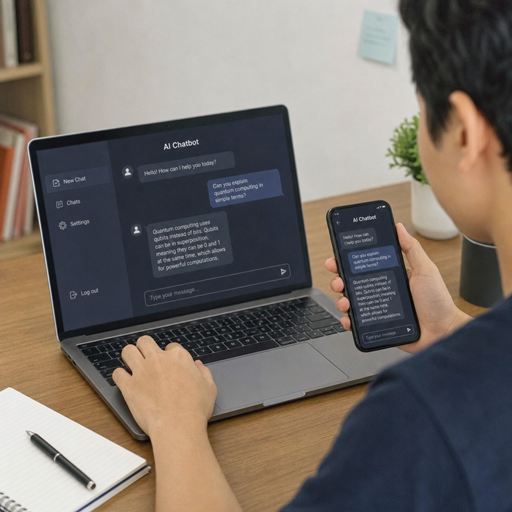
ChatGPT is moving from a simple ai chatbot into a broader work, learning, and creativity layer: part search tool, part writing partner, part virtual assistant, and part interface for software. Its future will likely be shaped by better natural language processing, richer voice and image interactions, more useful memory, and stronger expectations around privacy, accuracy, and brand transparency. For anyone watching conversational ai, the key question is no longer whether tools like ChatGPT matter, but how thoughtfully people and organizations will use them.
What will ChatGPT become next?
ChatGPT will likely become less like a standalone chat window and more like an intelligent assistant woven into everyday tasks. OpenAI first introduced ChatGPT as a conversational model that could answer follow-up questions, admit mistakes, challenge incorrect premises, and reject inappropriate requests; that basic chat format remains important, but the product has already expanded into search, voice, image understanding, memory, and workplace use cases. (openai.com)
The practical shift is simple: people will expect AI to understand context, help with multi-step goals, and communicate in whichever mode feels natural. Typing will still matter, but so will speaking, showing an image, asking for sources, and returning to a prior conversation without starting from zero. The future of chat gpt is not just “better answers”; it is better participation in the messy flow of real life.
The evolution from chatbot to everyday assistant
Early AI chat experiences often felt like novelty tools: useful for brainstorming, but limited when the task required context, judgment, or follow-through. ChatGPT changed expectations because it made natural language the interface. Instead of learning a dashboard, users could ask a question, refine it, and keep going.
That conversational pattern is why ChatGPT is often described as a virtual assistant. A good assistant does not merely respond; it helps organize thinking. It can turn a rough idea into an outline, summarize a dense document, draft an email in a specific tone, compare options, or explain a concept at different levels of difficulty.
The next stage is deeper integration. When conversational ai can work across text, images, files, calendars, business tools, and live web information, it becomes less of a separate destination and more of a support layer. That does not remove the need for human review. It changes where people spend their effort: less time staring at a blank page, more time deciding whether the output is useful, accurate, ethical, and aligned with the goal.
Natural language processing is becoming more contextual
Natural language processing is the foundation that lets tools like ChatGPT interpret prompts, generate responses, and maintain a conversational thread. The future will depend on making that process more context-aware. A user does not only want an answer to the sentence they typed; they want help that reflects their intent, constraints, previous choices, and preferred level of detail.
OpenAI’s memory features point in this direction. ChatGPT can use saved memories and, depending on settings, past conversation context to make responses feel more relevant; OpenAI also says users can control memory settings, turn off certain references, and use temporary chat for conversations that should not use or update memory. (openai.com)
For users, the benefit is continuity. You might not need to re-explain your writing style, business type, learning goals, or project background every time. For teams, the opportunity is consistency: shared tone, reusable workflows, and faster onboarding. The risk is over-personalization without awareness, which is why controls, transparency, and good data habits will matter as much as model quality.
Why does multimodal AI matter?
Multimodal AI matters because many real problems are not purely text problems. OpenAI has described voice and image capabilities in ChatGPT as a more intuitive interface, allowing people to speak with the assistant or show it what they mean rather than explaining everything in writing. (openai.com)
This is a major step for accessibility and everyday usefulness. A student can ask for help understanding a diagram. A traveler can discuss a landmark. A home cook can show ingredients and ask for meal ideas. A worker can share a chart and ask what trends stand out.
Multimodal interaction also makes the AI chatbot feel less like software and more like a collaborator. People naturally point, speak, sketch, gesture, and revise. The closer AI gets to those behaviors, the less friction users feel. The challenge is that richer inputs create richer responsibility: image interpretation can be wrong, voice can feel emotionally persuasive, and sensitive visual information should be handled carefully.
Search and sources will reshape expectations
One of the biggest changes in ChatGPT’s future is the blending of chat and search. OpenAI introduced ChatGPT search to provide timely answers with links to relevant web sources, and it described the experience as combining a natural language interface with up-to-date information in areas such as news, sports, stocks, weather, and maps. (openai.com)
This matters because users increasingly want answers, not just lists of links. But they also need a way to inspect where those answers came from. A conversational answer without sources may be convenient, yet it can be risky for decisions involving health, finance, law, travel, or fast-changing events.
The future of AI search will likely reward tools that make attribution easy to check. The best experience is not blind trust; it is guided investigation. ChatGPT can help frame the question, summarize the landscape, and point to sources, while the user decides what deserves confidence.
Better prompts will still produce better results
Even as systems improve, prompt quality will remain useful. A vague request often produces a vague answer. A clear request gives the assistant a target.
Try adding:
- Role: “Act as a patient tutor,” “Act as a product marketer,” or “Act as a skeptical editor.”
- Context: Explain the audience, goal, background, and constraints.
- Format: Ask for bullets, a draft, a checklist, a script, or a concise explanation.
- Standards: Tell it what matters most, such as accuracy, simplicity, tone, or compliance.
- Review step: Ask it to identify assumptions, risks, or missing information.
These habits make chat gpt more useful because they turn a broad request into a guided task. They also help users stay in control instead of accepting the first polished response as final.
AI at work will focus on workflows, not novelty
Businesses are moving past the question “Can AI write something?” and toward “Can AI improve how work gets done?” That shift is important. The value is not only in generating words; it is in reducing busywork, improving clarity, supporting decisions, and helping teams move from idea to execution faster.
OpenAI’s developer documentation describes the OpenAI API as a way to access models for text generation, natural language processing, computer vision, and more, which shows how ChatGPT-like capabilities can extend beyond the chat interface into products and internal tools. (developers.openai.com)
Common workplace uses include:
- Drafting first versions of emails, briefs, proposals, and knowledge base articles.
- Summarizing meetings, long documents, customer feedback, or research notes.
- Creating variations of marketing copy for different audiences.
- Explaining technical topics in plain language for non-specialists.
- Turning messy notes into action items, project plans, or decision memos.
- Helping customer support teams respond with more consistent tone and detail.
The most successful teams will treat conversational ai as part of a workflow, not a magic button. They will define where AI is allowed, where human approval is required, what data should never be entered, and how outputs should be checked.
Ownership, branding, and the ChatGPT logo
People often ask, “who owns chat gpt?” In straightforward product and trademark terms, ChatGPT is associated with OpenAI, and OpenAI’s brand guidelines state that the OpenAI name, OpenAI logo, ChatGPT, GPT, and other OpenAI trademarks are property of OpenAI. (openai.com)
That also matters for anyone writing about the product, building related tools, or using the chat gpt logo in content. OpenAI’s brand guidance says its logos should be used only when directly related to OpenAI services, should follow OpenAI’s style and usage terms, and should not be modified or used in ways that imply endorsement or confuse users about sponsorship. (openai.com)
For publishers and businesses, the safest approach is to be precise. Refer to ChatGPT accurately, avoid implying an official partnership unless one exists, and do not build a brand identity that looks like OpenAI’s. As AI ecosystems grow, trust will depend not only on what tools can do, but also on whether companies communicate clearly about what they are and are not.
The future will require stronger AI literacy
As ChatGPT becomes more capable, users will need stronger AI literacy. That does not mean everyone must become a machine learning expert. It means people should understand enough to use the tool well, question it appropriately, and avoid common mistakes.
A practical AI literacy checklist includes:
- Check important facts. Treat confident wording as a style, not proof.
- Protect sensitive data. Do not paste private, regulated, or confidential information unless your organization allows it.
- Ask for assumptions. Have the assistant explain what it inferred and what it does not know.
- Use sources for current topics. Recent events, pricing, policies, and laws can change quickly.
- Keep humans accountable. AI can support decisions, but people remain responsible for outcomes.
- Watch for bias. Outputs can reflect gaps, framing issues, or patterns in training and tool design.
This kind of literacy will separate casual use from dependable use. The people who benefit most will not be those who ask the most prompts. They will be those who combine AI speed with human judgment.
What should users do now?
Users should start building repeatable habits instead of waiting for a perfect future version. ChatGPT and similar tools will keep changing, but the core skills of clear prompting, careful review, privacy awareness, and workflow design will remain valuable.
Here is a simple way to begin:
- Choose one recurring task. Pick something frequent, such as summarizing notes, drafting emails, planning content, or learning a topic.
- Create a reusable prompt. Include context, desired format, audience, and quality criteria.
- Compare AI output with your standard. Look for speed gains, errors, missing nuance, and tone problems.
- Add a review process. Decide what must be fact-checked, edited, approved, or discarded.
- Document what works. Save strong prompts and examples so the process improves over time.
This approach keeps experimentation grounded. Instead of asking whether AI is “good” in general, you learn where it is useful for your actual work and where it still needs supervision.
A more human-centered AI future
The future of ChatGPT will not be defined only by model upgrades. It will be defined by the relationship between people, tools, institutions, and trust. More capable systems can help people learn faster, communicate better, explore ideas, and reduce repetitive work. They can also create confusion when users overestimate accuracy, ignore privacy, or mistake fluent language for expertise.
The best path forward is neither hype nor fear. It is thoughtful adoption. Use ChatGPT as an assistant, not an authority. Let it accelerate drafts, questions, summaries, and exploration, while keeping human judgment at the center.
ChatGPT’s future is bigger than a chat box. It points toward a world where natural language becomes a common interface for knowledge, software, and work. If users develop the right habits now, conversational ai can become not just more powerful, but more practical, transparent, and genuinely helpful.