
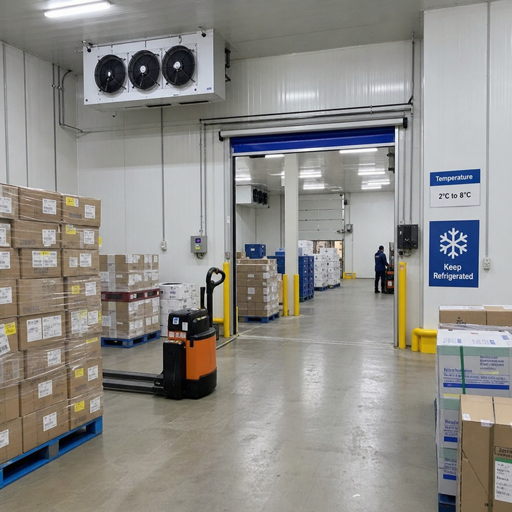
Clean logistics is no longer only about lower-emission vehicles or smarter route planning. Warehouses, cold rooms, packaging facilities, and distribution hubs also shape a company’s environmental footprint through the way they control temperature, reduce energy loss, and protect products in transit. Hydrofluoroolefin HFO insulation offers a practical path for logistics operators looking for energy-efficient insulation with a reduced environmental burden compared with older foam technologies.
For businesses managing temperature-sensitive goods, insulation is both an operational tool and a sustainability decision. The right insulation materials can help stabilize indoor conditions, reduce strain on refrigeration and HVAC systems, and support cleaner building strategies across the supply chain.
What makes HFO insulation relevant to clean logistics?
HFO insulation is relevant to clean logistics because it helps address two priorities at once: thermal performance and environmental responsibility. In logistics facilities, insulation is not simply a construction detail. It influences how much energy is needed to keep storage areas, loading zones, refrigerated spaces, and office areas within the right temperature range.
Hydrofluoroolefin HFO insulation typically refers to foam insulation systems that use HFO blowing agents. These blowing agents are designed to reduce the climate impact associated with traditional foam production while still supporting strong insulating performance. For companies trying to improve building efficiency without ignoring the environmental profile of their materials, hfo insulation can be part of a broader clean logistics strategy.
This matters because logistics buildings often have large surface areas, wide doors, high ceilings, and frequent temperature interruptions. Heat gain, heat loss, and air leakage can quickly become expensive. Better insulation helps create a more controlled envelope, allowing equipment to work more efficiently and helping teams maintain product quality with less waste.
The role of insulation in cleaner supply chains
Clean logistics is usually discussed in terms of transportation, fuel, fleet electrification, packaging, and data-driven routing. Those pieces matter, but the built environment behind the supply chain deserves equal attention. A poorly insulated warehouse can consume unnecessary energy every day, even if the delivery fleet is efficient.
Green building insulation supports cleaner supply chains by reducing avoidable energy demand. When the building envelope is tighter and better insulated, heating, cooling, and refrigeration systems do not need to compensate as aggressively for outdoor conditions. Over time, this can support lower operating costs, steadier indoor temperatures, and more resilient facility performance.
In cold chain logistics, the stakes are even higher. Food, pharmaceuticals, specialty chemicals, and other sensitive goods often depend on consistent temperatures from storage to shipment. Eco-friendly insulation does not replace refrigeration equipment, monitoring systems, or good handling practices, but it helps create the stable environment those systems need to perform well.
How hydrofluoroolefin HFO insulation works in buildings
Foam insulation commonly relies on a blowing agent to create a cellular structure. That structure traps gas within tiny cells, slowing heat transfer and improving thermal resistance. Hydrofluoroolefin hfo insulation uses HFO-based blowing agents in place of older options that may carry a heavier environmental profile.
In practical terms, HFO-based foam is often associated with spray foam or rigid foam applications. These insulation materials can be used in walls, roofs, ceilings, and other parts of the building envelope where air sealing and thermal resistance are important. Depending on the project, they may help limit thermal bridging, reduce uncontrolled air movement, and improve performance in areas that are difficult to insulate with loose or batt-style materials.
For logistics operators, the benefit is not only the insulation value on paper. It is the way the material behaves in real building conditions. Warehouses and fulfillment centers include dock doors, service penetrations, mezzanines, mechanical rooms, and transitions between conditioned and unconditioned areas. A continuous insulation strategy can reduce weak points that otherwise undermine energy performance.
Why material choice matters beyond R-value
R-value is important, but it is not the whole story. Two insulation products may appear similar when judged only by thermal resistance, yet differ in air sealing ability, moisture behavior, installation requirements, durability, and environmental impact. Clean logistics requires a more complete view of performance.
When comparing insulation materials, facility owners and project teams should consider:
- Thermal performance in the actual assembly Insulation should be evaluated as part of the wall, roof, floor, or cold room system, not as an isolated product. Gaps, compression, fasteners, and transitions can all reduce real-world performance.
- Air leakage control Uncontrolled air movement can carry heat, humidity, dust, and pollutants. In logistics spaces, it can also make temperature zones harder to manage, especially near loading docks and large openings.
- Moisture and condensation risk Warehouses and refrigerated facilities may experience humidity swings. The insulation strategy should help manage condensation risks rather than create hidden moisture problems.
- Environmental profile Sustainable insulation solutions look beyond energy savings. They also consider manufacturing inputs, blowing agents, durability, and end-of-life implications where data is available.
- Compatibility with operations Installation timing, access requirements, odor considerations, fire protection, and maintenance needs can all affect whether a product is realistic for an active logistics environment.
By looking at the full assembly and the full lifecycle of the facility, decision-makers can avoid selecting insulation that performs well in a brochure but poorly in daily operations.
HFO insulation and energy-efficient facility design
Energy-efficient insulation works best when it is part of an integrated design, not a late-stage upgrade. In clean logistics, the building envelope, mechanical systems, refrigeration equipment, lighting, dock design, and controls should support one another. HFO insulation can contribute to this approach by improving the thermal boundary and helping reduce unnecessary energy demand.
For example, a distribution center with insulated wall panels but poorly sealed roof transitions may still lose conditioned air. A cold storage facility with strong refrigeration equipment but weak insulation may spend more energy maintaining target temperatures. In both cases, the insulation strategy affects whether other systems operate efficiently.
HFO insulation can be especially useful where space is limited or where high-performance foam is needed to support a compact assembly. It may also be considered in retrofit projects where existing buildings need improved thermal performance without a complete rebuild. As with any material, the best application depends on building design, code requirements, climate zone, and operating conditions.
Where eco-friendly insulation supports logistics operations
Eco-friendly insulation is not only about environmental messaging. In logistics, it can support everyday operational goals that matter to facility managers, sustainability teams, and customers.
Key use cases include:
- Cold storage and refrigerated rooms: Better insulation helps maintain temperature stability and may reduce the workload on refrigeration systems.
- Temperature-controlled packaging areas: Stable indoor conditions can support product quality and worker comfort during packing, labeling, and staging.
- Warehouse roofs and exterior walls: Large building surfaces can be major pathways for heat gain or loss, making envelope upgrades especially valuable.
- Loading dock transitions: Insulation and air sealing around dock areas can reduce energy waste caused by repeated door openings.
- Retrofit projects: Existing facilities can often improve performance by addressing insulation gaps, roof assemblies, and air leakage paths.
- Mixed-use logistics buildings: Offices, storage zones, and production-adjacent areas may have different comfort and temperature needs, making zoning and insulation planning important.
These use cases show why sustainable insulation solutions should be considered early in logistics planning. They affect energy strategy, product protection, maintenance planning, and the long-term resilience of the facility.
Is HFO insulation the same as green building insulation?
HFO insulation can be part of a green building insulation strategy, but the terms are not identical. “Green building insulation” describes a broader category of materials and design choices intended to reduce environmental impact, improve energy performance, and support healthier, more efficient buildings. Hydrofluoroolefin HFO insulation is one option within that broader conversation.
A green insulation strategy may include HFO-based foam, mineral wool, cellulose, fiberglass, wood fiber, recycled-content products, insulated panels, or other systems depending on the project. Each option has strengths and trade-offs. Some materials may offer lower embodied impact, some may provide strong fire resistance, some may excel in air sealing, and some may be easier to install in specific assemblies.
The best choice is rarely based on one label. Instead, it should be based on project goals, climate conditions, code requirements, product availability, installation quality, and the long-term use of the building. HFO insulation is compelling when a project needs foam performance while also seeking a more environmentally responsible blowing agent than older high-impact alternatives.
A practical checklist for choosing insulation in clean logistics
Selecting insulation for a logistics facility should involve more than a quick product comparison. The decision should connect sustainability goals with building science and operational reality.
Use this checklist before specifying or approving insulation materials:
- Define the temperature zones. Identify which areas are ambient, conditioned, refrigerated, frozen, or frequently opened to outdoor air.
- Map the building envelope. Look closely at roofs, exterior walls, slabs, doors, penetrations, and transitions between zones.
- Confirm code and safety requirements. Insulation must fit applicable fire, energy, and building requirements for the facility type.
- Review the environmental attributes. Ask about blowing agents, recycled content where relevant, product declarations, and durability claims.
- Evaluate installation conditions. Consider whether the building is new, occupied, partially operational, or undergoing phased retrofit work.
- Plan for air sealing. Even strong insulation can underperform if gaps, joints, and penetrations are ignored.
- Coordinate with mechanical design. Insulation levels affect heating, cooling, and refrigeration loads, so envelope planning should align with equipment sizing.
- Think about maintenance access. Logistics facilities change over time, so assemblies should be practical to inspect, repair, or modify when needed.
This checklist helps teams avoid a narrow product-first decision. The goal is to create a facility that performs reliably, supports sustainability targets, and remains practical for the people operating it every day.
Common mistakes that reduce insulation performance
Even high-quality insulation materials can fail to deliver expected value when design or installation details are overlooked. In logistics buildings, the most common problems often appear at boundaries and interruptions rather than in the center of a wall or roof.
One common mistake is treating dock areas as separate from the insulation strategy. Loading bays, dock levelers, seals, and overhead doors are constant points of thermal disruption. If these areas are not coordinated with the surrounding envelope, the facility may experience drafts, humidity problems, and energy waste.
Another mistake is focusing on initial material selection while underestimating installation quality. Foam insulation, panels, batts, and boards all require proper detailing. Gaps, voids, misaligned layers, or poorly sealed penetrations can reduce performance. For clean logistics, the insulation system must be designed and installed as a continuous thermal and air-control layer wherever possible.
A third mistake is ignoring future changes. Logistics facilities often evolve as product lines, automation, storage formats, and customer requirements shift. Insulation choices should support adaptability without making every modification difficult or wasteful.
Sustainable insulation solutions as a business signal
Sustainable insulation solutions can also communicate something important to customers, investors, employees, and supply chain partners. They show that a company is looking beyond visible sustainability measures and addressing the infrastructure that supports daily operations.
This does not mean every facility needs the same material or the most expensive option. It means insulation should be treated as a strategic asset. When a company invests in energy-efficient insulation, it is also investing in temperature control, product protection, equipment efficiency, and long-term operational discipline.
For brands with public sustainability goals, material choices inside warehouses and logistics hubs can strengthen the credibility of those goals. Clean transportation matters, but so do the buildings where goods are received, stored, packed, and shipped. HFO insulation can be one practical piece of that larger commitment.
The takeaway for cleaner logistics facilities
Hydrofluoroolefin hfo insulation gives logistics teams a way to combine thermal performance with a more responsible material strategy. It is not the only form of eco-friendly insulation, and it should not be selected without considering the full building assembly, code requirements, installation quality, and operational needs.
For clean logistics, the strongest results come from treating insulation as part of the whole system. When the building envelope, mechanical systems, refrigeration design, and daily workflows are aligned, facilities can operate more efficiently and support more sustainable supply chains. HFO insulation belongs in that conversation because it helps bridge the gap between practical performance and environmental progress.