
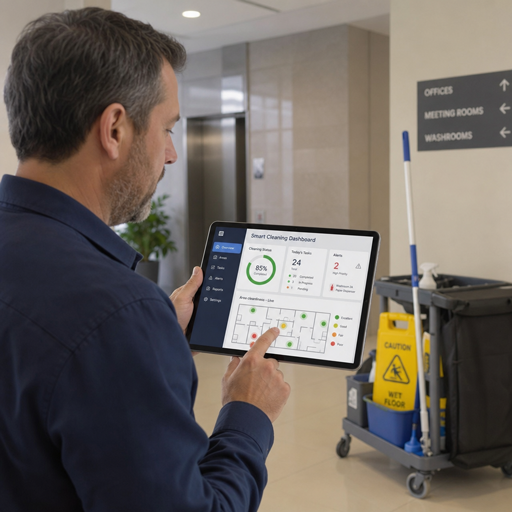
Restroom cleaning robotics brings automation, sensors, and sanitation-focused design into one of the hardest areas of facility cleaning: the public restroom. For facility teams, the goal is not to replace every human task, but to make cleaning more consistent, measurable, and easier to manage across busy buildings. This article explains how robotic cleaners fit into modern facility cleaning, where they work best, and what to consider before adding them to your cleaning program.
How can robotics improve restroom cleaning?
Restroom cleaning robotics can improve restroom operations by handling repeatable cleaning tasks with consistent routes, controlled chemical use, and digital reporting. In a space where soils, odors, touchpoints, and traffic patterns can change quickly, automated cleaning helps teams maintain a steadier baseline of cleanliness while staff focus on inspections, restocking, detail work, and occupant needs.
Restrooms are small, high-use environments with many surfaces packed into a limited footprint. Floors may be wet, corners collect debris, fixtures need careful attention, and the space may need to reopen quickly. Cleaning robots are designed to bring structure to that complexity by following planned workflows, detecting obstacles, and completing defined tasks with less variation from shift to shift.
That consistency matters because restroom cleanliness is one of the first things people notice in a building. A lobby can look polished, but a neglected restroom can change a visitor’s impression immediately. Smart cleaning systems give facility managers another tool for keeping standards visible, repeatable, and easier to verify.
The role of automation in modern facility cleaning
Automated cleaning is becoming more relevant as facilities balance labor availability, rising cleanliness expectations, and the need to document sanitation work. Robotics can help close the gap between what needs to be cleaned and what teams can realistically complete during busy operating hours.
In many buildings, restrooms are cleaned on a fixed schedule. That approach is simple, but it does not always match actual use. A restroom near an event space may need extra attention within an hour, while another on a quiet floor may stay clean longer. Sanitation technology, including connected sensors and robotic cleaners, supports a more responsive model: clean based on need, verify the task, and adjust resources where traffic is highest.
For facility cleaning teams, automation is most valuable when it removes repetitive strain and improves visibility. A robot that scrubs floors, maps routes, or logs cleaning activity can free staff to do higher-value work that still requires judgment. People remain essential for handling unexpected messes, cleaning delicate surfaces, resolving complaints, and making decisions that machines cannot.
What do restroom cleaning robots actually do?
Restroom cleaning robots typically perform targeted, repeatable jobs such as floor scrubbing, vacuuming, disinfectant application support, or scheduled cleaning route execution. Depending on the system, they may use sensors, mapping, programmed paths, docking stations, and reporting dashboards to complete and document their work.
Not every robot is built for the same task. Some robotic cleaners are designed for broad floor care in airports, hospitals, offices, schools, and retail properties. Others are more specialized for restroom environments, where they must navigate partitions, thresholds, drains, fixtures, and tight turning areas. The best fit depends on the layout, soil level, cleaning frequency, and expectations for human oversight.
Common functions may include:
- Autonomous floor cleaning Robots can scrub or vacuum restroom floors using planned routes. This can help maintain a cleaner baseline between deeper manual cleanings.
- Route mapping and navigation Many cleaning robots use sensors to identify walls, obstacles, and open pathways. This helps them operate safely in complex spaces when properly configured.
- Task scheduling Facility teams can assign cleaning windows during low-traffic periods, overnight shifts, or intervals between peak use.
- Usage and performance reporting Some systems provide logs that show when a task was completed, where the robot operated, and whether an issue interrupted the route.
- Integration with smart cleaning programs Robotics can be paired with occupancy sensors, work order systems, or inspection routines to support a more data-informed cleaning strategy.
The most practical applications are usually specific and well-defined. A robot may not “clean the entire restroom” in the same way a trained custodian would. Instead, it performs selected tasks reliably so the overall program becomes stronger.
Benefits for facility managers and cleaning teams
The value of restroom cleaning robotics is not only about speed. In many cases, the bigger benefit is predictability. When a robot handles an assigned route the same way each time, managers can build cleaning plans around a more dependable workflow.
A strong robotics program can support:
- More consistent outcomes: Automated cleaning reduces some of the variation that occurs when schedules are rushed or staffing is stretched.
- Better labor allocation: Staff can spend more time on touchpoints, restocking, inspections, spill response, and detailed sanitation.
- Improved documentation: Digital logs can support internal reviews and help supervisors understand what happened during a shift.
- Reduced physical strain: Floor cleaning and repetitive route work can be tiring. Robotics may reduce some repetitive manual effort.
- Higher responsiveness: When paired with smart cleaning data, teams can focus attention on restrooms that need service most.
These benefits are strongest when robotics is treated as part of a system, not a stand-alone fix. A cleaning robot can support a team, but it still needs setup, maintenance, oversight, and clear operating procedures. The people managing the program determine whether the technology becomes useful or merely impressive.
Sanitation technology works best with human expertise
Sanitation technology can improve facility operations, but it does not remove the need for trained cleaning professionals. Restrooms require judgment: knowing when a surface needs special attention, noticing a plumbing issue, identifying odor sources, and responding with care when occupants are present.
Human cleaners also understand context. A restroom after a sporting event, a school lunch period, or a conference break may need a different response than one on a quiet weekday morning. Robotic cleaners can follow instructions, but people decide what matters most in the moment.
The best results usually come from a blended workflow. Automation handles repeatable tasks. Staff handle inspection, detail cleaning, customer-facing decisions, and exceptions. Supervisors use data to refine staffing, adjust schedules, and confirm that the system is supporting the cleaning standard rather than complicating it.
Planning before implementation
Before investing in restroom cleaning robotics, facility leaders should look closely at the environment where the robot will operate. Restrooms are not identical, and a system that works well in one building may be unsuitable in another without layout changes, workflow adjustments, or staff training.
A useful planning checklist includes:
- Map the restroom layout: Note stall spacing, fixture placement, door swings, floor drains, tight corners, and storage areas.
- Identify the main cleaning problem: Decide whether the priority is floor care, labor support, documentation, odor control, or peak-time responsiveness.
- Review traffic patterns: Understand when restrooms are busiest and when automated cleaning can happen safely.
- Confirm surface compatibility: Cleaning methods, pads, brushes, and chemicals should match the flooring and finishes.
- Plan staff roles: Define who starts, monitors, cleans, charges, empties, refills, and troubleshoots the robot.
- Set realistic expectations: Robotics can strengthen a cleaning program, but it will not eliminate the need for manual cleaning.
- Measure results over time: Track complaints, inspection scores, labor allocation, and maintenance issues to see whether the program is working.
This preparation helps avoid a common mistake: buying technology before defining the operational problem. A clear use case makes it easier to choose the right system and train teams properly.
Practical use cases across different facilities
Restroom cleaning robotics can support many types of buildings, but the strongest use cases often appear in high-traffic environments. Airports, transit centers, universities, hospitals, offices, arenas, and retail locations all face the same basic challenge: restrooms must remain clean while people continue using them throughout the day.
In a large office, robotic cleaners may help maintain restroom floors during off-hours so staff can focus on daytime touchpoints and supply checks. In an education setting, automation may support cleaning between busy periods while custodial teams handle spills, waste, and detailed sanitation. In a healthcare or senior living environment, robotics may assist with consistency, although any cleaning program must follow the facility’s own infection prevention policies and approved procedures.
Retail and hospitality properties may use smart cleaning data to align restroom service with customer traffic. Rather than relying only on a fixed schedule, managers can identify patterns and adjust staffing where it has the most visible impact. This is where facility cleaning becomes more strategic: the team is not just cleaning more, but cleaning with better timing and clearer priorities.
Common challenges to consider
Like any operational technology, cleaning robots have limitations. They may require upfront planning, staff acceptance, physical space for docking or storage, and regular maintenance. If a restroom is too small, cluttered, or unpredictable, automation may be harder to justify.
There can also be workflow friction at first. Staff may need time to trust the equipment, understand alerts, and learn how to respond when a route is interrupted. Supervisors should communicate that robotics is a support tool, not a criticism of the cleaning team. When workers are included early, they can often identify practical issues that would be missed during a purely technical evaluation.
Cost is another factor, and it should be considered in relation to the full cleaning program. The question is not simply whether a robot is impressive. The better question is whether it improves consistency, reduces avoidable manual strain, supports documentation, or helps the team maintain standards during peak demand.
Building a smarter cleaning program
Smart cleaning is less about gadgets and more about better decisions. Robotics, sensors, inspections, and work orders should work together so facility leaders can see what is happening and respond effectively.
A strong program usually starts with a few defined goals. For example, a facility may want cleaner floors during high-traffic periods, better proof of completed tasks, or more efficient use of custodial labor. Once those goals are clear, the team can test robotic cleaners in a limited area, gather feedback, and refine the process before scaling.
It is also important to keep the occupant experience in mind. People want restrooms that are clean, stocked, odor-controlled, and available when needed. If automated cleaning disrupts access or feels confusing, the program may need adjustment. The technology should serve the facility experience, not become the experience.
The future of restroom cleaning robotics
The future of restroom cleaning robotics will likely be shaped by more practical integration. As cleaning robots become easier to manage, they may connect more closely with building systems, occupancy data, supply monitoring, and facility service platforms. That could help teams move from reactive cleaning to more predictive and coordinated sanitation work.
Even with better technology, the core purpose will remain simple: cleaner facilities, safer workflows, and more confidence that important tasks are being completed. The most successful organizations will be those that combine automation with trained people, clear standards, and continuous improvement.
Restrooms will always need human care, but robotics can make that care more focused. By using automated cleaning for repeatable tasks and keeping staff engaged in the work that requires judgment, facilities can create a more reliable sanitation program. For managers exploring restroom cleaning robotics, the best first step is to define the cleaning challenge clearly, then choose technology that supports the people responsible for solving it.