
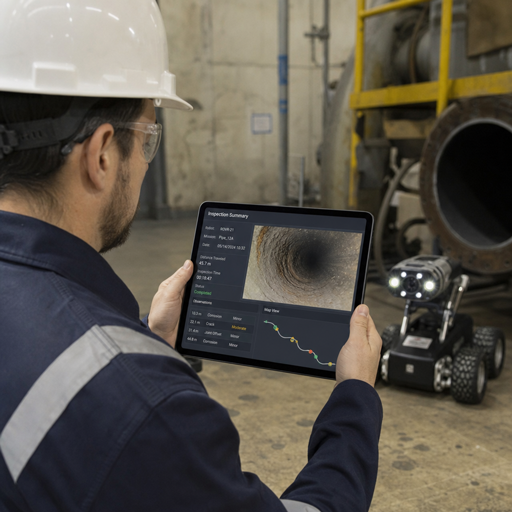
Legged robots are moving from research labs into practical industrial settings, and cost is a major reason why more teams are paying attention. Affordable quadruped robotics can help facilities explore inspection, monitoring, safety, mapping, and automation support without immediately committing to a highly customized robotics program. For manufacturers, warehouses, utilities, construction sites, and large campuses, the real opportunity is not replacing every human task but giving teams a mobile machine that can go where wheels, fixed sensors, or manual rounds are less efficient.
What makes quadruped robots useful in industrial automation?
Quadruped robots are useful in industrial automation because they combine mobility, sensing, and repeatable task execution in environments that are too irregular for many traditional mobile robots. Four-legged movement allows them to handle stairs, uneven flooring, grated walkways, ramps, thresholds, and cluttered areas more easily than wheeled platforms in many facilities. When paired with cameras, thermal sensors, microphones, gas detectors, lidar, or other payloads, they can collect consistent data while reducing the need for people to enter risky or hard-to-reach areas.
Industrial automation has often depended on fixed machines: robotic arms, conveyors, programmable logic controllers, machine vision stations, and permanently installed sensors. Those systems are powerful, but they are typically designed around a known process in a defined location. A quadruped robot adds a different kind of automation: mobile awareness. It can walk a route, inspect assets, document site conditions, and bring sensors to the place where information is needed.
This matters because many industrial problems are not purely about speed. They are about visibility, consistency, safety, and response time. A robot that performs scheduled patrols can help teams notice leaks, overheating equipment, blocked access points, abnormal sounds, or missing safety signage. The robot does not need to “run the factory” to be valuable. It may simply close the gap between occasional manual checks and continuous fixed monitoring.
Affordability changes the adoption conversation
For years, legged robotics felt out of reach for many operations teams. The technology was impressive, but the business case was difficult if the robot required expensive customization, specialized operators, and long integration cycles. As more affordable quadruped robotics options become available, the conversation shifts from “Can we justify a futuristic machine?” to “Where could a mobile robotic platform solve a real operational problem?”
Affordability does not only mean a lower purchase price. It also includes setup time, training effort, support needs, payload flexibility, maintenance expectations, and how easily the robot fits into existing workflows. A robot that is inexpensive to buy but difficult to deploy may still be costly in practice. A slightly more capable platform that reduces engineering time, integrates with existing systems, and supports multiple use cases may create better value.
Industrial buyers should think about affordability in layers:
- Acquisition cost: The initial cost of the robot, charging equipment, payloads, software, and accessories.
- Deployment cost: The time and labor needed to map routes, train users, set permissions, and test performance.
- Integration cost: The work required to connect robot data with dashboards, maintenance systems, security platforms, or reporting tools.
- Operating cost: Battery management, routine maintenance, replacement parts, software subscriptions, and staff oversight.
- Opportunity cost: The value of the inspections, data, or safety improvements the robot enables compared with current methods.
This broader view keeps teams from chasing the lowest sticker price. The goal is not simply to buy a robot cheaply. The goal is to use automation in a way that saves time, improves consistency, or reduces exposure to hazards without creating a new operational burden.
The strongest use cases start with routine movement and repeatable data
Quadruped robots perform best when the work is clearly defined, repeatable, and tied to measurable operational needs. They are not magic general-purpose workers. They are mobile platforms that become useful when assigned to specific routes, inspection points, sensing tasks, or response workflows.
A good first use case often looks simple. The robot follows a known path through a facility, stops at selected points, captures images or readings, and reports anomalies for human review. That may sound modest, but in large industrial environments, consistent data collection can be difficult. People get busy, routes are missed, notes vary by person, and some areas require extra safety preparation before entry.
Inspection rounds
Inspection is one of the most natural applications. A quadruped robot can check machinery, gauges, valves, panels, belts, pipes, storage areas, and access corridors. With the right sensors, it can help spot temperature differences, unusual vibration indicators, visible damage, fluid accumulation, or environmental changes.
The value is repeatability. When the same route is performed in the same way, teams can compare conditions over time. That makes trends easier to see and creates a clearer record of what changed, when it changed, and where it occurred.
Safety and hazard reduction
Some industrial environments expose workers to heat, noise, dust, chemicals, confined spaces, unstable ground, or active equipment. Robots can support safety by entering an area first, collecting visual or sensor data, and helping supervisors decide whether a person needs to go in.
This does not remove the need for trained personnel or proper safety procedures. Instead, it gives teams another layer of information before sending people into uncertain conditions. In many facilities, that is enough to make the technology worth serious consideration.
Security and perimeter monitoring
Large sites often require regular patrols after hours or across wide areas. A quadruped robot can support security teams by walking routes, streaming video, checking doors or gates, and documenting unusual activity. Unlike fixed cameras, it can change position. Unlike a person, it can perform repetitive patrols without fatigue.
The most practical approach is usually collaborative. The robot gathers information, while human security staff interpret the situation and decide what action to take. This keeps the system grounded in real operations rather than treating automation as a replacement for judgment.
Mapping and site documentation
Industrial sites change. Equipment moves, temporary barriers appear, construction progresses, and storage patterns shift. Quadruped robots can support mapping and documentation by capturing visual records or spatial data during scheduled walks.
For construction, utilities, mining support areas, logistics hubs, and complex manufacturing facilities, this creates a useful operational memory. Teams can compare current site conditions with previous records, verify progress, or locate potential access problems before they disrupt work.
Where does affordable quadruped robotics fit best?
Affordable quadruped robotics fits best in environments where mobility is difficult, inspection is frequent, and better data can improve decisions. The strongest candidates are not always the most advanced facilities. They are often sites where people still rely on manual rounds, paper notes, scattered photos, or fixed cameras that cannot see enough of the operation.
Facilities with stairs, narrow passages, grated floors, outdoor paths, changing layouts, or multiple inspection levels may benefit more than clean, flat, predictable spaces. If a wheeled robot can easily do the job, a quadruped may not be necessary. If fixed sensors already provide full coverage, a mobile robot may be redundant. The value appears when the robot can reach places that other systems cannot cover well.
Good-fit environments may include:
- Manufacturing plants with equipment spread across multiple levels
- Warehouses with long inspection routes and changing layouts
- Energy and utility sites with remote or hazardous assets
- Chemical and processing facilities where exposure reduction matters
- Construction projects that need frequent progress documentation
- Mining, aggregates, or heavy industrial sites with uneven terrain
- Large campuses that need security, facilities, or maintenance patrol support
The right fit also depends on organizational readiness. A facility that already uses digital work orders, maintenance software, dashboards, or structured inspection procedures may adopt robotic data more smoothly. A site with informal processes can still benefit, but it may need to define its inspection standards before the robot can deliver consistent value.
Choosing a practical first project
The first quadruped robotics project should be narrow enough to manage and important enough to matter. Many automation pilots struggle because they try to prove too much at once. A better approach is to choose one route, one operational problem, and one success measure.
Start with a task people already understand. If maintenance staff currently inspect a pump room twice a day, that route may be a practical pilot. If safety teams need visual confirmation before entering a restricted zone, that may also be a good starting point. The goal is to compare the robotic workflow with the existing workflow, not to build an entirely new process around novelty.
A simple pilot plan can include:
- Define the problem. Decide what the robot should help with, such as missed inspection points, delayed reporting, exposure to a hazard, or lack of visual records.
- Select the route. Choose a path with clear boundaries, known obstacles, and meaningful inspection targets.
- Choose the payload. Match sensors to the task, whether that means standard cameras, thermal imaging, acoustic monitoring, gas detection, or other tools.
- Set review rules. Decide who checks the data, how anomalies are flagged, and what triggers a human response.
- Measure the outcome. Compare time, consistency, data quality, safety impact, and operational usefulness against the current process.
- Document lessons. Record where the robot performed well, where it struggled, and what changes are needed before expanding.
This approach keeps expectations realistic. It also helps teams learn how employees interact with the robot, how data flows into decisions, and where integration will matter most.
The human side of robotic automation
Successful automation is rarely just a technology decision. People need to understand what the robot does, why it is being introduced, and how it will affect their work. Without that clarity, even useful robotics projects can meet resistance.
Industrial teams are more likely to accept a quadruped robot when it solves visible problems. If operators see that the robot handles dull, repetitive, risky, or time-consuming data collection, they may view it as support rather than a threat. If the purpose is vague, the technology can feel like a management experiment instead of a practical tool.
Managers can build trust by being specific:
- Explain which tasks the robot will perform and which tasks remain human-led.
- Involve maintenance, safety, security, and operations staff early in route planning.
- Ask frontline workers where inspections are inconvenient, risky, or often delayed.
- Train users on how to pause, redirect, or report issues with the robot.
- Share pilot results honestly, including limitations and adjustments.
The best robotics deployments make human expertise more valuable. A robot may collect images or readings, but people still interpret patterns, prioritize repairs, manage exceptions, and make judgment calls. In that sense, quadruped robotics is not just about automating movement. It is about giving skilled workers better information at the right time.
Key technical factors to evaluate
Industrial environments are demanding, so teams should evaluate more than walking performance. A robot may look capable in a demonstration but still struggle with lighting, connectivity, dust, water, battery life, narrow passages, or complex workflows. Practical evaluation should focus on the conditions the robot will actually face.
Important factors include:
- Mobility: Can the robot handle stairs, ramps, grates, floor transitions, obstacles, and outdoor surfaces found on site?
- Battery and charging: Is the runtime sufficient for planned routes, and can charging fit naturally into shift patterns?
- Payload support: Can it carry the sensors needed for the use case without reducing performance too much?
- Navigation: Can it repeat routes reliably, avoid obstacles, and operate safely around people and equipment?
- Connectivity: Will Wi-Fi, private networks, or remote communication work in the intended areas?
- Data handling: Can the robot store, transmit, label, and export useful information without creating manual data cleanup?
- Safety controls: Are there clear stop functions, speed limits, operating zones, and user permissions?
- Serviceability: Are parts, support, maintenance procedures, and training accessible enough for the facility’s team?
A checklist like this prevents the decision from being driven by novelty. The robot’s walking ability is important, but the full workflow matters more. If the data cannot be trusted, reviewed, or acted upon, the deployment will not create lasting value.
Common mistakes that slow adoption
One common mistake is treating the robot as a complete solution rather than a platform. A quadruped robot needs a defined job, the right sensors, a data workflow, and people who know how to use the output. Without those pieces, it becomes an impressive machine searching for a problem.
Another mistake is starting with the most complex environment first. A facility may want to send the robot into the hardest area immediately, but early pilots are better used for learning. Teams should begin with manageable routes, prove reliability, then expand into more challenging conditions.
A third mistake is ignoring integration. If inspection results remain trapped in separate files or dashboards, employees may not use them. The robot should support existing maintenance, safety, or security processes whenever possible. Even a basic handoff, such as a clear report with time-stamped images and recommended review steps, is better than a stream of unorganized data.
Finally, teams sometimes underestimate change management. Workers may have practical concerns about safety, reliability, job impact, or extra workload. Addressing those concerns early can make the difference between a stalled pilot and a useful automation program.
Building a business case without overpromising
A strong business case for quadruped robotics should focus on real operational improvements rather than futuristic claims. The most credible arguments are tied to tasks the organization already performs, risks it already manages, or information it already needs.
Useful business-case questions include:
- Which manual inspection routes consume the most time?
- Which areas are hazardous, unpleasant, or difficult to access?
- Which equipment failures would be easier to prevent with more consistent monitoring?
- Which compliance, safety, or maintenance records are currently incomplete or inconsistent?
- Which teams would use the robot’s data, and how would they act on it?
- What current tools already solve the problem, and where do they fall short?
The answer may show that a robot is not needed for every site. That is still a useful result. Industrial automation works best when technology is matched to the right problem. Affordable quadruped robotics becomes compelling when the same platform can support several meaningful tasks over time, such as inspection during the day, security patrol at night, and documentation during shutdowns.
The future is incremental, not instant
The future of quadruped robotics in industry will likely be built through practical improvements rather than sudden transformation. Better sensors, easier setup, stronger autonomy, safer human-robot interaction, and more accessible pricing can all help adoption grow. But the facilities that benefit most will still be the ones that define clear use cases and build disciplined workflows around the technology.
This incremental path is good news for industrial teams. They do not need to redesign an entire operation to begin learning. They can start with one inspection route, one safety challenge, or one documentation problem. From there, they can expand only when the robot proves useful.
The most important mindset is to treat the robot as part of the automation ecosystem. It can complement fixed sensors, cameras, maintenance systems, safety procedures, and human expertise. When those pieces work together, a quadruped robot becomes more than a mobile gadget. It becomes a flexible tool for seeing, checking, and understanding industrial spaces.
Practical takeaway
Affordable quadruped robotics is opening the door for more industrial teams to experiment with legged automation in a realistic way. The strongest opportunities are not vague promises of fully autonomous facilities, but focused applications where mobile sensing, repeatable inspection, and safer access create practical value.
For any organization considering this technology, the best next step is simple: choose a real operational problem, define a limited pilot, involve the people who know the site, and measure whether the robot improves the workflow. If it does, the path to broader industrial automation becomes much clearer.