
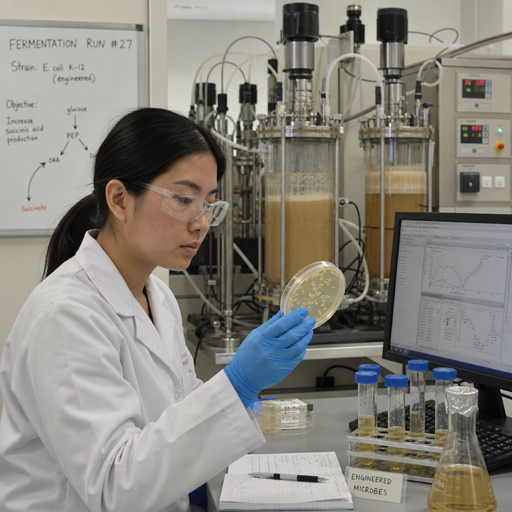
Synthetic biology and precision fermentation are reshaping how people think about food, materials, medicine, and manufacturing. At their core, these fields use biological systems as programmable platforms, combining genetic engineering, data analysis, dna synthesis, and fermentation know-how to make useful molecules with greater control. This article explains how the field evolved, why it matters, and what businesses, researchers, and curious readers should understand as biotechnology innovations move from the lab into real-world production.
What is synthetic biology, and why does it matter?
Synthetic biology is an area of biotechnology that designs, builds, and refines biological systems to perform specific tasks. Instead of only observing nature or modifying organisms one gene at a time, scientists use engineering principles to create biological functions that can be tested, improved, and scaled. It matters because living systems can make complex molecules, adapt to varied inputs, and operate under conditions that are often more efficient than conventional chemical manufacturing.
The field sits at the intersection of biology, engineering, computation, and manufacturing. A synthetic biology project may begin with a desired output, such as an enzyme, protein, flavor molecule, material precursor, or therapeutic compound. Researchers then identify the biological pathways that could produce it, design genetic instructions, insert those instructions into a host organism, and optimize the process until the organism performs reliably.
This shift is important because it changes biology from something primarily discovered into something increasingly designed. That does not mean biology becomes simple or fully predictable. Cells are still complex, responsive systems. But with better bioinformatics tools, faster dna synthesis, and more precise genetic modification methods, researchers can now test ideas in ways that were previously slow, expensive, or impossible.
The early foundations of engineered biology
The evolution of synthetic biology did not happen in a single leap. It grew from decades of work in molecular biology, fermentation science, genetics, and computing. Early discoveries about DNA structure and gene expression gave scientists a basic language for understanding how cells store and use information. From there, genetic engineering made it possible to move genes between organisms and observe how those changes affected biological function.
Fermentation has an even longer history. People have used microbes for thousands of years to make bread, beer, yogurt, cheese, vinegar, and other foods. Traditional fermentation relies on naturally occurring microbial activity. Modern biotechnology builds on that foundation by selecting, improving, or engineering microbes to make targeted compounds more consistently.
The emergence of recombinant DNA methods helped connect these two worlds. Once scientists could add specific genetic instructions to bacteria, yeast, or other cells, fermentation tanks became more than vessels for food processing. They became production environments for valuable biological molecules. This laid the groundwork for today’s precision fermentation systems.
Over time, the field became more systematic. Researchers began treating DNA as editable code, metabolic pathways as designable circuits, and microbes as programmable production platforms. This mindset is central to synthetic biology. It moves beyond asking what an organism already does and begins asking what it could be designed to do.
From genetic engineering to design-build-test-learn cycles
Genetic engineering made it possible to alter organisms. Synthetic biology made that process more modular, iterative, and data-driven. The difference is not always a clean boundary, but the engineering mindset is what makes the modern field distinct.
A traditional genetic modification project might focus on adding or removing one trait. A synthetic biology project often involves designing a larger biological system, testing many variations, and improving performance through repeated cycles. These cycles are commonly described as design, build, test, and learn.
In practice, that means teams move through a structured process:
- Design the biological function. Researchers define the desired output and map the genes, enzymes, regulatory elements, and host organism that may be involved.
- Build genetic constructs. Using dna synthesis and molecular biology methods, they assemble genetic instructions that can be introduced into cells.
- Test performance. Engineered cells are evaluated for productivity, stability, growth, resource use, and product quality.
- Learn from the data. Bioinformatics tools and laboratory results reveal which designs worked, which failed, and where the next improvements should focus.
- Repeat and optimize. The best-performing designs are refined, scaled, or redirected based on the project goal.
This approach has made biological engineering more predictable, though not effortless. Cells are not machines in the traditional sense. A change that improves one pathway may slow growth, create unwanted byproducts, or disrupt another cellular process. That is why metabolic engineering is so important. It looks at the cell as a network of reactions rather than a container for a single inserted gene.
Precision fermentation as a practical application
Precision fermentation uses microorganisms such as yeast, fungi, or bacteria to produce specific molecules with a high degree of control. The “precision” comes from designing or selecting microbes for a defined output, then managing the fermentation environment so the organism produces that output efficiently.
This approach is different from traditional fermentation, where the microorganism itself or the transformed food is often the final product. In precision fermentation, the target is usually a specific ingredient or molecule. After fermentation, the desired compound is separated, purified, and formulated for use.
Examples can include proteins, enzymes, fats, flavor compounds, vitamins, pigments, fragrances, or material inputs. The same broad concept can support food technology, medicine, agriculture, cosmetics, industrial chemistry, and specialty materials. The details vary widely, but the core logic remains the same: use biology to make a molecule that would otherwise be difficult, expensive, resource-intensive, or inconsistent to obtain.
Precision fermentation also shows why synthetic biology is not just a laboratory discipline. A strain that performs well in a small flask must still work in larger fermenters, meet quality requirements, tolerate process conditions, and fit into supply chains. The science matters, but so do manufacturing, regulation, cost, safety, and consumer acceptance.
How does precision fermentation actually work?
Precision fermentation works by giving a microorganism the genetic instructions needed to produce a target molecule, then growing that microorganism in a controlled environment where it can express those instructions. The organism consumes feedstock, carries out cellular metabolism, and produces the desired compound, which is then recovered and processed for its intended use.
The process usually begins with target selection. A team identifies a molecule with useful properties, such as a protein that provides texture, an enzyme that improves processing, or a compound that contributes aroma. Scientists then study how that molecule is made in nature or how it could be made through an engineered pathway.
Next comes strain design. Researchers choose a host organism based on factors such as safety history, growth behavior, genetic tractability, secretion ability, and compatibility with industrial fermentation. Yeast, for example, is often useful for producing certain proteins, while bacteria may be well suited for other molecules. Fungi and other microbes can also play important roles depending on the product.
The host is then modified using genetic engineering methods. This may involve inserting a gene, adjusting regulatory sequences, redirecting metabolic flux, or removing competing pathways. The goal is not only to make the molecule, but to make it consistently and at a level that can eventually support production.
Once a promising strain exists, fermentation conditions are optimized. Temperature, pH, oxygen, nutrients, mixing, and timing can all affect performance. After fermentation, downstream processing separates the target molecule from cells, media, and byproducts. For many products, this purification and formulation step is just as important as the biology itself.
The role of dna synthesis in accelerating the field
Dna synthesis has become one of the major enablers of modern biotechnology innovations. Instead of relying only on DNA found in nature, scientists can order designed sequences and test them directly. This speeds up experimentation and allows researchers to explore many design options.
In earlier eras, building genetic constructs could be slow and limiting. Researchers often had to isolate genes from organisms, modify them manually, and assemble them through labor-intensive processes. Today, synthetic DNA can support faster prototyping. A team can design multiple gene variants, regulatory elements, or pathway combinations and compare their performance.
Dna synthesis also supports codon optimization, pathway reconstruction, protein engineering, and the creation of genetic libraries. In practical terms, that means scientists can ask more ambitious questions. What happens if an enzyme is slightly changed? Which promoter gives the right expression level? Can a pathway from one organism be redesigned for another? How many variations should be tested before choosing a production strain?
The answer is rarely obvious at the start. Biology involves context. A DNA sequence that works well in one host may behave differently in another. A gene that expresses strongly may burden the cell. A pathway that looks efficient on paper may create bottlenecks in practice. Dna synthesis helps researchers explore that design space faster, but it does not replace the need for careful testing and interpretation.
Bioinformatics tools turn biological complexity into usable insight
Bioinformatics tools help researchers make sense of large and complex biological datasets. Synthetic biology depends on these tools because modern biological design generates more information than humans can interpret manually. Genomes, protein sequences, pathway maps, expression profiles, and fermentation data all need computational support.
In a typical project, bioinformatics may help identify genes that encode useful enzymes, compare sequences across organisms, predict protein function, or model metabolic pathways. It can also help detect unwanted changes, confirm strain identity, and analyze performance data from experiments.
The value of bioinformatics is not only speed. It helps scientists make better design choices before entering the lab. For example, if a team wants to produce a certain molecule, computational analysis can suggest candidate enzymes, likely pathway bottlenecks, or host organisms that may be compatible with the desired chemistry. That can reduce wasted effort and focus experimentation on the most plausible routes.
Useful applications include:
- Genome mining: searching microbial genomes for genes that may produce valuable enzymes or compounds.
- Pathway modeling: estimating how carbon, energy, and precursors move through a cell.
- Protein comparison: identifying sequence patterns that may affect stability, activity, or specificity.
- Strain verification: checking that engineered organisms contain the intended genetic design.
- Fermentation analytics: connecting process conditions with biological performance and product output.
Bioinformatics tools are especially powerful when combined with automation and machine learning, but the core principle is simple: better data can lead to better biological designs. The challenge is ensuring that predictions are tested carefully. Computational models guide decisions; they do not eliminate uncertainty.
Metabolic engineering connects design to productivity
Metabolic engineering focuses on optimizing the network of biochemical reactions inside a cell. If genetic engineering is about changing instructions, metabolic engineering is about making the cell’s internal economy support the desired output. That distinction matters because microbes have their own priorities. They naturally allocate energy and resources toward growth, maintenance, and survival, not necessarily toward making a commercial ingredient.
To improve productivity, scientists may increase the supply of precursor molecules, reduce competing pathways, balance enzyme expression, improve cofactor availability, or help the cell tolerate the product it is making. These interventions require a systems-level view. A pathway does not operate in isolation; it draws on the larger metabolism of the host.
For example, imagine a microbe engineered to produce a specialty oil, sweetener component, or aroma molecule. Adding the necessary genes may prove that production is possible, but the first version might produce only a small amount. Metabolic engineering asks why. Is the cell lacking a precursor? Is an enzyme too slow? Is the product toxic? Is too much carbon being diverted elsewhere? Each answer suggests a different improvement strategy.
This is where iteration becomes essential. Researchers may adjust gene expression, test alternate enzymes, change growth media, or modify fermentation conditions. A successful strain is usually not the result of one edit. It is the outcome of many decisions that bring biology, process engineering, and product requirements into alignment.
Biotechnology innovations are moving beyond single products
Many early biotechnology successes centered on individual molecules. That pattern still matters, but the field is expanding toward platforms. A platform approach means developing reusable tools, organisms, workflows, or fermentation processes that can support more than one product.
This is one reason synthetic biology attracts attention across industries. Once a company or research group can design, build, test, and scale one molecule in a host organism, some of that knowledge may help with related molecules. The same chassis organism, data systems, fermentation infrastructure, or purification experience can become the basis for a broader pipeline.
These biotechnology innovations are also encouraging new collaborations. Food scientists, computational biologists, chemical engineers, materials experts, regulatory specialists, and manufacturing teams often need to work together. A molecule is only useful if it can be produced, purified, approved where required, formulated, transported, and adopted by customers or end users.
The result is a more integrated model of innovation. Instead of separating discovery from production, teams increasingly consider manufacturability earlier in the design process. They ask whether a molecule can be made at scale, whether the host organism is suitable, whether purification is realistic, and whether the final product meets functional needs.
That practical orientation is important. A brilliant biological concept may not become a viable product if it is too expensive, unstable, hard to purify, or difficult to explain. The evolution of synthetic biology is therefore also the evolution of expectations: performance in the lab is only one milestone on a longer path.
Where are synthetic biology and precision fermentation used today?
Synthetic biology and precision fermentation are used wherever biological systems can make, modify, or discover useful molecules. The most visible areas include food ingredients, pharmaceuticals, enzymes, agriculture, cosmetics, biomaterials, and research tools, though the maturity of each application varies.
In food, precision fermentation can help produce proteins, enzymes, fats, flavors, colors, or nutritional ingredients. Some products aim to replicate a familiar function, such as texture, taste, foaming, melting, or binding. Others support processing efficiency or formulation flexibility. The appeal is not only novelty; it is the ability to make specific ingredients with consistent quality.
In medicine and life sciences, engineered cells and fermentation systems have long supported the production of biologically derived compounds. Synthetic biology adds new design capabilities, enabling more sophisticated control over pathways, proteins, and cellular behavior. The same principles can also support research tools, diagnostics, and therapeutic development, though medical applications require particularly rigorous validation and oversight.
In agriculture, engineered biology can support crop inputs, soil-related applications, animal nutrition, and biological alternatives to certain conventional chemicals. These uses must account for environmental interactions, field variability, regulation, and public trust. A lab result does not automatically translate into agricultural performance.
In materials and industrial chemistry, microbes can produce building blocks for polymers, coatings, textiles, fragrances, pigments, and other specialty products. This area is attractive because biology can sometimes make complex structures with selectivity that is difficult to achieve through traditional chemistry. However, cost, scale, and performance remain decisive.
The promise is real, but the challenges are practical
The excitement around synthetic biology can sometimes make the field sound inevitable. In reality, the path from concept to product is demanding. The promise is real, but it depends on solving biological, technical, economic, regulatory, and communication challenges.
A helpful way to understand the field is to separate possibility from readiness. Biology may be capable of producing a molecule, but that does not mean the process is already efficient, affordable, approved, or scalable. Precision fermentation must compete not only with scientific alternatives but with established supply chains, customer expectations, and price pressures.
Common challenges include:
- Strain performance: engineered organisms must produce enough of the target molecule without becoming unstable or unhealthy.
- Scale-up: behavior in a small lab vessel may not match performance in larger fermenters.
- Feedstock selection: inputs need to be available, compatible, and economically sensible.
- Downstream processing: separating and purifying the product can be complex and costly.
- Quality control: biological products require careful monitoring for consistency and safety.
- Regulatory pathways: requirements vary by product type, use case, and market.
- Public understanding: consumers and stakeholders may have questions about genetic modification, safety, labeling, and environmental impact.
These challenges do not undermine the field. They define the work ahead. The most successful applications are likely to be those where the biological route offers a clear functional advantage, a credible manufacturing pathway, and a product that people understand and value.
Responsible innovation depends on transparency and context
Synthetic biology raises important questions because it deals with living systems, food, health, ecosystems, and industrial production. Responsible innovation requires more than technical success. It requires clarity about what is being made, how it is made, how it is assessed, and what tradeoffs are involved.
One source of confusion is the phrase genetic modification. For some audiences, it sounds like a single category, but the reality is more nuanced. A genetically modified production microbe may be used inside a controlled fermentation facility and removed from the final purified ingredient. That is different from releasing an engineered organism into an environment. Both may involve genetic engineering, but the risk questions, controls, and regulatory considerations are not identical.
Communication matters because people do not evaluate biotechnology only through technical details. They also consider trust, purpose, fairness, labeling, environmental claims, and who benefits. Overstating sustainability, hiding uncertainty, or using vague language can damage confidence. Clear explanations are more durable than hype.
Responsible teams should be ready to explain:
- What organism is used and why it was selected.
- Whether the final product contains the production organism.
- What safety and quality checks are applied.
- What the product is intended to replace or improve.
- What is known, what is still being optimized, and what claims are not being made.
This kind of transparency does not slow progress. It strengthens it. Biotechnology innovations earn trust when they are communicated honestly and evaluated carefully.
Precision fermentation and sustainability claims need careful framing
Many discussions of precision fermentation focus on sustainability. The logic is understandable. If microbes can make certain molecules without relying on conventional extraction, animal production, or resource-intensive supply chains, there may be environmental benefits. However, those benefits depend on the specific product, process, energy source, feedstock, facility, yield, logistics, and comparison being made.
A responsible claim should be specific. It is not enough to say a fermentation-derived ingredient is automatically better for the planet. The right question is better than what, under which conditions, and measured how? A process that performs well in one region or facility may look different in another. Energy use, purification needs, and ingredient concentration can all affect the outcome.
That nuance should not be seen as a weakness. It is how mature industries evaluate impact. Synthetic biology and precision fermentation can contribute to more resilient production systems, but the strongest cases will be built on evidence, not broad assumptions.
For businesses and communicators, the practical takeaway is simple: avoid sweeping environmental promises unless they are supported by product-specific analysis. Focus instead on credible benefits, such as controlled production, ingredient consistency, supply diversification, or reduced dependence on scarce biological sources, when those benefits apply.
The next phase will be shaped by integration
The next phase of synthetic biology is likely to be less about isolated breakthroughs and more about integration. Better dna synthesis, smarter bioinformatics tools, improved strain engineering, advanced fermentation equipment, and more efficient downstream processing all need to work together. Progress in one area helps, but production depends on the whole system.
Integration also means connecting science with market reality earlier. Teams need to understand the final application before committing to a biological design. A protein for food texture, an enzyme for industrial processing, and a molecule for a cosmetic formulation may require very different purity levels, cost structures, regulatory pathways, and performance standards.
As the field matures, several capabilities will matter:
- Faster learning cycles. Teams that can design, build, test, and interpret results efficiently will move through uncertainty more effectively.
- Better host organisms. Robust microbial platforms can reduce friction across multiple products.
- Process-aware biology. Strains should be designed with fermentation and purification realities in mind.
- Clearer product positioning. Technical novelty is not enough; products need a clear reason to exist.
- Stronger public communication. Adoption depends partly on whether people understand and trust the technology.
The field’s future will not be defined by one tool or one organism. It will be defined by how well many tools work together to solve practical problems.
Key takeaways for readers and decision-makers
Synthetic biology can feel complex because it blends several disciplines at once. A simple way to think about it is that researchers are learning to program biology with increasing precision, while precision fermentation provides one of the most practical ways to manufacture the results.
For anyone evaluating the field, these takeaways are useful:
- Synthetic biology is an engineering approach to biology. It uses design, testing, and iteration to create useful biological functions.
- Precision fermentation is a production method. It uses microorganisms to make specific molecules in controlled fermentation systems.
- Genetic engineering is one tool within a larger workflow. The broader process may also involve computational design, metabolic engineering, fermentation optimization, and purification.
- Dna synthesis accelerates experimentation. It allows researchers to build and test designed genetic sequences more efficiently.
- Bioinformatics tools help guide decisions. They turn biological data into insights that can inform strain design and process development.
- Scale matters as much as discovery. A molecule made in the lab still has to be produced reliably, economically, and safely.
- Communication must be precise. Claims about sustainability, safety, or performance should match the evidence and the specific use case.
These points help separate the real potential of the field from oversimplified narratives. The technology is powerful, but its value comes from disciplined application.
A grounded view of a fast-moving field
The evolution of synthetic biology and precision fermentation is a story of convergence. Molecular biology made genes understandable. Genetic engineering made them editable. Dna synthesis made designed sequences easier to build. Bioinformatics tools made complex biological data more usable. Metabolic engineering made cells more productive. Fermentation gave all of that work a path toward manufacturing.
Together, these advances are changing how useful molecules are discovered and produced. They are not magic shortcuts, and they do not remove the need for safety, quality, regulation, or economic discipline. But they do create new possibilities for making ingredients, materials, and biological products with greater intention and control.
The most important shift may be cultural as much as technical. Biology is increasingly being treated as a design space, not only a natural system to study. For researchers, businesses, and consumers, that brings both opportunity and responsibility. The future of synthetic biology will depend on what we can build, how carefully we build it, and how clearly we explain why it matters.