
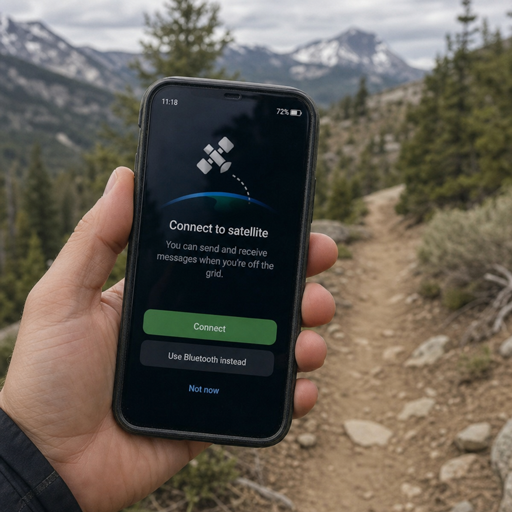
Direct-to-device satellite messaging lets people send and receive essential messages when cellular coverage is weak, unavailable, or interrupted. For hikers, road trippers, boaters, field workers, and families who travel beyond familiar signal bars, it offers a practical layer of communication without requiring a traditional satellite phone. This guide explains how the technology works, where it helps, what to expect from a satellite text service, and how to think about direct to device satellite messaging solutions for everyday use.
What is direct-to-device satellite messaging?
Direct-to-device satellite messaging is a form of satellite connectivity that allows a compatible everyday device, usually a smartphone or small connected device, to exchange messages through satellites rather than relying only on ground-based cell towers. In simple terms, it gives users a way to send direct messaging when terrestrial networks are unavailable or unreliable.
Traditional satellite communication often meant carrying dedicated equipment. Direct-to-device models are designed to feel more familiar: open a supported messaging experience, follow the device prompts, and send a short text-style message when the device can connect with an overhead satellite. The goal is not to replace high-speed mobile data in cities. It is to extend basic communication into the gaps where ordinary networks fade.
That distinction matters. Satellite messaging is built around reliability, reach, and low-bandwidth communication. It is most useful for short updates, check-ins, location sharing, and emergency contact when “no service” would otherwise mean no practical way to communicate.
The everyday problem it solves
Exploration is not always extreme. A dead zone can appear on a weekend trail, a rural highway, a lake, a campsite, a desert overlook, or a storm-affected neighborhood. Many people do not think of themselves as adventurers, yet they still move through places where ordinary mobile coverage can be inconsistent.
Direct-to-device satellite messaging helps bridge that gap. It gives everyday explorers a backup channel for moments when a call will not connect and a standard text will not send. That can reduce uncertainty for the person traveling and for the people waiting to hear from them.
The practical value is often simple:
- Letting someone know you arrived safely at a trailhead or campsite.
- Sending a delayed check-in when a road trip passes through rural coverage gaps.
- Sharing location context if plans change.
- Requesting help when a minor issue becomes more serious.
- Maintaining basic contact during temporary network outages.
The benefit is not constant conversation. It is the ability to communicate something important at the moment communication matters most.
How satellite connectivity works in plain language
Most mobile devices communicate with nearby cell towers. Those towers connect into larger ground networks that carry calls, texts, and data. When there is no tower nearby, or when terrain blocks the signal, the device may have no route to the network.
Satellite connectivity adds another route. Instead of reaching sideways toward a terrestrial tower, the device reaches upward to a satellite passing overhead or positioned to provide service to a region. The satellite then helps relay the message through the provider’s network and onward to the recipient or service endpoint.
For users, the experience is intentionally simplified, but a few realities shape how it works:
- Line of sight matters. Open sky usually improves the chance of a successful connection.
- Message size matters. Satellite text service is often optimized for short, essential messages.
- Timing can vary. A message may take longer than a standard cellular text, especially in challenging conditions.
- Device position matters. Some services may prompt users to point or orient the device for a better connection.
- Service availability matters. Coverage, supported devices, and supported message types depend on the specific solution.
This is why satellite messaging is best understood as resilient communication, not a full replacement for everyday broadband mobile service.
Direct messaging beyond the cell tower
Direct messaging through satellite is valuable because it fits into familiar behavior. People already know how to send short updates. They know how to tell a friend, “Running late,” “I’m okay,” or “Need help.” Direct-to-device satellite messaging brings that familiar action into places where standard networks cannot always follow.
For everyday explorers, this can change how trips are planned. Instead of assuming silence is unavoidable, travelers can create a communication plan that includes when they will check in, who they will contact, and what messages matter most. That plan is especially helpful when traveling alone, visiting remote areas, or moving through regions with unpredictable signal.
A good messaging plan can include:
- A primary contact. Choose one person who knows your route and expected timing.
- A backup contact. Add someone else in case the first person is unavailable.
- Simple message templates. Prepare short phrases such as “I’m okay,” “Delayed but safe,” or “Changing route.”
- Location expectations. Decide when location sharing is helpful and when it is unnecessary.
- Emergency criteria. Know when to stop sending updates and use emergency services or local rescue channels instead.
This planning turns messaging technology into a practical safety habit rather than a feature people remember only when trouble starts.
Who benefits most from satellite text service?
Satellite text service is most useful for people who spend time outside dependable cellular coverage but do not necessarily need a full satellite phone or complex expedition equipment. It serves the wide middle ground between everyday mobile texting and specialized remote communication systems.
Outdoor recreation is the obvious use case. Hikers, backpackers, trail runners, hunters, anglers, paddlers, campers, and overlanders often move through areas where coverage can disappear quickly. Even a short route can pass behind ridges, through forests, or across open terrain with limited infrastructure.
Road travelers also benefit. Rural highways, national parks, mountain passes, and long desert roads can produce long stretches of weak or nonexistent coverage. A basic message can help reassure family, coordinate arrival times, or explain delays.
There are also practical non-recreational uses. Property owners, photographers, field teams, volunteers, utility workers, and community responders may operate in areas where communications are uneven. In those contexts, direct to device satellite messaging solutions can support coordination without adding unnecessary complexity.
Practical scenarios for everyday explorers
The clearest way to understand satellite messaging is to imagine the moments when it helps. These are not always dramatic emergencies. Often, they are ordinary situations made stressful by the lack of communication.
A delayed hike
A day hike runs longer than planned because the trail is muddy and slower than expected. The hiker is safe, but a family member expects a check-in by late afternoon. With satellite messaging, the hiker can send a short update explaining the delay and reducing unnecessary worry.
A rural road detour
A driver takes a scenic route and finds a road closure. Cellular coverage is weak, and navigation may not update reliably. A short satellite message can tell a friend or lodging host that arrival will be later than expected.
A campsite with no signal
A group reaches a campsite where phones show no bars. They do not need to browse, stream, or make routine calls. They simply want to let someone know they arrived safely and will check in again the next morning.
A minor problem that needs support
A cyclist gets a flat tire in an area with no usable cell signal. The situation is not life-threatening, but it requires assistance. Satellite text service may allow the cyclist to share a location and request a pickup.
In each scenario, the value comes from sending the right message at the right time, not from maintaining constant contact.
Strengths and limitations to understand
Direct-to-device satellite messaging is powerful, but it is not magic. Understanding its limits helps users rely on it appropriately and avoid false confidence.
Its strengths include:
- Coverage extension. It can work beyond the reach of standard cell towers where supported.
- Familiar interaction. It can make satellite messaging feel closer to normal texting.
- Low equipment burden. It may reduce the need for separate dedicated satellite devices in some situations.
- Useful check-ins. It supports simple updates that keep others informed.
- Emergency relevance. It can provide a communication option when standard networks are unavailable.
Its limitations may include:
- Not all devices are compatible. Users must confirm that their phone or device supports the service.
- Not all regions are covered. Satellite connectivity depends on the provider’s network and service footprint.
- Not all messaging features are supported. Photos, group chats, rich media, or long conversations may be unavailable or impractical.
- Connection may take patience. Trees, canyons, buildings, weather, terrain, or device orientation can affect performance.
- It does not replace preparation. Maps, batteries, clothing, water, first aid, and route planning still matter.
A good rule is to treat satellite messaging as a backup communication layer. It strengthens a plan, but it should not be the entire plan.
How should everyday explorers choose a solution?
Everyday explorers should choose direct to device satellite messaging solutions by matching the service to their actual travel patterns, device habits, safety needs, and comfort with simple field procedures. The best option is the one that works where they go, on the devices they carry, with instructions they can follow under stress.
Start with coverage. A service that works well in one region may not be the best fit somewhere else. Think about the places you actually visit: local trails, rural roads, lakes, mountains, desert areas, coastal routes, or international destinations. Coverage should be evaluated around real use, not vague assumptions.
Next, consider the messaging experience. Some users need only emergency messaging and occasional check-ins. Others may want two-way direct messaging with family, location sharing, or preset messages. The more clearly you define your use case, the easier it becomes to compare options without being distracted by features you will rarely use.
Use this checklist before depending on any satellite text service:
- Confirm that your device and operating system are supported.
- Review where the service is available and where it is not.
- Understand whether messages are one-way, two-way, emergency-only, or general purpose.
- Practice sending a non-urgent message before a trip if the service allows it.
- Learn how to improve sky visibility and device orientation.
- Check battery settings before leaving coverage.
- Tell your contact what kind of message to expect and what to do if they do not receive one.
- Keep traditional safety tools with you, including offline maps and power backup.
Choosing well is less about chasing the most advanced messaging technology and more about reducing uncertainty in the places you actually explore.
Best practices before you leave coverage
A reliable communication plan starts before the first dead zone. Direct-to-device satellite messaging works best when users prepare contacts, expectations, and equipment in advance.
Download maps before the trip. Save route details, trail information, reservation details, and any instructions you may need without a live data connection. Satellite messaging may help you communicate, but it is not a substitute for offline navigation.
Charge your device and carry backup power. Cold weather, navigation apps, camera use, and poor signal searching can drain batteries quickly. A satellite message cannot help if the device is dead.
Share your plan with someone responsible. Include your route, destination, expected return time, vehicle description if relevant, and what they should do if you miss a check-in. Make the plan specific enough to help, but simple enough to remember.
Finally, rehearse the basics. Know where the satellite messaging feature is located, what prompts look like, and whether the device requires a clear view of the sky. The middle of a stressful situation is the wrong time to learn the interface.
Smart message habits in remote areas
When bandwidth is limited, clarity matters. Short messages are easier to send, easier to understand, and easier for recipients to act on. Avoid vague updates if the recipient might need to make a decision.
Useful messages often include three details:
- Status: Are you safe, delayed, injured, lost, or requesting help?
- Location: Can you share a location, landmark, trail name, road name, or last known point?
- Next action: Are you staying put, continuing, turning back, waiting for pickup, or escalating to emergency help?
For example, “Delayed but safe. Turning back at north ridge. Expect return around dusk” is more useful than “Running late.” If you need help, be direct. Say what happened, what you need, and whether there is immediate danger.
It also helps to keep emotion out of operational messages. Stress is normal, but the person receiving the message needs actionable information. Simple, calm wording can prevent confusion.
Safety, privacy, and realistic expectations
Any communication technology used in remote places carries responsibility. Direct-to-device satellite messaging may share location or status information, so users should understand privacy settings, contact permissions, and how messages are routed within the specific service they use.
Emergency expectations are especially important. If a service includes emergency messaging, learn what happens after a request is sent. Know whether you will be connected to emergency coordinators, local services, a private response center, or another process. Do not assume every service works the same way.
Realistic expectations also protect decision-making. Satellite messaging can support safer exploration, but it should not encourage risky choices. Weather, terrain, daylight, physical condition, and group experience still matter. The presence of satellite connectivity should make a good plan stronger, not justify a poor plan.
The future of messaging technology for explorers
Messaging technology is moving toward simpler, more resilient connections. As direct-to-device satellite messaging develops, the everyday user experience is likely to feel less specialized and more integrated into familiar devices and apps. That matters because safety tools are most useful when people actually understand and use them.
The broader promise is not just remote adventure. Satellite connectivity can also support communities affected by outages, travelers moving through rural infrastructure gaps, and professionals who work beyond reliable networks. The same basic idea applies across these situations: when ground networks are absent or interrupted, another path for essential communication can make a meaningful difference.
For everyday explorers, the most important shift is psychological. Places without cell service no longer have to feel completely disconnected. With the right preparation and expectations, satellite messaging can turn silence into a manageable communication gap.
Key takeaways for everyday use
Direct-to-device satellite messaging is best understood as a practical backup for essential communication beyond cellular coverage. It supports short, useful messages when standard networks are unavailable, helping people check in, coordinate, and request assistance.
Before relying on it, remember:
- It is designed for essential messaging, not full mobile internet replacement.
- Compatibility, coverage, and supported features vary by solution.
- Clear sky access and device positioning can affect performance.
- Short, specific messages are usually most effective.
- A satellite text service works best alongside offline maps, power backup, and a shared trip plan.
For hikers, campers, drivers, boaters, and anyone who regularly crosses in and out of coverage, direct to device satellite messaging solutions can add confidence without adding much complexity. The goal is simple: keep people reachable enough to make better decisions when the usual network disappears.
