
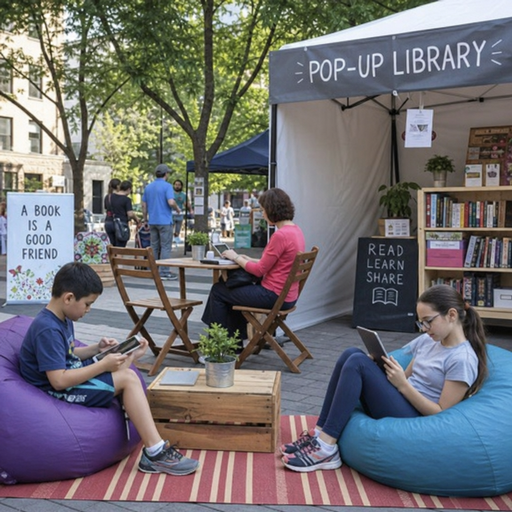
Open-air digital libraries bring reading, learning, and discovery into parks, plazas, campuses, festivals, and community spaces. They combine outdoor libraries with simple digital library access, giving visitors a welcoming place to browse, read, listen, watch, and connect without needing a traditional building. Whether you are planning a cultural activation, public program, school event, or neighborhood installation, this page helps you explore how an immersive pop-up library can work.
How can an open-air digital library serve your community?
An open-air digital library helps people meet books, archives, media, and learning resources where they already gather. Instead of asking visitors to enter a fixed indoor location, it creates a visible, approachable reading environment in the flow of everyday life. The format is especially useful when you want to encourage open-air reading, introduce open-access libraries, support digital inclusion, or turn a temporary space into a place of curiosity.
A pop-up model also makes the experience flexible. A quiet corner can support individual reading, while an interactive screen or listening station can invite group exploration. A community history collection, children’s story zone, digital zine shelf, language-learning station, or local author showcase can all live within the same footprint when the design is planned around access, comfort, and clear navigation.
Designed for reading, browsing, and shared discovery
Open-air reading works best when it feels easy to join. Visitors should be able to understand what is available within moments: where to sit, how to scan a code, how to open a collection, and what to do if they need help. The goal is not to replace permanent libraries, but to extend their reach through portable, inviting, and digitally connected spaces.
A strong installation can include:
- Digital shelves: QR codes, tablets, kiosks, or displays that guide visitors to ebooks, audiobooks, articles, archives, videos, or curated collections.
- Comfortable reading zones: Seating, shade, weather-aware layouts, and calm visual design that make staying feel natural.
- Immersive prompts: Audio stories, projection, augmented reality trails, themed pathways, or tactile wayfinding that help people explore content actively.
- Community curation: Featured local voices, public-domain works, multilingual materials, student projects, or partner collections.
- Simple access points: Clear instructions for digital library access, including options for visitors who are new to scanning codes or using shared devices.
- Flexible programming: Story hours, drop-in workshops, reading circles, author talks, archive days, or self-guided learning moments.
The best experiences feel both public and personal. Someone might stop for two minutes to scan a poem, while another visitor may spend an hour listening to an oral history recording. Both uses matter, and both should be supported by the space.
Spaces where pop-up libraries make sense
Outdoor libraries can be adapted to many settings because the concept is modular. A small installation may use signs, benches, printed prompts, and mobile-friendly collections. A larger environment may add staffed support, solar charging, projection, audio stations, or a full schedule of activities.
Consider an open-air digital library for:
- Public parks and plazas where casual foot traffic can become a reading audience.
- School and university campuses that want to expand learning beyond classrooms and study halls.
- Museums, galleries, and cultural festivals seeking a low-barrier way to connect visitors with deeper context.
- Community centers and housing courtyards where neighbors can gather around shared resources.
- Transit-adjacent spaces where short-form reading, audio, and local information can fit naturally into waiting time.
- Seasonal events and markets where families, tourists, and residents can discover collections in a relaxed setting.
A practical example: a city park could host a weekend reading garden with weather-safe signage, benches, children’s story prompts, and QR-linked collections. During the day, families browse picture books and nature guides. In the evening, adults follow an audio trail featuring local memories, poems, and neighborhood history.
Access stays at the center
Open-access libraries are most valuable when people can actually use them. That means the experience should be planned for different devices, ages, comfort levels, languages, and abilities. A beautiful installation that is hard to navigate will lose the very people it hopes to welcome.
Helpful access choices include:
- Use plain-language signs that explain each step without jargon.
- Offer short links or printed instructions alongside QR codes.
- Provide staff, volunteers, or peer guides during busy periods when possible.
- Include low-tech reading options such as printed excerpts, prompts, maps, or take-home lists.
- Make seating, pathways, and displays easy to approach.
- Curate content for different reading times, from quick five-minute pieces to longer works.
- Label collections clearly by theme, audience, language, or format.
Digital library access should feel like an invitation, not a test. Visitors should know whether materials are free to open, whether a library card is needed, and how to continue reading later. When access rules are clear, people are more likely to explore with confidence.
Immersive features turn collections into experiences
The immersive layer is what makes open-air digital libraries more than outdoor reading rooms. It gives collections a sense of place. A soundscape can connect a poem to a garden path. A projection can animate archival photos on a temporary wall. A map can guide visitors from one story station to the next.
These features should serve the content rather than distract from it. The most effective immersive choices help visitors slow down, notice details, and understand why a collection matters. For a local history project, that might mean listening posts with neighborhood voices. For a children’s program, it might mean a scavenger hunt connected to digital stories. For a campus event, it might mean curated research pathways that lead from a public display to deeper academic resources.
A simple path from idea to installation
Launching an open-air digital library starts with clear choices. The format can be modest, temporary, and easy to test before it grows. What matters most is matching the location, audience, content, and technology to the purpose of the project.
A practical planning path includes:
- Define the audience. Decide whether the installation is for families, students, commuters, residents, festival visitors, or a mixed public audience.
- Choose the content focus. Curate around a theme such as local history, wellness, children’s reading, public art, climate, poetry, or lifelong learning.
- Select the access model. Decide how visitors will reach materials through QR codes, devices, kiosks, printed prompts, or a combination.
- Design the physical experience. Plan seating, flow, shade, signage, power needs, sound, visibility, and accessibility.
- Prepare support materials. Create instructions, collection labels, program schedules, and simple take-home reminders.
- Test with real visitors. Watch where people pause, where they feel unsure, and which collections attract attention.
- Refine and repeat. Use feedback to improve navigation, content selection, and the balance between quiet reading and interactive discovery.
This step-by-step approach keeps the project manageable. It also allows organizers to learn what the community wants before investing in a larger or longer-running installation.
Build a library experience people can step into
Open-air digital libraries make reading visible, social, and flexible. They help open-access libraries reach beyond walls while giving visitors a memorable way to discover stories, knowledge, and local culture. With thoughtful content, accessible design, and a clear visitor journey, a temporary outdoor space can become a meaningful gateway to lifelong learning.
Start with the place you want to activate and the people you want to welcome. From there, shape a pop-up digital library that makes access simple, reading inviting, and discovery worth staying for.
