
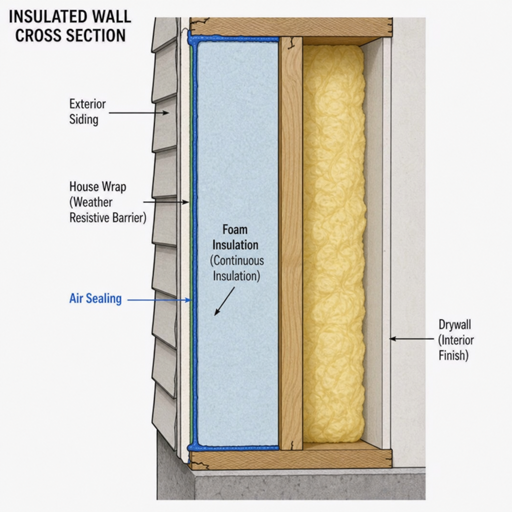
Choosing insulation is no longer only about keeping heat in during winter and out during summer. The materials behind the wall, roof, floor, or mechanical system can affect energy use, indoor comfort, moisture control, and the environmental footprint of a building. Eco-friendly hfo thermal insulation is one option gaining attention because it pairs strong thermal performance with blowing-agent technology designed to reduce climate impact compared with older foam systems.
For builders, facility managers, homeowners, and designers, the practical question is simple: how do you improve building efficiency without ignoring sustainability? HFO-based insulation can be part of that answer when it is selected carefully, installed correctly, and matched to the needs of the project.
What makes HFO thermal insulation eco-friendly?
HFO thermal insulation is considered more eco-friendly because many HFO blowing agents are designed to have a much lower global warming impact than previous generations of foam blowing agents. In foam insulation, the blowing agent helps create the closed-cell structure that resists heat flow. When that chemistry shifts toward lower-impact options, the insulation can support energy efficiency while reducing one of the environmental concerns associated with traditional foam products.
That does not mean every product labeled “green” is automatically the best choice. True environmentally safe insulation depends on the full system: the insulation material, the blowing agent, the application method, the building conditions, the expected service life, and the installer’s skill. A well-specified product that performs for decades can reduce heating and cooling demand, while a poorly installed product may waste material and underperform.
Eco-friendly hfo thermal insulation is most often discussed in relation to spray foam and rigid foam products. These materials can deliver high thermal resistance in relatively thin layers, which makes them useful where space is limited or where air sealing and insulation need to work together. For many projects, that combination is the reason HFO technology has become part of the broader sustainable insulation conversation.
The role of blowing agents in insulation performance
To understand HFO insulation, it helps to understand what a blowing agent does. Foam insulation is made by creating tiny cells within the material. Those cells trap gas and slow the movement of heat, which is what gives the insulation its thermal value.
Older foam systems often used blowing agents that raised environmental concerns. HFO technology was developed as a newer approach, aiming to maintain useful foam performance while improving the environmental profile of the product. In plain terms, the goal is to get the insulation benefits people expect from foam without relying on higher-impact chemistry where better options are available.
The blowing agent is only one part of the story, though. Density, thickness, substrate preparation, curing conditions, and air leakage all influence real-world results. A high-quality product can still disappoint if it is installed unevenly, sprayed under poor conditions, or used in the wrong assembly.
Thermal insulation is both a comfort and energy decision
Thermal insulation slows heat transfer through walls, roofs, floors, ducts, tanks, and other building components. When it works well, indoor temperatures are easier to maintain, HVAC systems cycle less aggressively, and rooms feel more consistent throughout the day. That comfort benefit is often the first thing occupants notice.
Energy performance is the longer-term advantage. Better insulation can help reduce the demand placed on heating and cooling equipment, especially in buildings with air leaks, poorly insulated rooflines, or temperature-sensitive spaces. Because energy savings depend on climate, building design, utility costs, and installation quality, it is better to think in practical terms: insulation helps reduce waste when it is part of a complete building envelope strategy.
Why sustainable insulation choices matter now
Buildings last a long time, and insulation is usually hidden once construction is complete. That means today’s material choices can shape energy use, maintenance needs, and comfort for many years. Sustainable insulation is not just a trend or a marketing phrase; it is a way of thinking about performance, durability, health, and environmental responsibility together.
Green insulation decisions often begin with one concern, such as reducing heating bills or choosing lower-impact materials. But the best results come from balancing several priorities at once. A product should meet code and performance needs, suit the assembly, resist moisture problems where appropriate, and support the owner’s sustainability goals.
This is where eco insulation planning becomes useful. Instead of asking only, “What has the highest R-value?” a better question is, “What insulation system will perform reliably in this specific building?” HFO-based foam can be a strong candidate when a project needs high thermal resistance, air sealing, and a reduced blowing-agent impact compared with older foam technologies.
How does HFO insulation compare with traditional options?
HFO insulation differs from many traditional insulation options because it focuses on advanced foam performance while using newer blowing-agent technology. Fiberglass, mineral wool, cellulose, and older foam systems all have their place, but they solve problems in different ways. HFO-based products are especially relevant when the project calls for foam’s air-sealing ability, moisture resistance, or high insulating value in a limited space.
Traditional fibrous insulation can be cost-effective and widely available, but it generally does not stop air movement unless paired with a separate air barrier. Cellulose is often valued as an eco-friendly insulation option because of its recycled content, yet it must be protected from moisture and installed at the correct density. Mineral wool offers fire resistance and sound control benefits, while foam products may be chosen for continuous insulation, difficult cavities, or assemblies where air leakage is a major concern.
HFO-based foam does not make other materials obsolete. It simply gives project teams another tool. The right choice depends on what the building needs most.
Consider HFO thermal insulation when the project requires:
- High thermal resistance in a compact space, such as narrow wall cavities, rooflines, or retrofit areas where adding depth is difficult.
- Air sealing and insulation in one application, especially where gaps, cracks, and penetrations contribute to energy loss.
- Continuous insulation, such as exterior wall or roof assemblies that need to reduce thermal bridging.
- Moisture-aware design, where the insulation must work with vapor control, drainage, and ventilation strategies.
- A lower-impact foam option, when foam performance is needed but environmental considerations are a priority.
In contrast, other green insulation materials may be a better fit when a project prioritizes recycled content, acoustic control, non-foam assemblies, or budget simplicity. A smart specification compares the whole assembly, not only the product label.
Practical benefits of eco-friendly HFO thermal insulation
Eco-friendly hfo thermal insulation can support several project goals at once. The most obvious benefit is thermal performance, but the deeper value comes from the way foam insulation can interact with the building envelope. When properly installed, it can reduce heat flow and help limit uncontrolled air movement, two major drivers of comfort problems and energy waste.
Another benefit is design flexibility. Foam insulation can be used in areas where batt insulation may be difficult to fit neatly, such as rim joists, irregular cavities, roof decks, and mechanical penetrations. Rigid foam boards using advanced blowing-agent technology can also be incorporated into continuous insulation strategies for walls and roofs.
For owners who care about sustainability, the appeal is not only that the insulation performs well. It is that the product may help align efficiency goals with a more responsible material choice. When a building uses less energy to stay comfortable, the insulation contributes to ongoing environmental benefits over its service life.
Key advantages to discuss with a professional
Before choosing any insulation system, it is worth reviewing the following benefits in the context of your project:
- Energy efficiency potential HFO-based foam can reduce heat transfer and help improve the performance of the building envelope. The actual impact depends on climate, thickness, air sealing, and the condition of the existing structure.
- Air leakage control Spray foam applications can help seal small gaps and irregular spaces. This is especially valuable in older buildings or complex framing areas where air movement is hard to control with separate materials.
- Space-saving performance Some foam systems deliver useful thermal resistance without requiring thick assemblies. That can help in retrofits, commercial spaces, and compact building details.
- Compatibility with high-performance design HFO insulation can support projects focused on improved envelopes, better comfort, and reduced mechanical loads when used as part of a coordinated design.
- Reduced blowing-agent concern Compared with older foam technologies, HFO systems are designed to address environmental impact associated with blowing agents. This is one reason they are often included in green insulation discussions.
These benefits are strongest when the insulation is installed by trained professionals who understand product requirements, safety procedures, and building science.
Where HFO-based eco insulation is commonly used
HFO-based products can be useful in both residential and commercial projects, especially where the insulation layer needs to do more than fill a cavity. For example, a homeowner renovating an attic may want improved comfort and air sealing under the roof deck. A commercial building owner may need continuous insulation to support energy performance across a large wall area.
Common use cases include attic rooflines, exterior walls, crawl spaces, rim joists, foundation walls, refrigerated or temperature-controlled spaces, and mechanical equipment insulation. The exact product type matters. Spray foam, rigid board, and specialty foam products are not interchangeable, even when they share similar environmental goals.
In retrofits, HFO insulation may help solve problems that standard materials struggle with, such as irregular framing, hard-to-reach gaps, or thermal bridges. In new construction, it can be designed into the assembly from the beginning, making it easier to coordinate with air barriers, vapor control layers, cladding, and mechanical systems.
Is environmentally safe insulation always foam-based?
Environmentally safe insulation is not always foam-based. Many sustainable insulation options exist, including cellulose, mineral wool, wood fiber, cork, sheep wool, recycled textile insulation, and other materials depending on the region and application. HFO-based foam is one path toward eco-friendly insulation, but it should be evaluated alongside other options rather than treated as the only green solution.
The best choice depends on the building’s priorities. If the main issue is air leakage in a tight, awkward space, HFO spray foam may be practical. If the project emphasizes low embodied impact, recycled content, vapor-open assemblies, or easy future removal, another material may be more suitable.
A responsible insulation decision considers trade-offs. Foam products can offer strong performance, but they also require proper handling and installation. Natural or recycled materials may appeal from a sustainability perspective, but they still need correct detailing to avoid moisture, settling, or performance gaps.
Choosing the right green insulation for your project
Choosing green insulation starts with the building, not the product brochure. Climate zone, wall design, roof structure, moisture exposure, ventilation, and local code requirements all influence what will work. A material that performs beautifully in one assembly may create problems in another if it traps moisture or conflicts with vapor control strategy.
Start by identifying the primary performance goal. Are you trying to reduce utility costs, improve comfort, control condensation, meet an energy standard, reduce environmental impact, or solve an air leakage problem? Most projects involve several goals, but ranking them helps narrow the options.
Then compare insulation choices based on practical criteria:
- Thermal performance: Does the material provide enough resistance to heat flow for the assembly and climate?
- Air sealing: Will it reduce drafts by itself, or does it require a separate air barrier?
- Moisture behavior: Does the assembly need to dry inward, outward, or both?
- Installation quality: Is qualified labor available for the selected system?
- Durability: Will the material maintain performance over time under expected conditions?
- Environmental profile: Does the product support sustainability goals through lower-impact chemistry, recycled content, long service life, or energy savings?
- Code compliance: Does the system meet fire, thermal, vapor, and safety requirements for the application?
This checklist helps prevent a common mistake: choosing insulation based on one attractive feature while ignoring how the whole assembly functions.
Installation quality makes the difference
Even the best sustainable insulation can fail to deliver if it is installed poorly. Gaps, voids, compression, overspray, uneven thickness, moisture contamination, and missed air leaks can all reduce performance. With foam products, installation conditions such as temperature, substrate cleanliness, ventilation, and application thickness are especially important.
Professional installation matters because HFO-based systems are technical products. Installers need to follow manufacturer guidance, use proper protective equipment, manage jobsite ventilation, and apply the material at the correct thickness. After installation, the work should be checked for coverage, adhesion, curing, and compatibility with fire protection or ignition barrier requirements where applicable.
For homeowners and building owners, it is reasonable to ask questions before work begins. A good contractor should be able to explain what product is being used, why it fits the assembly, how the area will be prepared, and what safety steps will be followed. Clear communication reduces surprises and helps ensure the finished insulation performs as intended.
A balanced view of eco-friendly insulation claims
The word “eco-friendly” can be useful, but it can also be vague. A product may have one strong environmental feature while still requiring careful evaluation in other areas. HFO-based insulation is often promoted because of its improved blowing-agent profile, but the final decision should consider material quantity, building performance, installation waste, indoor air practices, and long-term durability.
Green insulation is most meaningful when it helps a building use less energy, stay comfortable, and avoid premature replacement or repairs. A slightly better label does not matter much if the product is misapplied. On the other hand, a thoughtfully chosen insulation system can support comfort and sustainability at the same time.
The most reliable approach is to avoid extremes. Do not assume all foam is unsustainable, and do not assume all products marketed as environmentally safe insulation are equal. Look for clear product information, appropriate certifications where relevant, and guidance from qualified professionals who understand the building assembly.
The takeaway for better building performance
Eco-friendly hfo thermal insulation offers a practical path for projects that need strong thermal insulation while paying closer attention to environmental impact. It is especially useful when foam performance, air sealing, compact assemblies, or continuous insulation are important to the design. Used correctly, it can be part of a broader sustainable insulation strategy that improves comfort and reduces energy waste.
The best results come from matching the insulation to the building, not chasing a label. Compare options, ask about installation quality, consider moisture and code requirements, and look at the full life of the assembly. Whether you choose HFO-based foam or another form of eco insulation, the goal is the same: a more efficient, durable, and comfortable building with a lighter environmental footprint.