
The Agentic AI Foundation has brought MCP certifications into focus with the launch of the Model Context Protocol Associate, or MCPA. It is positioned as the first official certification for the Model Context Protocol, giving developers, platform teams, and AI governance professionals a vendor-neutral way to validate MCP knowledge. For anyone comparing MCP with a microsoft certification path or searching for a microsoft mcp exam, the key is to separate two meanings of “MCP”: Model Context Protocol and Microsoft Certified Professional.
What are MCP certifications, and why do they matter?
MCP certifications validate a person’s understanding of how the Model Context Protocol connects AI applications with external tools, data sources, services, prompts, and workflows. The new MCPA focuses on practical knowledge of MCP architecture, component interaction, implementation considerations, and responsible use, rather than on one vendor’s cloud platform or product stack. The Agentic AI Foundation announced MCPA as a foundational, vendor-neutral credential and the first certification launched by the foundation.
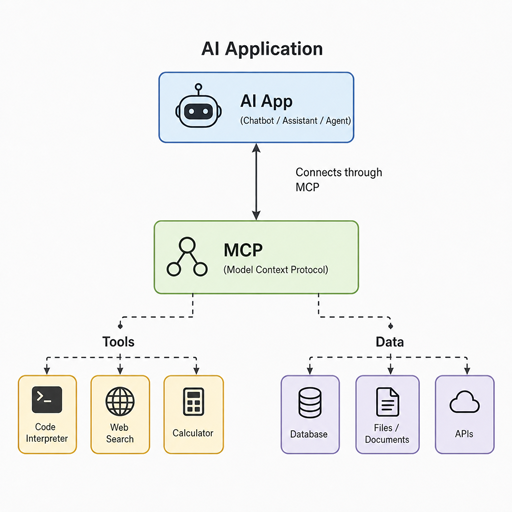
That matters because MCP is quickly becoming part of the infrastructure layer for agentic AI. The official MCP documentation describes the protocol as an open-source standard for connecting AI applications to external systems, giving AI tools a consistent way to access data, invoke tools, and perform tasks. In plain English: MCP helps AI agents move beyond chat and interact with real systems in a more standardized way.
The MCPA is the first official MCP certification
The Model Context Protocol Associate is designed for people who need to understand MCP at the protocol level. That includes software engineers building AI assistants, platform engineers supporting tool integrations, solution architects designing agentic systems, and security or governance professionals reviewing how AI agents interact with enterprise resources.
According to the Linux Foundation’s certification page, MCPA is intended to prove understanding of MCP clients, servers, tools, resources, and interaction lifecycles. It is also aligned with emerging AI engineering, platform engineering, and AI governance roles, which makes it broader than a single product certification.
The practical value is not just the badge. Preparing for the exam forces candidates to learn the vocabulary and mental model behind MCP: what a host does, how a client talks to a server, when tools are invoked, how permissions should be considered, and where trust boundaries appear. Those concepts are increasingly important as teams connect AI systems to calendars, databases, code repositories, customer systems, search tools, and internal workflows.
What the exam covers
The MCPA exam is organized around five domains. The current Linux Foundation page lists the following weights: MCP Fundamentals at 16%, Architecture & Components at 14%, Interactions & Execution at 26%, Security & Governance at 24%, and Use Cases & Ecosystem at 20%.
A useful way to study is to translate those domains into working questions:
- MCP Fundamentals: What problem does MCP solve, and why does interoperability matter?
- Architecture & Components: How do hosts, clients, servers, schemas, and structured data fit together?
- Interactions & Execution: What happens during tool invocation, response handling, and error handling?
- Security & Governance: Where are the trust boundaries, and how should permissions, consent, auditability, and risk controls be handled?
- Use Cases & Ecosystem: Which roles use MCP, where is it being adopted, and how portable are MCP-based integrations?
This structure is helpful because MCP is not just another API topic. It sits between AI applications and the outside systems they use. A candidate who only knows how to copy a sample server may struggle with the governance and lifecycle questions. A candidate who understands message flow, component responsibilities, and security implications will be better prepared for real implementation work.
Is there a microsoft mcp exam?
There is no indication that the Agentic AI Foundation’s MCPA is a Microsoft certification, and the phrase “microsoft mcp exam” can be confusing because MCP has historically also meant Microsoft Certified Professional. In this new AI context, MCP usually means Model Context Protocol. If your goal is protocol-specific validation, MCPA is the official MCP certification to watch; if your goal is Microsoft platform validation, follow Microsoft Learn’s role-based certification structure.
Microsoft does now reference Model Context Protocol in its AI certification ecosystem. For example, the Microsoft Certified: Multi-Agent AI Solutions Expert certification page says candidates should be familiar with open-source frameworks and standards including Model Context Protocol, along with Microsoft Agent Framework, RAG, and LangGraph. It also lists Azure AI Apps and Agents Developer Associate as a prerequisite and AI-500 as the required exam for that expert certification.
So the paths are related, but not interchangeable. MCPA is about understanding MCP as an open protocol. A Microsoft certification path is about proving skills in Microsoft technologies and job-role scenarios, even when MCP appears as one topic inside a broader AI architecture.
MCP certifications list: what counts today
If you are building an MCP certifications list, keep it clean and avoid mixing unrelated badges. A practical list today looks like this:
|
Category |
Credential or path |
Best fit |
|---|---|---|
|
Official MCP credential |
Model Context Protocol Associate (MCPA) |
Developers, platform engineers, and governance teams who need protocol-level MCP knowledge |
|
Microsoft AI path with MCP exposure |
Azure AI Apps and Agents Developer Associate, then Microsoft Certified: Multi-Agent AI Solutions Expert |
Practitioners building production multi-agent systems in the Microsoft ecosystem |
|
General AI or agent courses |
Vendor, platform, or community training that includes MCP modules |
Learners who want preparation, but not necessarily an official MCP credential |
This distinction is important for resumes and hiring screens. “Microsoft certified professional” has a different meaning from being certified in the Model Context Protocol. Likewise, microsoft certifications mcp searches may surface Microsoft AI certifications that mention MCP, but those should not be described as official MCP certifications unless the issuing body says so.
MCP certification cost and exam details
The current MCPA exam-only price is listed at $250 on the Linux Foundation training page. The same page also lists a $495 bundle that includes the exam plus a full-access subscription, along with details such as online delivery, multiple-choice format, one retake, 12 months of exam eligibility, and certification validity for two years.
Candidates should confirm the latest MCP certification cost before purchasing because training providers can update pricing, bundles, discounts, taxes, and regional availability. The Linux Foundation page also mentions conference-related savings and subscription bundles, so the best option may depend on whether you only need the exam or also want structured learning resources.
From a planning perspective, the exam-only route makes sense if you already build with MCP or have studied the specification closely. The bundle may be more attractive if you want broader training access and expect to use additional Linux Foundation learning products.
How to prepare without wasting time
MCPA is described as a beginner-level credential, but “beginner” does not mean “no technical context.” The certification page recommends familiarity with JSON-RPC or similar message-based protocols, LLM APIs, agentic AI concepts, basic security topics such as API keys and OAuth 2.1, and the ability to read MCP server manifests and capability definitions.
A focused preparation plan should include:
- Read the current MCP introduction and specification. Start with the official documentation so your understanding matches the protocol, not a third-party summary.
- Map the core components. Be able to explain hosts, clients, servers, tools, resources, prompts, transports, and message flow in your own words.
- Build or inspect a small MCP server. Even a simple example makes lifecycle and capability concepts easier to remember.
- Study security scenarios. Pay attention to permissions, consent, token handling, auditability, and what can go wrong when an agent can act on external systems.
- Use the exam domains as a checklist. Spend more time on Interactions & Execution and Security & Governance because they carry the largest listed weights.
The goal is not to memorize buzzwords. The goal is to reason through what happens when an AI application asks an MCP server for context, invokes a tool, receives a response, or encounters an error.
Choosing between MCPA and Microsoft certifications
Choose MCPA if your work centers on open agentic AI infrastructure, cross-platform tool integrations, or the protocol details behind MCP clients and servers. It is the clearer option when a job description asks for MCP knowledge directly or when your team needs a shared baseline for responsible MCP implementation.
Choose a Microsoft certification path if your work is primarily in Azure, Microsoft Foundry, Microsoft 365, or enterprise environments standardized on Microsoft’s AI stack. In that case, MCP knowledge may still help, but it supports a broader set of Microsoft-specific design, deployment, governance, and production responsibilities.
Many professionals may eventually want both. MCPA can demonstrate protocol literacy, while Microsoft credentials can demonstrate platform execution. Together, they tell a stronger story: you understand the open standard and can apply agentic AI patterns inside a major enterprise ecosystem.
The takeaway
The arrival of MCPA gives the AI community a clearer benchmark for MCP skills. As agentic systems become more connected to real tools and business workflows, teams need people who understand not only how to make integrations work, but how to make them understandable, portable, and safer to operate.
For now, treat MCPA as the official starting point for MCP certifications. Treat Microsoft AI credentials as adjacent paths when your work depends on Microsoft platforms. Most importantly, be precise with the acronym: in modern agentic AI, MCP usually means Model Context Protocol—not the older Microsoft Certified Professional label.