
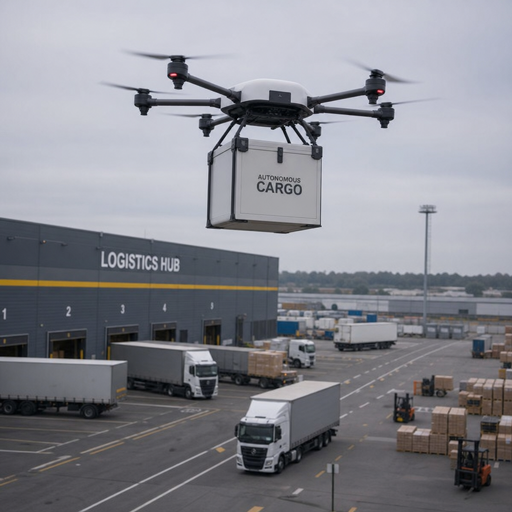
Autonomous Cargo Drones are moving from futuristic concept to practical logistics tool, especially for routes where speed, reach, and flexibility matter. The biggest shift is not simply that aircraft can fly without a pilot onboard; it is that software, sensors, airspace systems, and supply chain workflows are beginning to work together. For logistics leaders, the opportunity is clear: faster unmanned cargo transport in the places where roads, labor availability, distance, or urgency create friction.
What makes autonomous cargo drones different from ordinary delivery drones?
Autonomous cargo drones are designed to carry goods with a higher level of onboard decision-making, route automation, monitoring, and fleet coordination than a basic remotely piloted drone. Ordinary delivery drones may complete short package drops, but cargo-focused systems are built around reliability, payload protection, repeatable routes, and integration with dispatch, inventory, and compliance processes. That difference matters because the future of drone logistics depends less on eye-catching test flights and more on predictable, safe, scalable operations.
A modern cargo drone is not just an aircraft. It is part of a connected logistics system that may include automated loading, route planning, detect-and-avoid capability, remote supervision, digital flight approvals, maintenance tracking, and proof-of-delivery records. In that sense, autonomous delivery drones are becoming aerial nodes in a wider drone supply chain rather than standalone gadgets.
The business case is built around hard-to-serve routes
The strongest early use cases for unmanned cargo transport are not always the most glamorous. They are often routes where conventional transportation is slow, expensive, weather-sensitive, labor-intensive, or geographically constrained. A drone does not need to replace every truck route to create value; it only needs to improve the right route.
Healthcare logistics is a natural example. Time-sensitive items such as lab samples, medicines, and medical supplies often move between hospitals, clinics, pharmacies, and labs. In remote or congested areas, smart delivery drones can offer a more direct path than ground transport, reducing the number of handoffs and making urgent movement easier to plan.
Industrial and infrastructure operations are another strong fit. Mines, offshore sites, energy facilities, ports, farms, and large campuses often need parts, tools, documents, or samples moved across difficult terrain. Autonomous Cargo Drones can help teams avoid unnecessary vehicle trips, reduce downtime, and keep technicians focused on work instead of transport.
Retail delivery will continue to attract public attention, but it may not be the only or even the first widespread success story. The future is likely to include a mix of business-to-business routes, medical corridors, emergency response missions, warehouse-to-store replenishment, and selective consumer delivery where regulations, economics, and community acceptance line up.
Autonomy will reshape the pilot’s role
The most important operational change is the move from direct piloting to remote supervision. A human may still authorize flights, monitor exceptions, oversee safety, and intervene when needed, but the aircraft handles more of the routine tasks: takeoff, navigation, obstacle awareness, route adjustment, landing, and status reporting.
That is why the phrase “control systems reduce pilot workload autonomous commercial cargo drones” points to a real industry priority. Better control systems reduce pilot workload in autonomous commercial cargo drones by automating repetitive flight tasks, surfacing only the decisions that need human attention, and helping one operations team manage a fleet more efficiently.
This does not remove the need for skilled people. It changes the skills required. Operators will need knowledge of aviation safety, data systems, maintenance planning, weather impacts, emergency procedures, cybersecurity, and customer service. The pilot of the future may look more like an air operations manager supported by intelligent software.
Regulations will decide how fast the market scales
Technology can advance quickly, but cargo drones must earn public and regulatory trust before they can scale. In the United States, small drone operations under Part 107 still include visual-line-of-sight requirements unless an operator has specific authority to do otherwise, which is why routine beyond-visual-line-of-sight operations remain central to industry growth.
The FAA has been working toward broader BVLOS operations, including a proposed rule intended to normalize certain low-altitude beyond-visual-line-of-sight drone flights. The proposal matters because scalable cargo networks generally need aircraft to fly beyond where a pilot can physically see them.
Airspace management is just as important as aircraft certification. The FAA describes UAS Traffic Management as a collaborative ecosystem for low-altitude drone operations that supports functions such as flight planning, authorization, surveillance, and conflict management, especially for BVLOS flights. NASA’s UTM research also helped demonstrate how digital flight intent, localized weather, communications networks, and detect-and-avoid capabilities could support package delivery and other drone operations.
In Europe, EASA’s Specific Operations Risk Assessment framework is used to classify operational risk and identify mitigations for specific-category drone operations. That risk-based approach is important because cargo flights vary widely: a rural medical route, an urban rooftop delivery, and an offshore spare-parts mission do not create the same safety profile.
The drone supply chain will become a system, not a shortcut
The future drone supply chain will not be a simple “warehouse to doorstep” animation. It will be a coordinated chain of inventory systems, launch sites, aircraft, airspace services, charging or battery-swapping infrastructure, recovery points, exception handling, and customer communication.
For shippers, the real question is not “Can a drone carry this?” but “Can a drone operation fit into the way goods are ordered, packed, tracked, received, returned, and audited?” A drone that flies perfectly but cannot integrate with warehouse management software, delivery records, or compliance workflows will struggle to deliver business value.
A practical drone logistics model needs several pieces working together:
- Inventory readiness: Goods must be packed in drone-compatible containers before the aircraft is waiting.
- Payload discipline: Teams need clear rules for weight, dimensions, temperature sensitivity, and hazardous materials.
- Launch and landing procedures: Sites must be safe, repeatable, and easy for staff to use without disrupting normal work.
- Digital tracking: Customers and operations teams need accurate status updates, not vague “in transit” messages.
- Exception workflows: Weather holds, route changes, failed deliveries, and maintenance issues must have clear playbooks.
- Security controls: Cargo, aircraft, data links, and landing areas all need protection from misuse or interference.
The companies that win with autonomous delivery drones will likely be the ones that treat them as logistics infrastructure, not as a novelty layered on top of an unchanged process.
Smart delivery drones need smarter ground operations
A drone’s intelligence does not end at the aircraft. Smart delivery drones depend on reliable ground operations: charging, battery health monitoring, maintenance checks, loading accuracy, route assignment, weather review, and customer notifications. If those steps are manual, inconsistent, or poorly documented, autonomy in the air cannot compensate.
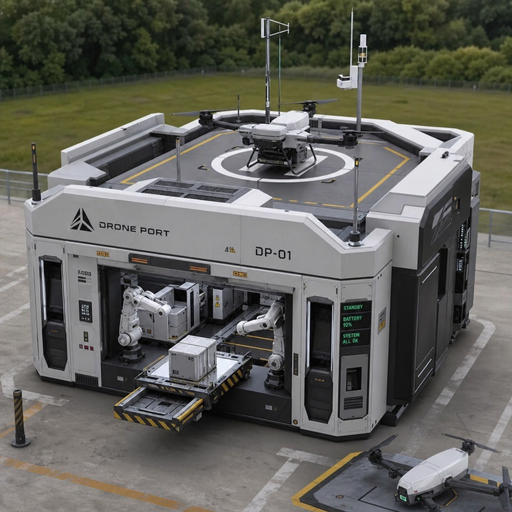
This is where automation will spread beyond flight. Drone ports may automatically check battery status, confirm payload identity, upload route instructions, and report whether the aircraft is ready. Dispatch software may compare drone delivery against truck delivery, choosing the best option based on urgency, distance, payload, airspace, and weather.
Over time, the most valuable systems may be hybrid networks. A truck could bring goods to a regional hub, drones could handle urgent middle-mile or last-mile legs, and couriers could complete deliveries where landing is impractical. The future is not necessarily drones versus trucks; it is drones used where aerial movement creates a measurable advantage.
Safety, trust, and cybersecurity will define public acceptance
For autonomous cargo drones to become ordinary, they must become boring in the best possible way: predictable, quiet enough for communities, secure, and professionally managed. Public acceptance will depend on how operators handle noise, privacy, reliability, crash risk, and transparency.
Safety systems will need redundancy. That may include backup navigation, monitored communications links, geofencing, parachutes or controlled landing modes, detect-and-avoid sensors, and conservative weather limits. Operators will also need disciplined maintenance programs because autonomy is only as dependable as the aircraft, sensors, software, and batteries supporting it.
Cybersecurity deserves special attention. A cargo drone is a flying connected device carrying goods and operational data. Protecting command links, location data, customer information, and fleet management systems will be essential. As drone networks become more integrated with logistics platforms, cyber risk becomes supply chain risk.
The economics will favor focused deployments first
Autonomous cargo drones will not make financial sense for every package, lane, or customer promise. Their economics depend on payload size, route distance, aircraft utilization, labor model, maintenance cost, battery cycles, regulatory requirements, insurance, site preparation, and the value of speed.
The best deployments will start with focused problems. For example, a hospital network may value speed and reliability more than the lowest possible transport cost. An energy company may justify drone delivery if it reduces technician downtime at a remote site. A retailer may use drones selectively for urgent local orders rather than every basket.
A simple readiness checklist can help organizations decide where to begin:
- Identify routes with real pain. Look for delays, high labor burden, road access issues, or urgent service needs.
- Define the payload clearly. Know the size, weight, packaging, handling, and compliance requirements.
- Map operational constraints. Consider airspace, weather, landing zones, staffing, and nearby communities.
- Plan the workflow, not just the flight. Include order intake, packing, loading, tracking, receipt, returns, and exceptions.
- Measure value honestly. Compare drone delivery with existing transport based on speed, reliability, cost, and service quality.
This disciplined approach helps prevent a common mistake: buying drone capability before defining the logistics problem it should solve.
What will the next generation look like?
The next generation of autonomous cargo drones will likely be more specialized, more connected, and more operationally integrated than today’s systems. Instead of one aircraft type serving every use case, fleets may include small medical drones, rugged industrial carriers, longer-range fixed-wing systems, and vertical-lift aircraft for dense or constrained locations.
Artificial intelligence will improve planning and monitoring, but aviation will remain safety-led. AI may help predict maintenance needs, recommend routes, flag weather risks, optimize battery use, and prioritize deliveries. However, high-confidence automation, audit trails, and human oversight will matter more than flashy autonomy claims.
Battery technology, hybrid power, lightweight materials, and modular payload systems will also shape the market. Better endurance and easier loading will expand useful routes. More standardized containers and ground equipment will make drone delivery easier to adopt across industries.
The future is practical, networked, and selective
Autonomous cargo drones are not a universal replacement for ground transport. They are a new logistics layer for routes where air movement solves a specific problem better than traditional options. The companies that benefit most will be those that pair aircraft capability with strong operations, clear use cases, compliant airspace strategies, and realistic economics.
The future of unmanned cargo transport will be built step by step: safer aircraft, smarter control systems, better airspace coordination, trusted regulations, and supply chains designed to use drones well. When those pieces come together, autonomous delivery drones will feel less like science fiction and more like a normal part of moving goods where they need to go.
