
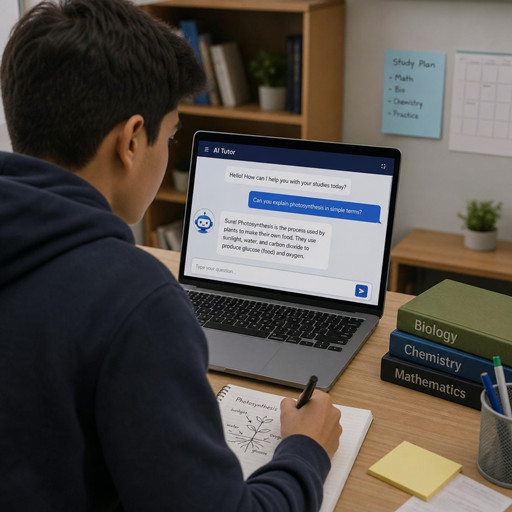
Learning is easier when support arrives at the exact moment a student needs it. Interactive AI tutors are designed to provide that support through guided explanations, practice prompts, feedback, and adaptive pathways that respond to how a learner performs. Used well, these AI learning tools can make study time more focused, less frustrating, and more personal without replacing the human encouragement students still need.
What are interactive AI tutors?
Interactive AI tutors are digital learning aids that use artificial intelligence to guide students through lessons, questions, practice activities, and feedback in a conversational or responsive way. Instead of presenting the same fixed worksheet to every learner, they can adjust prompts, explanations, and next steps based on the student’s answers, confidence, and progress.
The key word is “interactive.” A video lesson can be useful, but it usually moves in one direction. Interactive learning AI invites the student to participate, make choices, ask questions, correct mistakes, and try again. That back-and-forth experience is what makes the tool feel closer to a study partner than a static resource.
In practice, these systems may help with subjects such as math, reading, writing, science, language learning, test preparation, coding, or general homework review. Some are built into school platforms, while others are standalone ai study helpers used at home. The best use cases are not about doing the work for the learner; they are about helping the learner understand the work more clearly.
The shift from one-size-fits-all learning
Traditional learning materials often assume that students move at the same pace. A class chapter, worksheet, or online module may be carefully designed, but it cannot always account for every gap in understanding. One student may need extra help with the basics, while another is ready for a harder challenge.
Personalized ai tutors address that gap by responding to individual learning patterns. If a student repeatedly misses a concept, the tutor can slow down, rephrase the explanation, or offer simpler examples. If the student answers quickly and accurately, the system can introduce more advanced practice instead of making them repeat what they already know.
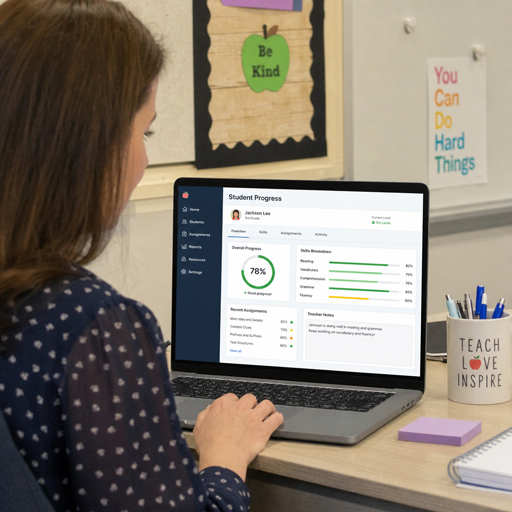
This is where adaptive learning technology becomes valuable. It can help students spend less time guessing what to study next and more time working on the areas that matter. For parents, teachers, and independent learners, that kind of direction can reduce wasted effort and make progress feel more visible.
How interactive AI supports active learning
Good learning is not passive. Students remember more when they retrieve information, explain ideas in their own words, practice repeatedly, and receive timely feedback. Interactive ai tutors can support those habits by turning study sessions into a cycle of attempt, response, reflection, and improvement.
For example, a student working on algebra might not simply receive the final answer. A useful tutor can ask what step they would try first, point out where a sign changed incorrectly, and then offer a similar problem to reinforce the correction. In writing, an AI tutor might encourage a student to clarify a thesis, strengthen evidence, or reorganize a paragraph before polishing grammar.
This matters because feedback is most useful when it arrives while the learner is still engaged. Waiting days to find out what went wrong can weaken the connection between effort and correction. AI study helpers can provide immediate guidance, helping students adjust before confusion becomes a habit.
Common learning moments AI tutors can improve
- Getting unstuck: A student can ask for a hint instead of abandoning the task or searching randomly online.
- Practicing at the right level: The tool can offer easier or harder questions depending on recent performance.
- Reviewing mistakes: Learners can revisit missed questions and see why an answer did not work.
- Building confidence: Step-by-step prompts can make difficult topics feel more manageable.
- Studying independently: Students can keep working even when a teacher, tutor, or parent is not immediately available.
These benefits are strongest when the AI acts as a coach rather than a shortcut. The goal is to guide thinking, not remove it.
What makes personalized AI tutors effective?
Personalized AI tutors are effective when they combine clear instruction, responsive feedback, appropriate challenge, and learner control. A tool that only gives answers may feel fast, but it does not necessarily build understanding. A stronger system helps the student see the reasoning behind each step and encourages them to apply that reasoning again.
Personalization should also feel practical. It might show up as a customized review plan, targeted practice questions, simplified explanations, or progress summaries. The learner should be able to recognize why the system is suggesting a certain activity and how that activity connects to their goals.
The most helpful ai learning tools also respect the student’s current level. If the challenge is too easy, the learner may disengage. If it is too difficult, they may feel defeated. Adaptive learning technology works best when it keeps the student in the productive middle: stretched, but not overwhelmed.
Signs of a strong AI tutor experience
Look for tools that offer:
- Explanations, not just answers Students should be able to understand the “why” behind feedback.
- Step-by-step guidance The tutor should break complex tasks into manageable parts.
- Practice that adapts The system should respond to performance rather than repeat the same type of question endlessly.
- Opportunities for reflection Prompts such as “Explain your reasoning” or “Try a similar problem” help deepen learning.
- Age-appropriate support The language, examples, and independence level should match the learner.
- Clear boundaries The tool should support learning without encouraging students to submit AI-generated work as their own.
Digital learning aids work best with human guidance
AI can make study time more responsive, but it does not replace teachers, mentors, parents, or peers. Human guidance is still essential for motivation, emotional support, deeper discussion, classroom context, and ethical judgment. A student may understand a concept through an AI explanation, but a teacher can connect that concept to a broader learning path.
Parents and educators can help by setting expectations. Instead of saying, “Use this to finish faster,” they can frame the tool as a way to ask better questions, practice more deliberately, and review mistakes. That small shift changes the purpose from completion to comprehension.
Human oversight also helps students develop healthy study habits. Learners need to know when to struggle productively, when to ask for help, and when to verify information. Interactive learning AI can be powerful, but students should still learn to think critically about the guidance they receive.
Where do AI study helpers fit into everyday learning?
AI study helpers fit best into the moments when learners need extra practice, quick clarification, or a structured way to review. They can be used before class to preview a topic, after class to reinforce a lesson, or during exam preparation to identify weak areas. They are especially useful when a student knows they need help but does not know exactly what to ask.
For younger students, the tool may work best in short, supervised sessions. For older students, it can become part of an independent study routine. In both cases, the experience should be active: reading an explanation, answering questions, correcting mistakes, and summarizing what was learned.
A simple weekly routine might look like this:
- Monday: Review class notes and ask the AI tutor to explain one confusing concept.
- Tuesday: Complete a short set of adaptive practice questions.
- Wednesday: Revisit missed problems and write down the corrected method.
- Thursday: Use the tool to quiz key terms, formulas, or ideas.
- Friday: Summarize the week’s learning without help, then check for gaps.
This routine keeps the AI in a supportive role. The student still does the thinking, practicing, and reflecting.
Choosing the right AI learning tools
Not every platform will suit every learner. Some tools focus on conversation, while others emphasize structured lessons, quizzes, writing feedback, or subject-specific practice. The right choice depends on the student’s age, subject, goals, and preferred learning style.
Before choosing a tool, consider what problem it needs to solve. Is the learner struggling to understand homework instructions? Do they need more math practice? Are they preparing for a test? Do they need writing feedback before submitting a draft? Matching the tool to the actual need prevents technology from becoming another distraction.
A practical selection checklist
Use this checklist when evaluating digital learning aids:
- Purpose: Does the tool support a clear learning goal?
- Accuracy: Are explanations reliable, and can students verify them with class materials?
- Feedback quality: Does it explain mistakes in a useful way?
- Adaptability: Does the experience change based on student performance?
- Ease of use: Can the learner navigate it without constant frustration?
- Privacy and safety: Are account settings, data practices, and communication features appropriate?
- Teacher or parent visibility: Can progress be reviewed when needed?
- Academic integrity: Does it encourage learning rather than answer-copying?
A flashy interface is less important than thoughtful learning design. The best interactive ai tutors make the student more capable over time, not more dependent.
Healthy boundaries make AI tutoring more valuable
Students should understand that AI assistance has limits. It may misread a question, oversimplify a topic, or provide an explanation that does not match a teacher’s preferred method. That does not make the tool useless, but it does mean learners should compare AI guidance with textbooks, notes, rubrics, and teacher feedback.
Boundaries also matter for assignments. If the purpose of a task is to demonstrate original thinking, students should not let a tool generate the final product for them. A better approach is to use AI for brainstorming, practice, clarification, or revision prompts while keeping the actual response in the student’s own voice.
Educators and families can make this easier by creating simple rules. For example: use AI to ask for hints, not completed answers; explain the final solution independently; cite or disclose assistance when required; and ask a human when advice conflicts with class instructions.
The future is more guided, not less human
The promise of interactive learning AI is not a classroom without teachers or a study routine without effort. Its real value is more targeted support, more opportunities to practice, and more immediate feedback. When students receive help at the right moment, they are more likely to keep going.
As adaptive learning technology continues to improve, learners may see more personalized pathways across subjects and skill levels. Still, the most meaningful results will come from balance. AI can guide, prompt, and respond, while humans provide context, encouragement, accountability, and care.
Interactive AI tutors are best understood as learning partners: useful, responsive, and available when used with purpose. Choose tools carefully, set clear boundaries, and keep the focus on understanding. With that approach, ai learning tools can turn everyday study sessions into more confident, active, and personalized learning experiences.
