
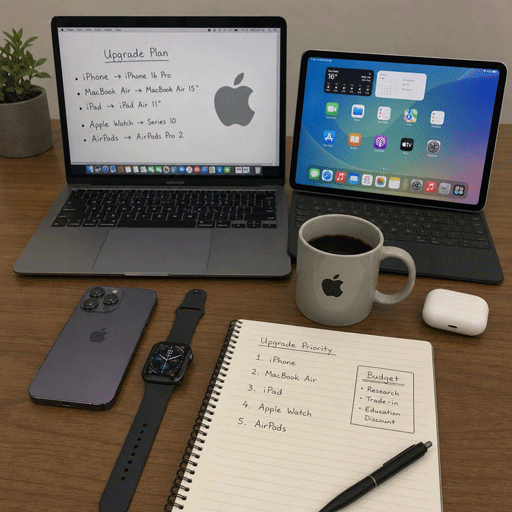
Bring faster, more capable everyday computing to your Apple devices with an Apple Intelligence-ready hardware upgrade plan. This product offering helps you choose the right iPhone, iPad, or Mac upgrade for writing, organizing, creating, multitasking, and using new AI-assisted features without guessing which model fits your workflow. Instead of chasing every rumor or buying the most expensive device by default, you get a practical path based on compatibility, performance needs, and how you actually use your tech.
Which Apple hardware upgrade is right for Apple Intelligence?
The right Apple hardware upgrade is the one that supports the Apple Intelligence features you want, has enough performance headroom for your daily apps, and fits the device role you rely on most. Apple lists Apple Intelligence compatibility across recent iPhone models, iPad models with supported Apple silicon, Mac models with M-series chips, Apple Vision Pro, and select Apple Watch models when paired with an Apple Intelligence-enabled iPhone; exact feature access can still depend on software, language, region, and device requirements.
For most people, that means starting with the device that slows them down most. If your phone is where you write messages, capture photos, manage notes, and use Siri, iPhone hardware may deliver the most visible upgrade. If your biggest pain point is long work sessions, creative apps, browser-heavy research, or file management, mac upgrades may create a bigger day-to-day change.
Built for people who want smarter Apple devices, not more confusion
Apple upgrades can feel complicated because the conversation mixes software features, chip names, storage, memory, camera systems, displays, and rumors. This product page is designed around a simpler outcome: choosing Apple devices that are ready for current and upcoming AI-assisted workflows while avoiding upgrades that do not solve your real problem.
Apple Intelligence emphasizes personal context, on-device processing, and Private Cloud Compute for requests that need larger server-based models; Apple says data used with Private Cloud Compute is not stored and is used only for the user’s requests. That matters when you are comparing iphone hardware, iPad hardware, and Mac hardware because the device is no longer just a screen and processor. It is the foundation for how quickly, privately, and smoothly your work can happen.
This upgrade path is especially useful if you are:
- Replacing an older iPhone that no longer supports the newest intelligence features.
- Moving from an Intel Mac to Apple silicon for smoother performance and longer software relevance.
- Choosing between a new iPhone, iPad, and Mac instead of upgrading everything at once.
- Equipping a small team with consistent Apple hardware upgrades.
- Trying to separate credible Apple upgrade needs from rumor-driven buying pressure.
- Searching phrases like “apple iphone 18 leaks detail design changes and hardware upgrades” or “apple iphone 18 pro series leaks detail major hardware upgrades” and wanting a calmer, compatibility-first way to decide.
The upgrade package
This product offering is a guided Apple Intelligence and hardware upgrade plan. It is not a one-size-fits-all device recommendation and it does not rely on unsupported claims about unreleased products. It focuses on matching your current setup to a practical upgrade route across iPhone, Mac, iPad, and connected accessories.
A typical package includes:
- Device review: Identify your current Apple devices, chip generation, storage pressure, battery concerns, and software compatibility.
- Apple Intelligence readiness check: Confirm whether your current or planned device supports the AI-assisted features you care about.
- iPhone upgrade guidance: Compare iphone hardware needs such as camera use, performance, storage, battery life, and expected lifespan.
- Mac upgrade guidance: Evaluate mac upgrades for office work, creative production, development, remote work, and multitasking.
- Priority roadmap: Decide what to upgrade now, what can wait, and what should be skipped.
- Setup considerations: Plan migration, backups, Apple Account readiness, app compatibility, and accessory needs.
- Quote-ready recommendation: Receive a clear device direction that can be used to shop, request procurement, or brief an internal buyer.
The goal is not to push the newest product simply because it exists. The goal is to help you buy with confidence, especially when Apple hardware upgrades overlap with new AI features and changing device requirements.
Benefits you can feel in daily work
A well-chosen upgrade improves more than benchmark numbers. It changes the small moments that add up: opening apps without lag, editing documents without waiting, searching information faster, summarizing and rewriting text more easily, switching between calls and files, or using a Mac all day without feeling like the machine is fighting you.
For iPhone users, the practical benefit is having a device that can support modern Apple Intelligence workflows while also improving the core phone experience: photos, messages, maps, notes, browsing, video, and battery confidence. For Mac users, the benefit is often deeper. Moving to a capable Apple silicon Mac can improve responsiveness across meetings, spreadsheets, creative apps, development tools, and large browser sessions.
Here is the before-and-after scenario many buyers recognize: before the upgrade, your iPhone is full, your Mac fans spin during routine work, and new Apple Intelligence features look interesting but feel out of reach. After the right upgrade, your devices become easier to use together, your everyday apps respond faster, and you have a clearer runway for the software features Apple is building into its ecosystem.
Hardware priorities that matter most
Not every specification deserves equal attention. A beautiful color or minor exterior change can be appealing, but it should not outweigh performance, compatibility, storage, and long-term use. This is where a structured upgrade plan prevents overspending.
Use these priorities when comparing Apple devices:
- Compatibility first Start by confirming whether the model supports Apple Intelligence and the software version you plan to use. If it does not, the upgrade may still be useful for basic tasks, but it will not meet the AI-readiness goal.
- Performance headroom Choose hardware that can comfortably handle your current apps plus the next few years of software demands. For Macs, this often means paying close attention to Apple silicon generation, unified memory, and storage.
- Storage that matches reality Photos, videos, local files, creative projects, and app caches grow quickly. A lower-storage device may cost less up front but become frustrating if you constantly manage space.
- Battery and mobility needs If your iPhone or Mac is used away from a desk, battery life and portability matter as much as raw speed. A heavier or more expensive device is not automatically the better fit.
- Ecosystem fit Your iPhone, Mac, iPad, Apple Watch, and accessories should work together. The best apple upgrades reduce friction across the whole setup, not just one device.
Clear options without invented pricing
Pricing for Apple hardware upgrades depends on the device family, configuration, storage, trade-in options, availability, and whether accessories or setup support are included. Rather than publish generic prices that may be wrong for your situation, this page uses a quote-ready structure so you can match the recommendation to current models and purchasing channels.
Essential upgrade path
Choose this route if you want the simplest Apple Intelligence-ready device decision. It focuses on the one device causing the most friction, usually an iPhone or Mac, and keeps the recommendation lean. This is a strong fit for individual users who want better performance without rebuilding their entire Apple setup.
Productivity upgrade path
Choose this route if your Apple devices support work, school, content creation, or business operations. It looks at iPhone and Mac together, including how files, notes, calls, messages, cloud storage, and apps move across devices. This option is useful when mac upgrades and iphone hardware decisions need to support the same workflow.
Ecosystem upgrade path
Choose this route if you are planning a broader refresh across multiple Apple devices. It helps prioritize purchases, avoid duplicate spending, and coordinate setup. This is the best fit for households, creators, consultants, and small teams that depend on Apple hardware every day.
Why upgrade now with a compatibility-first approach
Apple Intelligence has made hardware choice more strategic. In the past, many buyers could keep an older device until it physically failed or became too slow. Now, AI-assisted features, privacy architecture, and deeper Siri capabilities make compatibility a more important part of the purchase decision. Apple says Siri AI in current software requires an Apple Intelligence-enabled device set to a supported language, and availability can vary by feature and region.
That does not mean every person needs the newest iPhone or most powerful Mac. It means the upgrade should be intentional. A compatibility-first plan helps you understand when a device is still good enough, when it is blocking features you want, and when waiting for the next release cycle may be reasonable.
It also protects you from rumor fatigue. Searches around future models, including apple iphone 18 leaks detail design changes and hardware upgrades or apple iphone 18 pro series leaks detail major hardware upgrades, can be interesting, but a purchase should be based on confirmed needs, supported features, and the device you can actually use now.
What you get after purchase
The final deliverable is a practical Apple upgrade recommendation you can act on. It should make the buying decision easier, not bury you in jargon.
You receive:
- A short summary of your current Apple device situation.
- A recommended upgrade priority: iPhone, Mac, iPad, or multi-device refresh.
- Compatibility notes for Apple Intelligence and relevant software requirements.
- Suggested configuration considerations, such as storage and performance tier.
- A “buy now, wait, or skip” recommendation for each device category reviewed.
- Setup reminders for backup, migration, accounts, apps, and accessories.
- A clear next step for purchasing or requesting a current quote.
Start with the device that holds you back
If your current Apple setup feels slower, less capable, or uncertain as Apple Intelligence expands, now is the right time to review your hardware. Start with the device you use most, confirm compatibility, and choose an upgrade that solves a real daily problem.
Request your Apple Intelligence and hardware upgrade recommendation today, and turn a confusing device decision into a clear, practical buying plan.