
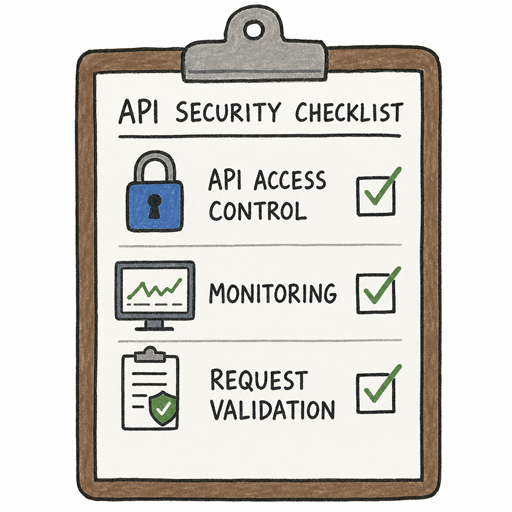
APIs connect the systems, applications, partners, and users that modern businesses rely on every day. That connectivity creates speed and flexibility, but it also expands the attack surface. API Security Gateways help organizations secure APIs by controlling access, enforcing policies, inspecting traffic, and adding a consistent layer of API protection between clients and backend services.
For teams building digital products, gateway security is not just a technical add-on. It is a practical way to make API security more manageable, especially when APIs are spread across cloud platforms, internal services, mobile apps, and third-party integrations.
What is an API Security Gateway?
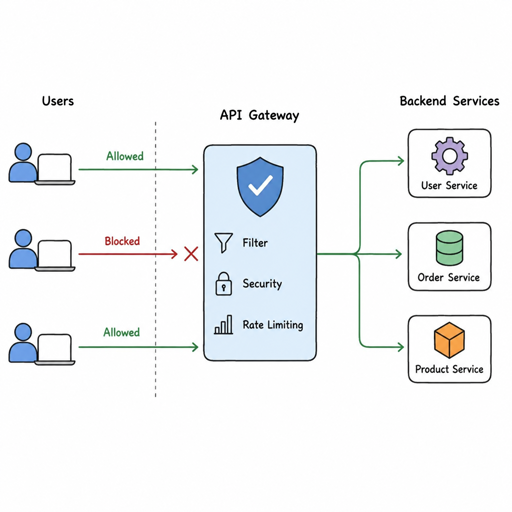
An API Security Gateway is a dedicated control point that sits between API consumers and the services they want to reach. It receives incoming API requests, checks whether those requests should be allowed, applies security and governance policies, and then forwards approved traffic to the correct backend service.
In simple terms, it acts like a security checkpoint for APIs. Instead of asking every individual service to handle authentication, authorization, rate limits, traffic inspection, and logging on its own, the gateway centralizes those functions. This makes api access control more consistent and reduces the chance that one poorly protected endpoint becomes an easy target.
A security gateway may be part of a broader api management platform, a cloud-native architecture, or a dedicated API security toolset. Its exact features vary, but the goal is the same: protect APIs without slowing down development or creating unnecessary complexity for legitimate users.
APIs need security at the front door
APIs often expose business logic, customer data, payment workflows, account functions, inventory systems, or internal operations. If they are not properly protected, attackers may try to exploit weak authentication, excessive data exposure, broken authorization, injection flaws, or automated abuse.
Traditional network defenses are not always enough because API traffic can look like normal application traffic. A request may come through the correct port, use valid-looking methods, and still be harmful if it tries to access another user’s records or overload a service. That is why api security needs context: who is calling, what they are allowed to do, how often they are calling, and whether the request matches expected behavior.
API Security Gateways provide that front-door control. They help ensure that every request is evaluated before it reaches the systems that process sensitive actions or data.
Core functions of API Security Gateways
A well-designed gateway does more than pass traffic from one place to another. It applies security, routing, monitoring, and operational policies in a consistent way. The most useful functions usually include a mix of access control, validation, traffic management, and visibility.
Authentication and identity verification
Authentication confirms that the client, user, app, or service making the request is who it claims to be. API Security Gateways commonly support methods such as API keys, OAuth tokens, JSON Web Tokens, mutual TLS, or integration with identity providers.
This matters because APIs are often accessed by many different clients. A mobile app, partner platform, internal dashboard, and machine-to-machine workflow may all need access to the same API, but not in the same way. Centralized authentication helps teams avoid scattered, inconsistent identity checks across many services.
Authorization and api access control
Authentication answers “Who are you?” Authorization answers “What are you allowed to do?” Strong api access control ensures that authenticated clients can only perform actions and access resources that match their permissions.
For example, a customer should be able to view their own account information but not another customer’s data. A partner may be allowed to submit orders but not update billing rules. An internal service may need read-only access to a dataset, while an admin service may require broader privileges.
Gateways can enforce role-based, scope-based, attribute-based, or policy-based controls depending on the architecture. This helps reduce overexposure and limits the damage if a credential is misused.
Rate limiting and abuse prevention
APIs are vulnerable to both intentional abuse and accidental overload. A misconfigured client can send too many requests, while an attacker may attempt credential stuffing, scraping, denial-of-service behavior, or brute-force probing.
Rate limiting controls how many requests a client can make within a defined period. Throttling can slow traffic when limits are approached. Quotas can manage long-term usage across partners, customers, or applications. Together, these controls protect API availability and keep backend services from being overwhelmed.
Request validation and threat filtering
A gateway can inspect incoming requests before they reach application logic. It may validate headers, methods, schemas, payload size, content types, parameters, and tokens. If a request does not match expected patterns, the gateway can block it, sanitize it, or route it for additional review.
This kind of validation supports secure APIs by reducing malformed, suspicious, or obviously dangerous traffic. It does not replace secure coding inside the application, but it adds an important outer layer of defense.
Logging, monitoring, and audit trails
Security teams need to know what is happening across API traffic. Gateways can collect logs for request volume, response codes, authentication failures, blocked requests, latency, client behavior, and endpoint usage.
These records are valuable for troubleshooting, incident response, compliance support, and long-term API management. Without centralized visibility, teams may struggle to detect patterns across services or reconstruct what happened during a security event.
How API Security Gateways support api management
API management is about controlling the full lifecycle of APIs, from design and publication to access, monitoring, versioning, and retirement. Security gateways support that lifecycle by making policies easier to apply at scale.
When organizations have only a few APIs, teams may be able to manage security manually. As the environment grows, that approach becomes fragile. Different teams may implement authentication differently, forget to apply rate limits, expose inconsistent error messages, or publish endpoints without enough visibility.
A gateway creates a shared layer for common controls. This does not remove responsibility from development teams, but it gives them a safer foundation. Developers can focus on business logic while the gateway handles repeatable security and governance tasks.
Key api management benefits include:
- Consistent policy enforcement: Apply authentication, authorization, throttling, and validation rules across many APIs.
- Centralized visibility: Monitor usage patterns, failures, and suspicious activity from one control point.
- Simpler onboarding: Give internal teams, partners, or applications controlled access through defined plans and permissions.
- Version and routing support: Direct traffic to the right service version while reducing disruption during updates.
- Operational resilience: Use traffic controls to reduce overload and improve service stability.
The practical value is not only stronger api protection. It is also cleaner operations, faster troubleshooting, and fewer one-off security implementations.
Why does gateway security matter for modern architectures?
Gateway security matters because modern applications are distributed, fast-moving, and heavily interconnected. APIs may run across containers, serverless functions, microservices, SaaS platforms, legacy systems, and public cloud environments. Without a consistent security layer, each connection becomes another place where mistakes can happen.
In microservices architectures, for example, dozens or hundreds of services may communicate with each other. Some are public-facing, while others are internal. A gateway helps separate external traffic from internal service communication and can enforce different policies for each type of request.
In partner ecosystems, APIs may be exposed to organizations outside the company. Gateway controls make it easier to issue credentials, apply usage limits, revoke access, and monitor partner behavior without changing backend systems every time a relationship changes.
In mobile and web applications, APIs often carry the actual business transaction. The user interface may be visible, but the API determines what action occurs. If attackers bypass the interface and call APIs directly, gateway security helps enforce the rules that should apply regardless of the client.
Common risks a gateway can help reduce
API Security Gateways are not a cure-all, but they can reduce many common and costly risks when configured well. The strongest results come when gateway controls are combined with secure design, testing, and application-level authorization.
A gateway can help reduce risks such as:
- Unauthorized access Strong authentication and authorization make it harder for unknown or underprivileged clients to reach protected resources.
- Broken object-level access Gateways can help enforce scopes and policies, though applications must still verify that users can access specific records.
- Excessive traffic and automated abuse Rate limits, quotas, and anomaly monitoring reduce the impact of bots, scraping, brute-force attempts, and runaway clients.
- Malformed or unexpected requests Schema validation and request filtering block traffic that does not match approved API contracts.
- Poor visibility during incidents Centralized logs and metrics give security and operations teams a clearer view of what happened, when it happened, and which clients were involved.
- Inconsistent security across teams Shared gateway policies reduce the risk of every team inventing its own approach to api security.
The important point is balance. A gateway can block many threats at the edge, but backend services should still validate permissions, handle errors safely, and protect sensitive data.
Gateway security is one layer, not the whole strategy
It is tempting to think that placing a gateway in front of APIs automatically makes them secure. In reality, gateway security works best as part of a layered API security strategy.
The gateway can check identity, enforce policy, and filter traffic before it reaches the application. But the application still needs secure code, proper data handling, strong authorization logic, safe error responses, and protection against business logic abuse. Internal service-to-service traffic also needs attention, especially in environments where attackers may move laterally after gaining access.
A complete approach often includes:
- Secure API design and threat modeling before release.
- Strong identity and access management for users, apps, and services.
- Input validation at both the gateway and application layer.
- Encryption in transit, and appropriate protection for sensitive data at rest.
- Continuous monitoring for unusual behavior and failed access attempts.
- Regular testing, including API-specific security testing.
- Clear ownership for every API, including deprecated or undocumented endpoints.
This layered model makes API protection more resilient. If one control fails, another may still prevent or limit damage.
Practical features to look for in an API Security Gateway
The right gateway depends on the organization’s architecture, risk profile, compliance needs, and development workflow. Still, some capabilities are broadly useful for teams that want to secure APIs without creating friction.
Look for features such as:
- Flexible authentication support: The gateway should work with the identity methods your teams and partners actually use.
- Granular authorization controls: Policies should support different roles, scopes, clients, environments, and API products.
- Traffic management: Rate limiting, quotas, throttling, and spike arrest features help protect availability.
- Schema and payload validation: The gateway should reject requests that do not match expected contracts.
- Threat detection integrations: Connections to security monitoring, SIEM, or observability tools can improve response.
- Developer-friendly policy management: Security rules should be manageable through clear interfaces, configuration, or automation.
- Support for modern deployment models: Cloud, hybrid, containerized, and multi-environment setups may require flexible deployment options.
- Clear logging and reporting: Teams need usable data, not just raw noise.
The best choice is rarely the tool with the longest feature list. It is the one that fits the way your teams build, deploy, monitor, and maintain APIs.
Implementation mistakes that weaken api protection
Even strong tools can fail if they are poorly implemented. One common mistake is relying on default settings without adapting them to real API behavior. Another is protecting only public APIs while leaving internal APIs exposed or poorly governed.
Teams may also create broad permissions for convenience. For example, issuing tokens with excessive scopes can make development easier in the short term but increase risk later. Similarly, rate limits that are too loose may not stop abuse, while limits that are too strict may frustrate legitimate users.
Avoid these common pitfalls:
- Treating the gateway as a substitute for application-level authorization.
- Allowing undocumented or “shadow” APIs to bypass gateway controls.
- Reusing the same access policies across very different clients.
- Logging sensitive data without proper masking or retention rules.
- Failing to review old credentials, unused endpoints, and outdated API versions.
- Creating security policies that developers cannot understand or maintain.
Strong API security depends on governance as much as technology. Policies should be reviewed, tested, and adjusted as APIs evolve.
A simple checklist for stronger API gateway security
Use this checklist as a practical starting point when reviewing an existing gateway or planning a new implementation:
- Inventory your APIs: Know which APIs exist, who owns them, what data they expose, and whether they are public, partner-facing, or internal.
- Classify risk: Apply stronger controls to APIs that handle sensitive data, privileged actions, payments, identity, or business-critical workflows.
- Define access policies: Map users, applications, services, and partners to the permissions they actually need.
- Enforce authentication everywhere: Avoid unauthenticated endpoints unless there is a clear and intentional reason.
- Use least privilege: Keep scopes and roles narrow, and review them regularly.
- Set realistic rate limits: Base limits on expected usage patterns and adjust as traffic changes.
- Validate requests: Require expected schemas, methods, headers, and payload sizes.
- Monitor continuously: Watch for spikes, repeated failures, unusual geographies, suspicious clients, and abnormal endpoint usage.
- Plan incident response: Make sure logs, owners, and revocation processes are ready before something goes wrong.
- Review and retire: Remove unused APIs, expired credentials, and old versions that no longer need to be active.
This checklist does not need to be completed all at once. Many organizations improve gateway security in phases, starting with the highest-risk APIs and expanding coverage over time.
Secure APIs create trust and flexibility
APIs are valuable because they make systems easier to connect, extend, and reuse. That same openness requires discipline. When APIs are secured through consistent gateway controls, teams can move faster with more confidence because the basics are not rebuilt from scratch for every service.
API Security Gateways help create a dependable layer for authentication, api access control, traffic management, validation, logging, and policy enforcement. They support api management by making security more repeatable and visible across growing API ecosystems.
The takeaway is straightforward: a gateway is not the entire api security program, but it is one of the most important control points. Used well, it helps organizations secure APIs, protect backend systems, reduce operational risk, and build digital services that are safer to expose, scale, and evolve.
