
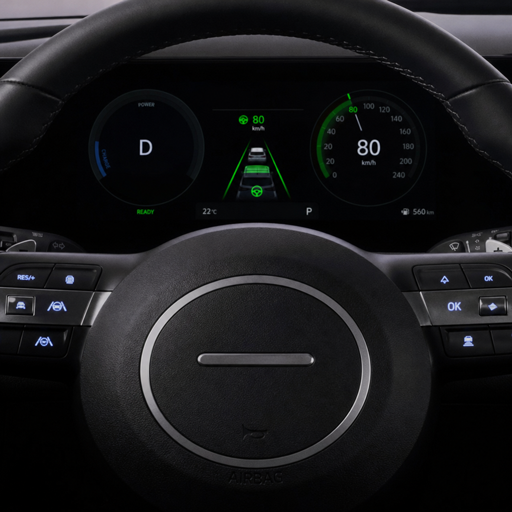
Semiautonomous driving works best when the vehicle and driver understand each other. A communicating steering wheel can make that handoff clearer by using touch, light, motion, or other signals to show what the system is doing, what it expects from the driver, and when human control is needed. For anyone following vehicle technology, this approach points to a practical path for improving semiautonomous driving performance without pretending the car can do everything alone.
How can a steering wheel improve semiautonomous driving performance?
A steering wheel can improve semiautonomous driving performance by becoming more than a control device. In vehicles with advanced driver assistance, the wheel can act as an interface that gives the driver timely, physical information: a vibration before a lane-centering correction, a light cue when the system is active, or a stronger prompt when hands should return to the wheel. These signals help reduce confusion, support faster reactions, and keep the driver mentally connected to the driving task.
This matters because semiautonomous systems sit in a complex middle ground. They can assist with steering, speed, spacing, and lane position, but they still depend on human supervision. If the vehicle’s intentions are hidden inside a screen menu or a subtle dashboard icon, the driver may miss important context. The steering wheel, by contrast, is already where the driver’s hands and attention belong.
The steering wheel is becoming a communication surface
Traditional steering wheels are designed around input: turn left, turn right, hold steady, correct course. In newer vehicle technology, the wheel can also provide output. That shift turns it into a two-way communication surface between human and machine.
The key advantage is immediacy. A driver does not need to look away from the road to feel a vibration, notice a gentle resistance change, or see a peripheral light cue around the wheel. These signals can be designed to match the urgency of the situation. A routine lane-centering reminder should feel different from a takeover request, and a system status cue should not be as startling as a safety alert.
Common steering wheel communication methods may include:
- Haptic feedback: Vibrations, pulses, or torque changes that can signal lane departure, system correction, or driver attention needs.
- Visual indicators: Light strips, icons, or color changes that show whether advanced driver assistance features are active, limited, or unavailable.
- Grip sensing: Sensors that detect whether the driver’s hands are on the wheel and whether the driver appears ready to intervene.
- Adaptive resistance: Subtle changes in steering feel that can guide the driver without fully taking control away.
- Multimodal alerts: Coordinated touch, sound, and visual cues that make important messages harder to miss.
Used well, these features make autonomous driving and assisted driving feel less mysterious. The driver can better understand when the car is helping, when it is uncertain, and when it is asking for support.
Clear cues support driving safety
Driving safety depends not only on what the vehicle can detect but also on what the driver understands. A semiautonomous system may have cameras, radar, maps, and software, yet the human still needs a clear sense of responsibility. Poor communication can create overtrust, undertrust, or delayed response.
A communicating steering wheel helps address that gap by keeping feedback close to the driver’s natural control point. If lane assistance is active, a light or gentle steering cue can reinforce that status. If the system is about to disengage because road markings are unclear, the wheel can provide a more urgent prompt. If the driver has removed their hands for too long, grip sensing and haptic alerts can encourage re-engagement before the situation becomes critical.
The best safety communication is not simply louder or more frequent. It is specific, consistent, and easy to interpret. Drivers should not have to decode a confusing pattern of beeps and icons while moving at highway speed. A wheel-based interface can make communication more intuitive, especially when paired with simple dashboard language.
What performance metrics matter most?
The most useful performance metrics are the ones that show whether the driver and vehicle are working together more effectively. For semiautonomous driving performance, this can include driver reaction time, takeover quality, lane-keeping stability, alert recognition, driver workload, and how often the system creates confusion or unnecessary intervention.
These metrics matter because a feature can look impressive in a demonstration but still perform poorly in real driving behavior. If drivers misunderstand an alert, react too slowly, or become too relaxed while the system is active, the technology may not deliver the intended safety benefit. Measuring the human-machine relationship is therefore just as important as measuring the vehicle’s sensors and software.
A practical evaluation may consider:
- Takeover response: How quickly and smoothly the driver resumes control after a prompt.
- Alert comprehension: Whether the driver understands what the steering wheel cue means without hesitation.
- False alarm tolerance: Whether alerts are accurate enough to avoid annoyance and alert fatigue.
- Driver engagement: Whether the system keeps the driver appropriately attentive without causing stress.
- Vehicle stability: Whether steering cues support smooth lane position and predictable control.
- Trust calibration: Whether the driver trusts the system enough to use it, but not so much that they ignore responsibility.
These performance metrics provide a more complete picture than “the car stayed in the lane” alone. Semiautonomous driving is a shared task, and shared tasks need shared understanding.
Better communication reduces mode confusion
One of the hardest parts of advanced driver assistance is mode awareness. Drivers need to know what the system is doing right now. Is adaptive cruise active? Is lane centering active? Is steering assistance temporarily limited? Is the vehicle asking for hands on the wheel, eyes on the road, or full control?
Mode confusion can happen when different assistance features turn on, pause, or disengage under different conditions. A driver may assume the car is steering when it is only controlling speed, or believe the system is unavailable when one feature remains active. This is where steering wheel communication becomes especially valuable.
Instead of relying only on a screen, the vehicle can use the wheel to make status changes more noticeable. For example, a calm blue light might indicate assisted steering is available, while a pulsing cue could indicate that the driver needs to take over. The exact colors and patterns will vary by design, but the principle is the same: the signal should match the meaning and urgency of the message.
For self-driving cars and semiautonomous vehicles alike, clarity builds confidence. Drivers are more likely to use helpful systems correctly when the vehicle explains itself in a way that feels natural.
The human factor remains central
Even as autonomous driving technology advances, human behavior remains a major design challenge. People get distracted. They overestimate features. They ignore alerts that feel repetitive. They may also distrust systems that behave unpredictably or communicate poorly.
A steering wheel that communicates can support better habits, but it must be designed with real human tendencies in mind. Alerts should not be so subtle that they are missed, but they also should not be so aggressive that drivers disable them. Visual cues should be visible without becoming distracting. Haptic cues should be distinguishable, not random buzzes that all feel the same.
Good design also respects the driver’s learning curve. A first-time user should be able to understand the basics quickly, while regular users should find the system consistent over time. If a cue means “hands required” today, it should not feel similar to a routine lane warning tomorrow.
Design principles for steering wheel communication
A communicating steering wheel is only useful if its signals are easy to notice, understand, and act on. The design should support calm confidence rather than constant interruption.
Strong systems tend to follow these principles:
- Make the message obvious: The driver should understand whether the cue is informational, cautionary, or urgent.
- Use touch for time-sensitive prompts: Haptic feedback can reach the driver without requiring a glance away from the road.
- Keep visuals simple: A small set of consistent colors or icons is usually better than a crowded display.
- Avoid alert overload: Too many warnings can train drivers to ignore them.
- Match feedback to context: A gentle nudge may fit a lane-centering correction; a stronger pulse may fit a takeover request.
- Support accessibility: Designers should consider different grip styles, visual abilities, hearing conditions, and driver preferences.
- Explain the system clearly: In-vehicle onboarding and owner materials should teach what each cue means.
These principles help move the steering wheel from a novelty feature to a meaningful safety and performance tool.
Where does this fit in the future of vehicle technology?
Communicating steering wheels fit into a broader trend: vehicles are becoming more software-driven, sensor-rich, and collaborative. As cars take on more assistance tasks, the interface between the human and the machine becomes more important. Better sensors alone are not enough if the driver does not understand when to rely on them.
In the near term, steering wheel communication is most relevant for advanced driver assistance features that still require supervision. It can help drivers use lane-centering, adaptive cruise, traffic assist, and related systems with more awareness. Over time, as self-driving cars become more capable in defined conditions, wheel-based communication may remain important for transitions, fallback situations, and driver reassurance.
This does not mean every future vehicle will communicate in the same way. Some designs may emphasize haptics, while others may combine light, sound, and touch. The common goal is to make the driving experience more transparent: the vehicle should show what it knows, what it is doing, and what it needs from the person behind the wheel.
Practical takeaways for drivers and automakers
For drivers, the main takeaway is simple: do not treat semiautonomous features as a replacement for attention. Learn what your vehicle’s steering wheel cues mean, notice when assistance is active, and stay prepared to take control. The most advanced driver assistance system still works best with an engaged human supervisor.
For automakers and technology teams, the takeaway is that communication is part of performance. Semiautonomous driving performance is not only about algorithms, cameras, or steering precision. It is also about whether the driver receives the right message at the right time in the right form.
A well-designed communicating steering wheel can support smoother control, clearer system status, and stronger driving safety habits. As vehicle technology continues to evolve, the steering wheel may become one of the most important places where humans and automated systems learn to cooperate. The future of autonomous driving will not be defined only by how much the car can do on its own, but by how clearly it can work with the person still responsible for the journey.
