
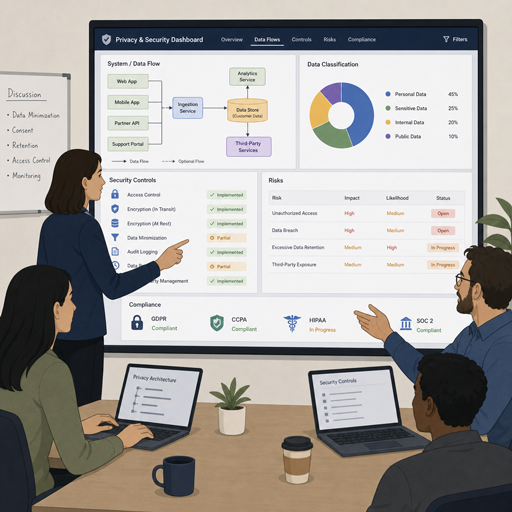
Privacy-Enhancing Technologies (PETs) are becoming a practical part of modern data protection, not just a specialist topic for cryptographers or compliance teams. As organizations collect more data, use more AI, and collaborate across cloud platforms, PETs can help reduce privacy risk while still allowing useful analysis, personalization, fraud detection, research, and service improvement. The future of online privacy will depend less on simply asking users for consent and more on building privacy solutions directly into systems, workflows, and cybersecurity tools.
What are Privacy-Enhancing Technologies (PETs)?
Privacy-Enhancing Technologies (PETs) are technical methods that help organizations collect, process, analyze, or share information while reducing the exposure of personal or sensitive data. The ICO describes PETs as technologies that support data protection principles by minimizing personal information use and strengthening information security, while the OECD frames them as digital solutions that enable information use while protecting confidentiality and privacy. NIST similarly describes PETs as technical controls that try to reduce privacy risks by limiting how data is collected, analyzed, and shared.
In simple terms, PETs help answer a difficult question: how can people and organizations get value from data without revealing more than they need to? That matters because many privacy failures do not come from one dramatic breach alone. They come from over-collection, unnecessary copying, broad access, weak governance, and systems that treat personal data as a default ingredient instead of a sensitive asset.
PETs are not a single product category. They include methods such as differential privacy, synthetic data, federated learning, secure multiparty computation, homomorphic encryption, confidential computing, anonymization techniques, pseudonymization, and privacy-preserving identity tools. Some are mature enough for everyday use. Others are still complex, expensive, or limited to specific use cases. The real opportunity is knowing which privacy tools fit which problem.
Why PETs are becoming essential for digital trust
Digital trust is under pressure from several directions at once. People expect convenient services, but they are increasingly aware that their personal data can be tracked, combined, inferred, sold, leaked, or used in ways they never expected. Businesses want richer insights, yet they also face stricter privacy expectations, rising cyber risk, and growing scrutiny around how data is used in analytics and artificial intelligence.
That tension is pushing privacy solutions closer to the center of product design. Traditional data protection often focused on policies, notices, access controls, and post-collection governance. Those still matter, but they do not fully solve the technical problem of reducing exposure. PETs add another layer: they can change the way data is processed so that less raw personal information is visible in the first place.
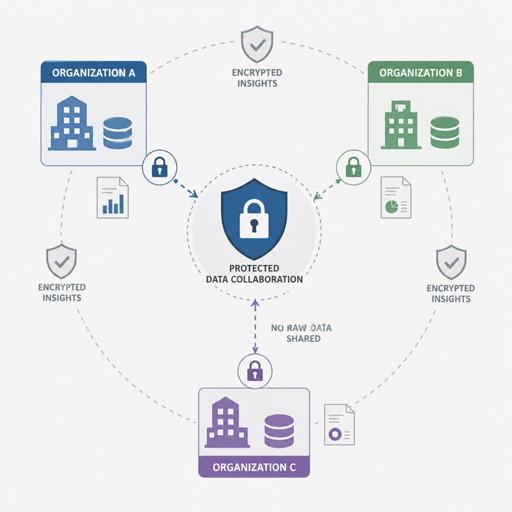
This is especially important in collaborative environments. A hospital, university, bank, public agency, or technology company may need to learn from data held by others without pooling every record into one central database. PETs can make those collaborations more realistic by allowing analysis under stricter privacy constraints. The OECD notes that PETs can foster trust, enable secure collaboration, and address critical considerations for data sharing.
The PETs toolbox is broader than one technology
A common mistake is to talk about Privacy-Enhancing Technologies PETs as if they all do the same thing. They do not. Some reduce the amount of data collected. Some hide identities. Some protect data during analysis. Some make statistical outputs safer. Some keep data distributed instead of centralizing it. The best choice depends on the data, the purpose, the threat model, and the level of accuracy required.
Here is a practical way to think about the main categories.
|
PET category |
What it helps with |
Practical use case |
|---|---|---|
|
Data minimization and selective disclosure |
Sharing only what is necessary |
Proving eligibility without revealing a full identity profile |
|
Pseudonymization and tokenization |
Reducing direct identifiers |
Replacing names or account numbers with controlled references |
|
Differential privacy |
Limiting what outputs reveal about individuals |
Publishing aggregate statistics with mathematical privacy safeguards |
|
Synthetic data |
Creating artificial datasets that resemble real patterns |
Testing software or training models without exposing raw records |
|
Federated learning |
Training models where data stays local |
Improving models across multiple devices or institutions |
|
Secure multiparty computation |
Joint analysis without exposing each party’s input |
Multiple organizations comparing data without revealing full datasets |
|
Homomorphic encryption |
Computing on encrypted data |
Performing limited calculations without decrypting sensitive inputs |
|
Confidential computing |
Protecting data while it is being processed |
Running workloads in isolated secure execution environments |
This table is a starting point, not a shopping list. In real projects, organizations often combine multiple PETs with cybersecurity tools, access controls, audit trails, legal agreements, and data governance. The UK government’s PETs adoption guidance warns that using one PET does not automatically improve privacy unless it is supported by good privacy design and appropriate governance.
Data minimization remains the foundation
The most reliable privacy protection is not collecting unnecessary data in the first place. Data minimization sounds simple, but it can be difficult in organizations that have grown used to storing everything “just in case.” PETs can support minimization by enabling selective disclosure, limiting access to raw records, or transforming data before it is shared.
For example, a service may need to know that a user is over a required age threshold, not the user’s full date of birth. A fraud model may need risk signals, not a permanent copy of every underlying transaction detail. A marketing analytics team may need trend-level insight, not identifiable browsing histories. When teams start with the minimum useful data, privacy tools become more effective and easier to justify.
Privacy-preserving analytics will shape AI development
AI and machine learning make PETs more urgent because models often depend on large, diverse datasets. The more data is collected and centralized, the greater the potential exposure if access is mismanaged or systems are compromised. PETs such as federated learning, differential privacy, synthetic data, and secure computation can help teams experiment with data while reducing direct access to sensitive records.
This does not mean PETs make every AI system safe by default. Poorly designed models can still produce unfair, inaccurate, invasive, or insecure outcomes. Privacy-preserving analytics must be paired with model governance, security testing, explainability where appropriate, and clear limits on data use. PETs are powerful because they reduce certain privacy risks, not because they remove the need for judgment.
Encryption is expanding beyond storage and transit
Most people are familiar with encryption for data at rest and data in transit. The future of digital security is increasingly focused on data in use: the moment when information is being processed, queried, or analyzed. Techniques such as homomorphic encryption and confidential computing aim to reduce exposure during that phase, although they differ greatly in maturity, performance, and implementation complexity.
For many organizations, this is where PETs will meet mainstream cybersecurity tools. Security teams already manage identity, endpoint protection, logging, vulnerability management, and cloud controls. PETs add a privacy-aware layer to that stack by reducing how much sensitive data is visible even to systems that need to compute with it.
How will PETs change online privacy for individuals?
PETs can make online privacy less dependent on lengthy notices, confusing settings, and all-or-nothing consent prompts. Instead of placing the full burden on users to understand every data flow, better privacy architecture can limit exposure automatically, reduce unnecessary collection, and make sensitive processing safer by design.
For individuals, the most visible change may be in identity and personalization. People often want the benefits of digital services without handing over a complete profile every time they interact online. PETs can support experiences where a person proves a specific fact, receives a relevant service, or contributes data to a larger analysis without revealing more than the situation requires.
Consider a few everyday possibilities:
- Private eligibility checks: A user could prove they qualify for a discount, benefit, or restricted service without disclosing a full identity document.
- Safer personalization: A platform could customize content based on limited, local, or privacy-preserving signals rather than building an unnecessarily detailed central profile.
- More private analytics: Product teams could learn which features are useful without seeing every individual user journey in identifiable form.
- Reduced breach impact: If less raw data is stored, copied, or exposed, attackers have fewer valuable records to steal.
- More transparent choices: Privacy tools can support clearer controls because data flows are designed with limits from the beginning.
This matters because online privacy is not only about secrecy. It is about control, dignity, fairness, and reasonable expectations. People should not need advanced technical knowledge to avoid excessive surveillance. PETs can help make privacy a normal part of the infrastructure rather than an optional setting hidden behind a menu.
Where PETs deliver the most value today
Some PETs are still emerging, but the business case is already strong in areas where sensitive data must be used responsibly. The most compelling use cases tend to share three conditions: the data is valuable, the privacy risk is meaningful, and collaboration or analysis would be difficult without stronger safeguards.
Healthcare is a clear example. Researchers and providers often need to detect patterns across patient populations, evaluate treatments, or improve operations. Yet health data is deeply sensitive and heavily regulated. PETs can help enable research, benchmarking, or model development while limiting unnecessary access to identifiable records.
Financial services also have strong incentives. Banks, insurers, and payment providers need to detect fraud, assess risk, comply with regulations, and collaborate against financial crime. At the same time, they handle identity data, transaction histories, and behavioral signals. Privacy-preserving collaboration can make it easier to find suspicious patterns without broadly exposing customer information.
Public sector and smart city projects are another important area. Agencies may want to improve transportation, allocate resources, detect misuse, or measure public outcomes. Without strong privacy protections, these projects can create concern about surveillance or misuse. PETs can support aggregate analysis and inter-agency collaboration while reducing the need to centralize identifiable data.
Retail, advertising, and product analytics are also changing. The era of unlimited third-party tracking is giving way to more privacy-conscious measurement. Companies still need to understand performance, but they need methods that respect user expectations and reduce dependence on invasive profiling. PETs can support measurement systems that focus on aggregates, cohorts, or locally processed signals instead of unrestricted personal data flows.
The future of privacy solutions is layered
No single PET will become the universal answer to every privacy problem. The future is layered: organizations will combine technical controls, legal controls, operational controls, and user-facing controls. That layered approach is important because privacy risks appear at different points in the data lifecycle.
A strong privacy architecture might include:
- Purpose definition before collection. Teams should know why the data is needed, what decision it supports, and when it should be deleted.
- Data minimization at the source. Collect fewer fields, shorten retention periods, and avoid copying raw data into unnecessary environments.
- Privacy-preserving processing. Use PETs such as differential privacy, federated learning, secure computation, or synthetic data where they fit the use case.
- Security controls around the system. Apply identity management, encryption, monitoring, vulnerability management, and incident response.
- Governance and accountability. Document assumptions, test outputs, review risks, and make sure people understand who is responsible.
- Clear user communication. Explain meaningful choices in plain language rather than relying only on dense privacy policies.
This layered model is more realistic than treating PETs as magic. It also makes PET adoption easier. A team does not need to transform every data system at once. It can start with high-risk workflows, prove value, and build internal confidence over time.
Adoption challenges are real but solvable
PETs are promising, but adoption can be difficult. Some methods require specialized expertise. Some introduce performance trade-offs. Some are hard to explain to executives, auditors, product teams, or users. Others may be misunderstood as a guarantee of anonymity, when in reality privacy depends on context, implementation, and surrounding controls.
Organizations also struggle with choosing the right tool. A team may hear about homomorphic encryption and assume it is the best answer, when synthetic data or differential privacy would be more practical. Another team may adopt federated learning but overlook the risk that model updates can still leak information if not protected. PETs work best when selected through a structured assessment rather than excitement about a single technique.
The NIST PETs Testbed reflects this need for evaluation by focusing on questions such as which PET best addresses a specific problem and how a technology may affect existing workflows. That practical mindset is essential. PETs should be tested against real requirements: privacy risk, utility, cost, performance, usability, compliance needs, and operational impact.
Organizations can reduce adoption friction by using a simple checklist:
- Define the sensitive data clearly. Know which fields, identifiers, inferences, and combinations create risk.
- Map the data flow. Identify where data is collected, copied, transformed, accessed, shared, and deleted.
- Clarify the threat model. Decide whether the main concern is internal misuse, external breach, re-identification, partner exposure, model leakage, or excessive collection.
- Set utility requirements. A PET that protects privacy but ruins the usefulness of the output will not survive in production.
- Compare alternatives. Sometimes minimization, aggregation, or access control is enough. Sometimes a more advanced PET is justified.
- Test before scaling. Use pilots, red-team reviews, privacy impact assessments, and performance benchmarks.
- Document decisions. Record why a PET was chosen, what it protects, what it does not protect, and who owns ongoing review.
This checklist keeps the conversation grounded. It also helps privacy, security, legal, engineering, and business teams work from the same facts.
PETs will reshape cybersecurity and compliance strategies
Cybersecurity and privacy are closely related, but they are not identical. Cybersecurity tools often focus on protecting systems from unauthorized access, disruption, theft, or misuse. Privacy tools focus on limiting inappropriate exposure and use of personal information, even inside authorized systems. PETs connect the two by making sensitive data less visible, less centralized, and less exploitable.
For security leaders, PETs can reduce the blast radius of incidents. If a dataset is tokenized, minimized, aggregated, or synthetic, an attacker may get less useful information. If analysis can happen without centralizing raw data, there may be fewer high-value repositories to defend. If access to sensitive computation is isolated, monitored, and restricted, insider risk may be reduced.
For compliance leaders, PETs can support privacy-by-design programs. They provide concrete technical mechanisms that help demonstrate a serious effort to protect personal information. However, they should not be presented as a substitute for legal analysis or governance. Data protection still requires lawful purpose, transparency, rights management, retention controls, vendor oversight, and accountability.
For product leaders, PETs can become a differentiator. People increasingly choose services based on trust, not only features. A company that can explain how it reduces unnecessary data collection and uses privacy-preserving methods may have an advantage over one that simply says, “We take privacy seriously.” The future belongs to organizations that can prove privacy through design choices, not just promises.
What should organizations do now?
Organizations should start by treating PETs as part of normal data strategy, not as an experimental side project. The first step is to identify where sensitive data creates the greatest risk or blocks valuable collaboration. From there, teams can evaluate whether Privacy-Enhancing Technologies PETs can reduce exposure while preserving enough utility to meet the business goal.
A practical roadmap can look like this:
- Inventory high-value data use cases. Focus on analytics, AI, data sharing, fraud detection, personalization, research, and reporting.
- Rank privacy risk. Prioritize workflows involving health data, financial data, children’s data, precise location, biometrics, identity documents, or sensitive inferences.
- Identify quick wins. Remove unused fields, shorten retention, aggregate reports, and restrict raw data access before adopting complex technology.
- Match PETs to use cases. Choose the method based on the problem, not the trend. Federated learning, synthetic data, and differential privacy solve different problems.
- Build cross-functional ownership. Include privacy, security, engineering, legal, data science, procurement, and product teams early.
- Measure outcomes. Track whether the approach reduces data exposure, supports compliance goals, preserves analytical value, and remains operationally manageable.
- Educate stakeholders. Make PETs understandable to non-specialists so decisions are not limited to a small technical group.
This roadmap is intentionally incremental. Many organizations do not need to begin with the most advanced cryptographic system. They need to build the habit of asking better questions: What data do we truly need? Who can see it? Can we achieve the same outcome with less exposure? What happens if this system is breached, misused, or repurposed?
The next phase of online privacy will be proactive
The future of PETs is not only about stronger mathematics or faster computation. It is about a broader shift in mindset. Instead of reacting to privacy concerns after products launch, organizations will increasingly need to design digital security, privacy controls, and data protection into the architecture from the beginning.
That shift will make privacy more measurable. Teams will compare the utility of a dataset against the risk of re-identification. They will test whether synthetic data is safe enough for development. They will evaluate whether differential privacy settings protect individuals while preserving useful statistics. They will ask whether a partner truly needs raw data or whether secure collaboration can deliver the same result.
It will also make privacy more collaborative. PETs require input from engineers, data scientists, lawyers, security teams, executives, and users. The technology may be complex, but the goal is simple: enable useful digital services without turning personal data into an unnecessary liability.
Privacy-Enhancing Technologies PETs are not a cure-all, and they will not eliminate every privacy risk. But they are one of the most important directions in modern data protection because they move privacy from paperwork into system design. As online privacy expectations rise and data-driven innovation continues, the organizations that succeed will be those that use privacy solutions thoughtfully, combine them with strong governance, and treat trust as a core product feature rather than an afterthought.
