
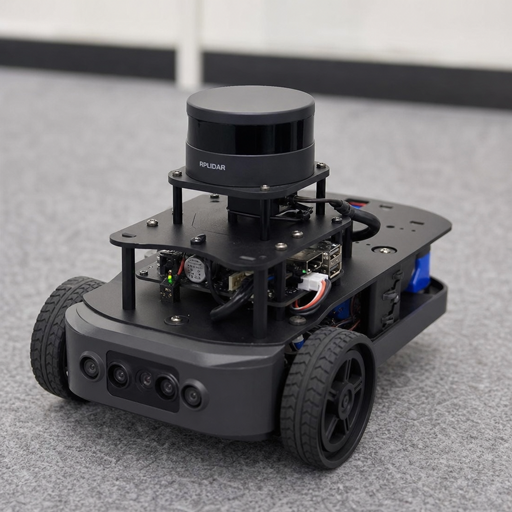
Miniaturized lidar sensors bring distance measurement and 3D perception into products where traditional lidar systems may be too large, power-hungry, or difficult to integrate. By combining compact optics, efficient light sources, sensitive detectors, and embedded processing, these sensors help machines understand nearby spaces with speed and precision. For developers, product teams, and technology buyers, the value is practical: smaller sensing modules can support smarter automation without forcing a complete redesign around bulky hardware.
What are miniaturized lidar sensors?
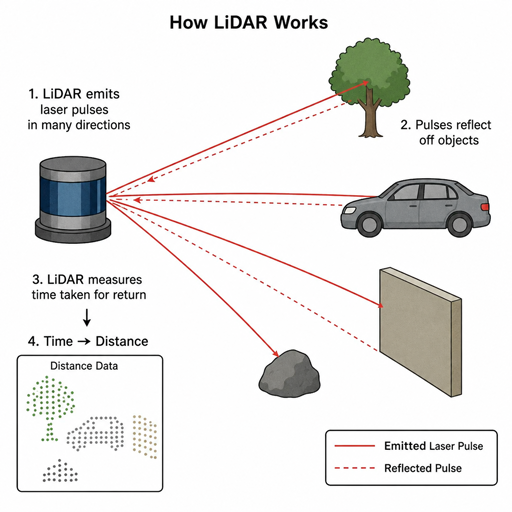
Miniaturized lidar sensors are compact devices that use light to measure distance, detect objects, and map surroundings in three dimensions. Like larger lidar systems, they emit pulses or modulated beams of light, receive reflections from surfaces, and calculate distance based on how the light returns. The difference is in scale: small lidar sensors are designed to fit into tighter spaces, use less power, and integrate more easily into mobile robots, vehicles, industrial equipment, smart infrastructure, and consumer devices.
The word “miniaturized” does not mean “less capable” by default. It means the sensing architecture has been condensed through optical design, semiconductor integration, micro-mechanical components, or solid-state scanning methods. In many applications, the goal is not to replace every long-range lidar system. It is to provide reliable spatial awareness where size, weight, cost, and energy use matter just as much as raw sensing range.
Why size matters in modern sensing
As machines become more mobile and more autonomous, physical space becomes a design constraint. A warehouse robot, drone, handheld scanner, delivery device, or smart security system may need depth perception, but it may not have room for a large rotating sensor assembly. Smaller sensing hardware gives engineers more freedom to place perception where it is most useful rather than where a large component happens to fit.
Miniaturization also affects the overall product experience. A compact sensor can reduce protrusions, improve enclosure design, lower weight, and support more discreet installation. In consumer-facing products, that can mean cleaner industrial design. In industrial products, it can mean easier mounting, fewer mechanical vulnerabilities, and better protection from dust, vibration, or accidental contact.
Power consumption is another reason size matters. Many compact devices run from batteries or shared power budgets, so every component must justify its energy use. Miniaturized lidar sensors often appeal to teams that need depth data without the thermal load, wiring demands, or packaging complexity associated with larger systems.
How small lidar sensors work
Most lidar systems share the same basic workflow: emit light, detect reflected light, and translate that return signal into distance information. The sensor may measure the time it takes for light to travel to an object and back, or it may use other optical measurement methods depending on the design. Once distance points are collected, the system can create a point cloud, detect obstacles, track movement, or feed data into a navigation or perception stack.
The miniaturized version of this process requires careful engineering. Optical components must be aligned in a compact package. The detector must capture useful signals despite limited aperture size. The processing electronics must handle measurements quickly while staying within heat and power limits. The final module also needs calibration, environmental protection, and interfaces that allow it to communicate with the host device.
Several design approaches can help reduce size:
- Integrated optics: Combining lenses, filters, emitters, and detectors into tighter assemblies reduces mechanical bulk.
- Solid-state or limited-motion scanning: Reducing or eliminating large moving parts can support thinner, more durable modules.
- On-board signal processing: Local processing can reduce the burden on the host system and simplify integration.
- Efficient emitters and detectors: Better component efficiency can reduce power needs while preserving useful sensing performance.
- Compact packaging: Purpose-built housings and connectors help the sensor fit into constrained product designs.
The best design depends on the application. A short-range sensor for presence detection has different priorities than a sensor used for navigation, mapping, or safety support.
Core benefits for product designers and engineers
Miniaturized lidar sensors are attractive because they can make spatial perception easier to deploy. They allow teams to add depth awareness without turning the sensor into the dominant mechanical feature of the product. That flexibility can shorten design discussions, reduce mounting compromises, and open up new use cases.
For engineers, the benefits usually fall into a few practical categories:
- Compact integration: Smaller modules can fit inside housings, behind protective windows, or on mobile platforms with limited surface area.
- Better placement options: Designers can position sensors closer to the ideal field of view instead of building around a large device.
- Lower system burden: Reduced weight and power needs can help preserve battery life, mobility, and thermal stability.
- Improved user experience: Compact sensing can support smoother product shapes and less visually intrusive hardware.
- Scalable deployment: Small form factors can make it more realistic to use multiple sensors for wider coverage or redundancy.
These benefits become especially important when a product has to balance sensing performance with reliability, aesthetics, cost targets, and manufacturability. A large sensor may perform well in isolation, but a smaller lidar module may deliver the more workable system-level solution.
Where miniaturized lidar sensors are used
Miniaturized lidar sensors appear wherever machines need to understand distance, shape, or motion in a compact footprint. Their role varies from simple object detection to advanced perception, depending on the surrounding software and hardware.
Robotics and autonomous machines
Robots need to know where they are, what surrounds them, and whether something is blocking their path. Small lidar sensors can help with obstacle detection, docking, navigation, and zone monitoring. In indoor environments such as warehouses, hospitals, offices, and retail spaces, compact lidar can support safer and more predictable movement.
Mobile robots often have limited room for sensors because they already carry batteries, motors, controllers, payload systems, and safety hardware. A miniaturized module can be easier to place near corners, bumpers, lift mechanisms, or elevated viewpoints. This helps the robot see the areas that matter without adding unnecessary height or width.
Drones and aerial platforms
Drones are especially sensitive to weight and power. A sensor that is too heavy can reduce flight time or payload capacity, while a sensor that draws too much power can limit mission duration. Miniaturized lidar sensors can support altitude estimation, landing assistance, obstacle awareness, terrain following, or mapping tasks when paired with suitable software.
Because drones operate in dynamic environments, sensor placement is critical. Compact modules can be mounted in forward-facing, downward-facing, or multi-directional configurations. This gives designers more flexibility when balancing perception coverage with aerodynamics and payload requirements.
Smart infrastructure and buildings
Lidar can help buildings and infrastructure systems understand movement and occupancy without relying on traditional camera imagery. Compact sensors may be used for people counting, access monitoring, object presence detection, elevator systems, smart lighting, or traffic-adjacent applications.
In these environments, discretion matters. A smaller sensor can be installed in ceilings, door frames, kiosks, cabinets, or equipment panels without drawing attention. That can be valuable in public spaces where design, privacy expectations, and maintenance access all influence technology choices.
Industrial automation
Factories and logistics facilities need reliable sensing for equipment positioning, bin monitoring, pallet detection, machine guarding support, and process automation. Small lidar sensors can provide depth data in places where large scanners are impractical. They may also complement cameras, ultrasonic sensors, radar, or safety-rated systems depending on the application.
Industrial environments can be demanding. Vibration, dust, changing lighting, reflective materials, and tight installation spaces all affect sensor selection. Miniaturized lidar is most useful when it combines compact size with rugged mounting, stable communication, and predictable performance under expected operating conditions.
What should you consider before choosing one?
You should choose a miniaturized lidar sensor based on the job it must perform, not just its size. The right device depends on range, field of view, resolution, update rate, power budget, environmental exposure, integration requirements, and the type of data your system needs. A compact module is only valuable if it can deliver dependable information in the conditions where the product will actually operate.
A practical evaluation starts with the use case. Are you detecting a nearby obstacle, measuring fill level, mapping a room, helping a robot navigate, or monitoring a doorway? Each task places different demands on the sensor. For example, obstacle avoidance may prioritize fast updates and a suitable field of view, while mapping may require more detailed spatial data and stable calibration.
Use this checklist before narrowing your options:
- Define the sensing task clearly. Decide whether you need simple distance readings, multi-point detection, object tracking, or full 3D perception.
- Set the operating range. Identify the minimum and maximum distances that matter, including edge cases.
- Review field-of-view needs. A narrow field may be enough for targeted measurement, while navigation may require broader coverage.
- Consider target surfaces. Dark, shiny, transparent, or angled surfaces may affect signal quality.
- Check environmental conditions. Account for dust, moisture, sunlight, vibration, temperature, and enclosure materials.
- Evaluate data output. Confirm whether the sensor provides raw measurements, point clouds, processed detections, or a simple interface.
- Plan mechanical integration. Leave room for mounting, cable routing, optical windows, cleaning access, and thermal management.
- Test with real scenarios. Lab performance is useful, but real-world validation reveals alignment, reflection, and interference issues.
This process prevents a common mistake: choosing the smallest available sensor before confirming what the system really needs to see.
Design trade-offs behind compact lidar
Miniaturization is powerful, but it usually involves trade-offs. A smaller optical aperture may collect less reflected light. A tighter package can make heat management more challenging. A compact field of view may be ideal for one task and too limited for another. Understanding these compromises helps teams select realistic solutions instead of chasing a perfect specification.
One important trade-off is range versus size. Long-range sensing often benefits from stronger emitted signals, larger optics, and highly sensitive receivers. Shorter-range applications can often use smaller modules effectively, especially when the target area is controlled or the required detection zone is limited. This is why miniaturized lidar is common in close-range perception, embedded measurement, and compact automation tasks.
Another trade-off is data richness versus processing complexity. A sensor that produces dense spatial data may require more computing power, filtering, and interpretation. A simpler sensor may be easier to integrate but provide less detail. Product teams should consider the full chain: sensing, processing, decision-making, and action.
Miniaturized lidar and other sensing technologies
Small lidar sensors are rarely the only sensing option. Many products combine multiple technologies because each one has strengths and limitations. Cameras can provide rich visual context. Radar can perform well in conditions where optical sensing may struggle. Ultrasonic sensors can offer simple short-range measurement. Infrared proximity sensors may be useful for basic detection.
Lidar’s advantage is that it provides direct distance information with strong spatial usefulness. It does not need ambient light in the same way a passive camera does, and it can provide shape and depth cues that simple proximity sensors cannot. However, lidar may still be affected by surface reflectivity, environmental conditions, packaging choices, and optical interference.
A sensor fusion approach can be more robust than relying on one device. For example, a mobile robot may use lidar for obstacle geometry, cameras for classification, wheel encoders for motion estimation, and inertial sensors for orientation. Miniaturized lidar fits well into this layered approach because it can add depth perception without consuming excessive space.
Integration tips for better performance
Good lidar performance depends on more than the sensor module. Mechanical design, software filtering, calibration, and installation quality all influence results. A compact sensor installed poorly can underperform, while a thoughtfully integrated one can provide reliable data over the life of the product.
Start with optical placement. Keep the sensor’s viewing area clear, avoid recessed mounting that blocks the field of view, and choose protective windows carefully. Materials, coatings, thickness, and angle can affect reflections and signal quality. If the device will operate in dusty or dirty environments, design for cleaning and maintenance rather than assuming the optical path will stay perfect.
Software matters as well. Raw lidar data may include noise, missed returns, or reflections that need filtering. Systems should account for temporary occlusions, changing surfaces, and unexpected objects. The goal is not simply to collect points; it is to convert measurements into decisions the product can act on safely and consistently.
For smoother integration, keep these practices in mind:
- Prototype early with the intended enclosure. Testing an exposed sensor is not the same as testing it behind the final cover or window.
- Validate at different angles and distances. Objects rarely appear only in ideal positions.
- Log real operating data. Field data helps tune thresholds, filters, and behavior.
- Plan for calibration. Even compact sensors may need alignment checks or software compensation.
- Think about serviceability. A sensor that is hard to access may become a maintenance problem later.
The future of compact 3D perception
Miniaturized lidar sensors are part of a broader shift toward embedding perception into everyday machines. As components become smaller and more efficient, depth sensing can move beyond large vehicles and specialized equipment into more products, tools, and spaces. The result is a world where devices can respond not only to commands, but also to their physical surroundings.
This does not mean every product needs lidar. The best sensing choice always depends on the problem. But when a device needs accurate distance awareness in a compact form, miniaturized lidar deserves serious consideration. It gives designers another way to make machines more aware, adaptive, and useful without sacrificing the physical constraints that make a product viable.
Key takeaway
Miniaturized lidar sensors make 3D sensing more accessible for compact, mobile, and design-sensitive applications. They can support navigation, detection, measurement, and automation when selected and integrated with the full system in mind. The smartest approach is to define the sensing task first, then choose small lidar sensors that match the real environment, mechanical limits, power budget, and data needs of the product.
