
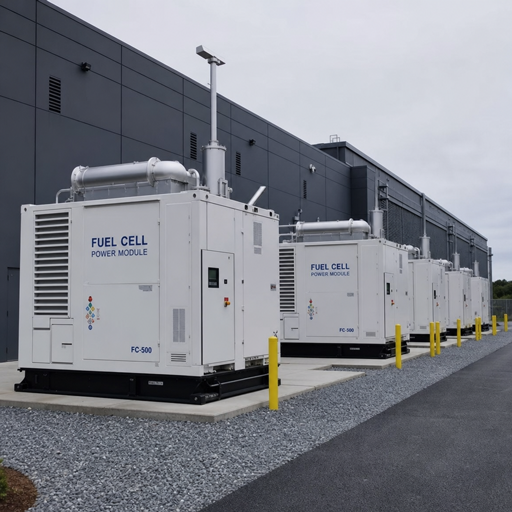
Petra Power is positioning solid oxide fuel cells as a practical answer to a power problem that is growing on two very different fronts: AI-driven data centers and energy-hungry defense vehicles. The larger story is not just one company’s technology, but the push to modernize energy solutions for data centers and defense vehicles with systems that are efficient, flexible, resilient, and easier to deploy where power is urgently needed.
For operators evaluating clean energy technologies, the Petra Power conversation is worth watching because it sits at the intersection of distributed generation, hydrogen readiness, fuel flexibility, and mission-critical uptime. It also reflects a broader market shift: energy is no longer a back-office utility decision; it is now a strategic constraint that can determine where facilities get built, how fast missions move, and which organizations can scale.
Why are data centers and defense vehicles looking for new power architectures?
Data centers and defense vehicles are looking for new power architectures because their electricity needs are becoming larger, more mobile, and less tolerant of delay. Data centers need fast, reliable power for AI and cloud infrastructure, while defense platforms need onboard electricity for sensors, communications, computing, and auxiliary loads without depending entirely on idling engines or vulnerable fuel logistics.
The U.S. Department of Energy has warned that data center growth, AI, manufacturing, and electrification are contributing to a new era of rising electricity demand. DOE cited analysis showing that data centers used about 4.4% of U.S. electricity in 2023 and could rise to roughly 6.7% to 12% by 2028, depending on growth scenarios.
That kind of demand changes how infrastructure teams think about power. Waiting years for grid upgrades can slow development, and relying only on diesel backup can create emissions, noise, maintenance, and fuel-cost challenges. Modern operators increasingly want smart energy solutions that combine reliability, lower local impact, and a realistic path to scale.
Defense faces a different version of the same issue. Military vehicles are becoming rolling electronics platforms, not just mobility assets. The Department of Defense has emphasized operational energy resilience and reducing logistics risk, while official budget materials have pointed to investments in silent watch, longer operational duration, and more onboard electrical power for next-generation combat vehicles.
Petra Power’s approach centers on solid oxide fuel cells
Petra Power’s core bet is that solid oxide fuel cells can provide useful on-site and mobile power without the combustion pathway used by conventional generators and engines. NASA’s Technology Transfer Program describes Petra Power as a company focused on precision manufacturing of power systems and electrolyzers for commercial and defense energy challenges, with reversible technology that can support both electricity and hydrogen production in the same platform.
Solid oxide fuel cells, often shortened to SOFCs, convert the chemical energy in fuel directly into electricity through an electrochemical process. That matters because combustion-based systems typically turn fuel into heat, then motion, then electricity, losing energy through several conversion steps. Fuel cells avoid much of that chain, which is why they are frequently discussed as an efficient option for distributed power.
Petra’s public site frames its offering around on-site power for data centers, critical backup power, heavy industrial power, and utility-scale power. The company also states that its systems are designed for fuel flexibility, including natural gas, diesel, and hydrogen, and it claims industry-leading efficiency with up to 3x fuel savings compared with generators and turbines.
That fuel-flexible positioning is important. Many organizations want green energy solutions, but they also need technology that can work inside today’s infrastructure. A system that can operate on available fuels while preserving a pathway toward hydrogen can be more practical than a system that depends on a fully mature hydrogen supply chain from day one.
How can fuel cells fit into modern energy solutions?
Fuel cells can fit into modern energy solutions as distributed generation assets that sit close to the load, provide steady power, and reduce dependence on long interconnection timelines. They are not a universal replacement for the grid, renewables, batteries, or backup generators; instead, they can become one layer in a more resilient power stack.
The U.S. Department of Energy describes solid oxide fuel cells as a technology suited for modular-scale and large-scale power generation, including systems fueled by natural gas or synthesis gas. DOE’s National Energy Technology Laboratory has also highlighted applications such as distributed generation, microgrids, charging and fueling stations, and data centers.
For a data center, the attraction is straightforward: put power where the compute is. A facility can use on-site generation to reduce exposure to grid bottlenecks, support faster commissioning, or add capacity in phases. In some cases, on-site generation may also help align computing growth with local grid constraints rather than forcing every new megawatt through the same strained interconnection queue.
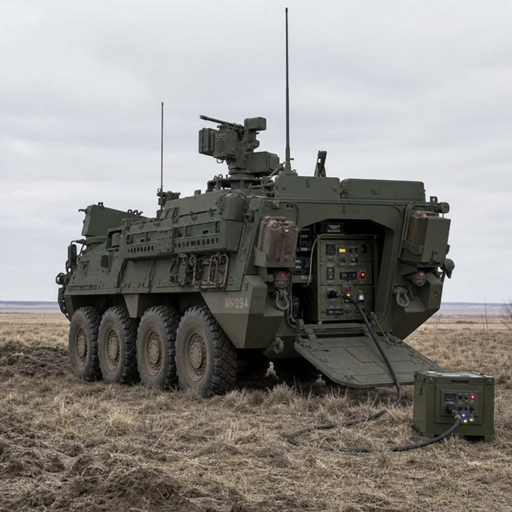
For defense vehicles, the value is different but related. Auxiliary power can support onboard systems when the main engine is off, helping reduce noise, heat signature, fuel consumption, and mechanical wear in certain operating modes. TechCrunch reported that Petra is targeting first commercial data center deployments in 2028 and full-scale production in 2029, while defense vehicle use remains in testing.
The data center power problem is now a development problem
The data center industry used to talk about power mostly in terms of efficiency: power usage effectiveness, cooling design, backup systems, and renewable procurement. Those still matter, but the conversation has expanded. Today, access to electricity can determine whether a campus moves forward, where it is located, and how quickly customers can get capacity.
That is especially visible in fast-growing technology corridors. In Utah, for example, lawmakers have discussed new rules around data center development, ratepayer protection, water resources, and behind-the-meter power. The Utah House reported in September 2026 that seven projects under construction were expected to add about 2,600 megawatts of demand, including 1,700 megawatts expected to operate behind the meter or off the electric grid.
This is where the phrase modern energy solutions Utah becomes more than a keyword. States with strong technology growth, large land availability, and rising data center interest must balance economic development with grid reliability, water use, land use, and customer rates. On-site power can help, but only if it is planned transparently and integrated with community needs.
Alternative energy sources and renewable energy options remain central to the long-term picture. Solar, wind, geothermal, hydro, nuclear, batteries, demand response, and efficiency all have roles to play. Fuel cells add another option: a modular, dispatchable power source that can be located near critical loads and potentially paired with low-carbon fuels over time.
Defense vehicles need power without adding fragility
Modern defense vehicles are becoming more electrically intensive because communications, sensing, electronic warfare, autonomy, and battlefield networking all require power. The challenge is not simply producing more electricity; it is producing it in a way that supports survivability, logistics, and mission flexibility. Every extra fuel delivery, maintenance demand, or heat signature can become an operational concern.
The Army has described battlefield energy as a system that should avoid dependence on a single generation source. Its discussion of open power architecture points toward hybrid systems that can draw from generators, vehicles, renewable resources, and other assets as conditions change.
That mindset is compatible with Petra Power’s defense-vehicle angle. A compact fuel cell auxiliary power unit could support silent watch, run communications, or power sensors while reducing the need to idle a primary engine. It would not eliminate fuel logistics, but it could make each unit of fuel more useful if the system delivers higher efficiency in the relevant operating profile.
The same caution applies here as in data centers: adoption depends on testing, durability, cost, integration, maintenance, and procurement timelines. Military systems must survive vibration, shock, temperature extremes, field repair constraints, and long readiness cycles. Promising clean energy technologies only become mission assets when they work reliably outside a demo environment.
Practical benefits operators will look for
Whether the buyer is a cloud infrastructure company, a colocation provider, an industrial operator, or a defense integrator, the evaluation will come down to business and mission outcomes. Fuel cell technology is interesting, but procurement teams will ask practical questions before they commit.
Key evaluation areas include:
- Speed to power: Can the system be permitted, delivered, installed, and commissioned faster than a conventional grid upgrade or large central plant?
- Fuel availability: Does the site have access to natural gas, diesel, hydrogen, or another suitable fuel, and what are the cost and supply risks?
- Efficiency at real load: Does performance hold up across the actual duty cycle, not just a lab condition or ideal operating point?
- Uptime and serviceability: Can the system support mission-critical reliability, planned maintenance, and rapid repair?
- Emissions profile: How does the system compare with generators, turbines, and grid power under the local fuel mix?
- Noise and siting: Can it operate near populated areas or sensitive facilities with fewer local impacts?
- Scalability: Can modules be added as demand grows, or does the architecture create new bottlenecks?
- Hydrogen readiness: Can the system transition toward lower-carbon fuels as supply chains and economics improve?
Petra emphasizes several of these themes publicly, including deployment speed, reliability, fuel flexibility, quiet operation, and reduced siting friction. Its website states that power can be deployed in months rather than years and that its systems are designed for “5 nines” uptime, though buyers should validate those claims against project-specific requirements, warranties, and operating data.
Clean energy is becoming a portfolio decision
The most credible energy strategies are rarely built around one technology. A data center might combine grid service, renewable energy contracts, batteries, fuel cells, backup generators, and load management. A military platform might combine batteries, fuel cells, generators, vehicle alternators, and renewable charging where conditions allow.
That portfolio approach is what makes terms like smart energy solutions and green energy solutions meaningful. “Smart” means the system can match the right power source to the right use case. “Green” means the emissions profile improves over time rather than merely shifting impacts elsewhere.
Fuel cells may be especially useful when operators need steady, high-quality power close to the load. Batteries are excellent for short-duration response, ride-through, and smoothing. Renewables can provide low-cost energy when the resource is available. The grid remains essential for bulk power and regional balancing. The future is not fuel cells versus renewables; it is intelligent coordination across multiple assets.
Petra’s reversible platform concept also points toward a more flexible future. NASA’s description notes that Petra’s technology can both produce electricity and hydrogen within the same platform. If that capability proves economical at scale, it could support a system where excess clean electricity is converted into hydrogen and later used for power, industrial processes, or mobility applications.
What to watch as Petra Power moves toward deployment
Petra Power’s opportunity is substantial, but the next phase will depend on execution. The company is addressing markets with urgent pain points, yet both data centers and defense programs have long qualification cycles. A technology can be promising and still face difficult hurdles in manufacturing, reliability, financing, and customer adoption.
The most useful signals to watch include:
- Pilot performance: Do early systems meet uptime, efficiency, maintenance, and emissions expectations under real operating conditions?
- Customer mix: Are deployments limited to pilots, or do infrastructure providers begin planning repeat projects?
- Manufacturing scale: Can the company produce systems at consistent quality without losing the precision that solid oxide technology requires?
- Fuel strategy: Does the technology deliver value with available fuels today while maintaining a credible path to lower-carbon fuels?
- Defense validation: Do vehicle tests show that the system can handle vibration, weight limits, thermal constraints, and field conditions?
- Regulatory acceptance: Can projects move through air permitting, utility coordination, local review, and safety requirements efficiently?
These milestones matter because energy buyers are conservative for good reason. A data center cannot risk downtime, and a defense vehicle cannot carry unproven equipment that compromises the mission. Petra’s story will become more compelling as it moves from technical promise to field-proven performance.
A broader shift toward resilient, distributed power
Petra Power’s rise reflects a broader shift in how organizations think about energy. Centralized grids remain vital, but the fastest-growing loads increasingly want power that can be deployed closer to the point of use. Data centers want capacity without years of delay. Defense vehicles want onboard power without unnecessary idling or fragile logistics. Industrial users want cleaner, quieter, more controllable systems.
That is why alternative energy sources and renewable energy options are expanding alongside distributed generation. The goal is not only to decarbonize, but to make power more resilient, modular, and responsive. Clean energy technologies that can meet those operational requirements will have an advantage over solutions that look good on paper but fail to solve deployment realities.
For Petra Power, the path forward is clear but demanding: prove the systems, scale manufacturing, and show that solid oxide fuel cells can deliver economic and operational value in some of the hardest power environments. If the company succeeds, it could become part of the next generation of modern energy solutions for data centers and defense vehicles.
The takeaway is simple: energy modernization is no longer optional infrastructure work. It is a competitive and strategic priority. Petra Power is one of the companies trying to turn that priority into deployable hardware, and its progress will be worth following as data centers, defense systems, and high-growth regions look for cleaner, smarter, and more flexible ways to keep power available where it matters most.
