
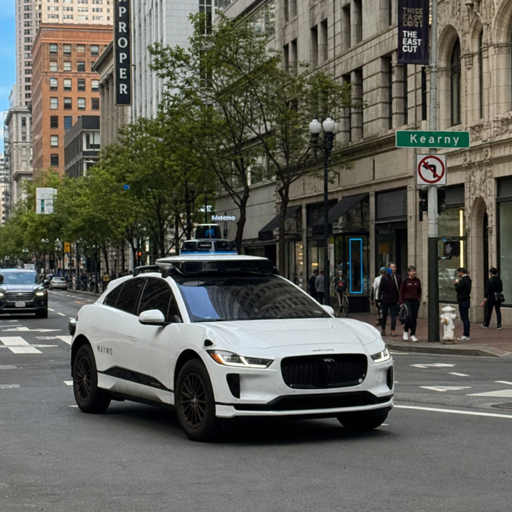
Commercial Robotaxis are moving from a futuristic idea into a practical transportation model built around on-demand, driverless rides. For riders, the promise is simple: more convenient trips without owning a car; for cities and operators, the challenge is making those trips safe, reliable, affordable, and useful at scale. This article explains how robotaxi services fit into mobility as a service, what has to happen before they become common, and how they may reshape urban mobility over time.
What are commercial robotaxis, and why do they matter?
Commercial robotaxis are autonomous taxis operated as a paid transportation service, usually through an app or mobility platform, without a human driver controlling the vehicle during the trip. They matter because they could change how people think about everyday transportation: instead of choosing between private car ownership, public transit, ride-hailing, biking, or walking, riders may gain another flexible option for short and medium-distance trips.
Unlike experimental prototypes, commercial robotaxis must work in the real world. They need to handle traffic, passengers, road rules, weather, emergency situations, customer service issues, cleaning, charging or fueling, maintenance, and fleet management. The technology is only one part of the system. A robotaxi service also has to earn rider trust, meet local requirements, integrate with existing streets, and operate economically enough to survive.
That is why the future of Commercial Robotaxis is not only about whether driverless vehicles can drive. It is about whether they can become a dependable transportation service that people actually want to use. The winners in this space will likely be the operators that combine safe automation with thoughtful service design, strong operations, and clear value for riders.
The shift from car ownership to mobility as a service
Robotaxis fit into a broader movement called mobility as a service, where transportation is accessed when needed rather than owned outright. In this model, people combine different travel options through digital platforms: public transit, shared bikes, scooters, ride-hailing, car sharing, walking routes, and eventually autonomous taxis. The goal is not to replace every mode with one new technology, but to make trips easier to plan and complete.
For many households, owning a car is expensive, especially when it sits parked most of the day. Insurance, fuel, maintenance, parking, financing, registration, and depreciation all add up. A well-run robotaxi network could make it easier for some people to delay buying a second car, reduce car dependency, or choose on-demand rides only when public transit is inconvenient.
For cities, the opportunity is more complicated. If robotaxi services reduce private car ownership and connect people to transit, they could support more efficient urban mobility. If they simply add more empty vehicles to already crowded roads, they could increase congestion. The difference depends on pricing, regulation, fleet behavior, curb management, and whether services are designed to complement rather than compete with high-capacity transportation.
A healthy mobility as a service ecosystem may include:
- Transit for high-volume corridors, where buses and trains move many people efficiently.
- Robotaxis for flexible point-to-point trips, especially late-night, first-mile, last-mile, or lower-density travel.
- Walking and cycling for short trips, supported by safer streets and better infrastructure.
- Shared mobility options, such as bikes, scooters, and car sharing, for trips that do not require a full vehicle.
- Integrated payment and planning tools, so riders can compare cost, travel time, accessibility, and convenience in one place.
The future transportation system is likely to be mixed. Robotaxis may become important, but they will be most useful when they fill real gaps instead of trying to replace every other mode.
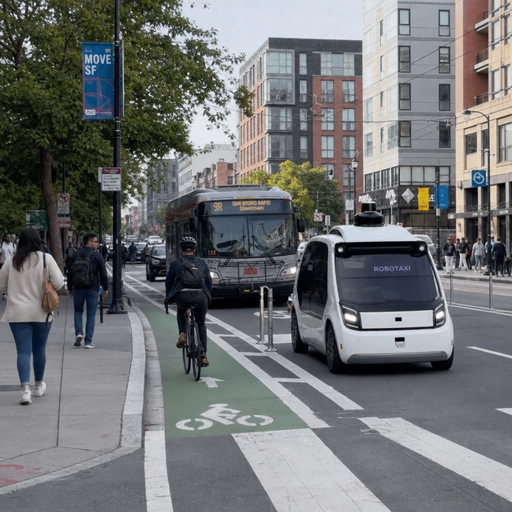
How driverless vehicles make robotaxi services possible
Driverless vehicles rely on a combination of sensors, software, mapping, connectivity, vehicle controls, and fleet operations. Sensors help the vehicle understand its surroundings. Software interprets that information, predicts how nearby road users may move, and plans safe vehicle behavior. The vehicle then accelerates, brakes, turns, signals, and navigates according to that plan.
This may sound simple in summary, but real streets are full of edge cases. A delivery truck blocks a lane. A cyclist swerves around a pothole. A pedestrian hesitates at a crosswalk. Construction changes the road overnight. Rain, glare, fog, or unusual signage can make perception harder. A commercial service has to manage these situations calmly and consistently.
Most robotaxi systems are expected to begin in limited operating areas before expanding. This controlled approach allows operators to understand local roads, refine pickup and drop-off points, train support teams, and monitor vehicle performance. A narrow launch area is not a failure; it is often a practical way to build a safer service before scaling.
The vehicle is only part of the product
A rider does not experience sensors or algorithms directly. They experience whether the car arrives on time, stops in a safe location, drives smoothly, keeps the cabin clean, handles route changes, and provides help when something goes wrong. That means robotaxi operators must think like transportation companies, software companies, and hospitality providers at the same time.
The operational layer includes fleet dispatch, remote assistance, charging or fueling, cleaning, repairs, customer support, incident response, insurance, data security, and compliance. A technically impressive vehicle will not become a trusted service if the overall experience feels confusing, unreliable, or unsafe.
Remote support will shape rider confidence
Driverless does not necessarily mean unsupported. Commercial robotaxi fleets may use remote assistance teams to help vehicles interpret unusual situations, support riders, and coordinate with local authorities when needed. The exact level of remote involvement can vary by operator and jurisdiction, but the rider-facing principle is clear: people need to know that help is available.
Visible support features can reduce anxiety. In-app assistance, clear audio prompts, emergency controls, ride status updates, and transparent pickup instructions all help riders understand what is happening. Trust is built through repeated ordinary trips, not only through technical claims.
What will make autonomous taxis commercially viable?
Autonomous taxis become commercially viable when they can provide safe, useful rides at a cost and reliability level that works for riders, operators, cities, and regulators. That requires more than removing the driver from the front seat. It requires a complete operating model where vehicles are used efficiently, maintained properly, matched to demand, and accepted by the public.
Commercial viability depends on several connected factors. If the vehicle technology is strong but the service area is too small, the business may struggle to attract repeat riders. If demand is high but vehicles frequently block traffic or create curbside problems, cities may push back. If rides are convenient but too expensive, adoption may stay limited. Sustainable robotaxi services need balance.
Key commercial factors include:
- High vehicle utilization A robotaxi earns revenue only when it is moving riders or positioning itself for useful demand. Too much idle time, deadheading, or empty repositioning can weaken the economics.
- Predictable service zones Early commercial robotaxis may work best in areas with clear road layouts, strong demand, manageable weather conditions, and defined pickup points. Expansion can happen gradually as performance improves.
- Efficient maintenance and cleaning Vehicles used all day need frequent care. Operators must manage cabin cleanliness, sensor calibration, tire wear, charging, software updates, and repairs without taking too many vehicles out of service.
- Clear rider value Riders need a reason to choose autonomous taxis over driving, transit, walking, or conventional ride-hailing. That reason may be price, availability, privacy, novelty, accessibility, predictability, or comfort.
- Regulatory confidence Cities and transportation agencies need evidence that robotaxi services can operate responsibly. That includes safety reporting, data-sharing where appropriate, incident handling, accessibility considerations, and compliance with local rules.
Commercial success will likely arrive unevenly. Some districts, campuses, airports, entertainment zones, business corridors, or planned communities may be better suited for early deployment than complex citywide networks. Over time, successful patterns can spread.
The rider experience will decide public adoption
People may be curious about driverless vehicles, but curiosity alone does not create lasting demand. Riders will return only if the experience feels easy, safe, and worth the cost. The first ride may be about novelty; the fifth ride is about usefulness.
A strong robotaxi experience should make the unfamiliar feel ordinary. Booking should be simple. The vehicle should identify itself clearly. The door process should be intuitive. The route should be visible in the app. The cabin should feel clean and comfortable. The ride should be smooth rather than jerky or overly cautious. The drop-off should happen somewhere safe and convenient.
There are also emotional factors. Some riders may feel uncomfortable without a driver. Others may enjoy the privacy. Some may worry about being stuck in the vehicle during an unusual event. Others may appreciate a consistent, quiet ride. Operators need to design for all of these reactions instead of assuming that technical success automatically creates human comfort.
Practical rider adoption will depend on whether robotaxi services can deliver:
- Clarity: Riders understand where to meet the vehicle, how to enter, and what to do during the trip.
- Control: Riders can adjust basic preferences, contact support, and end the trip safely if needed.
- Consistency: The service behaves predictably across different times of day and traffic conditions.
- Accessibility: Vehicles and apps support a wider range of mobility, visual, hearing, and language needs.
- Trust: Riders believe the system is designed to protect them, their data, and the people around them.
Robotaxi companies often talk about autonomy, but passengers care about the whole journey. A technically capable ride that creates confusion at pickup may still feel like a poor service.
Urban mobility will change in visible and subtle ways
The biggest changes from robotaxis may not happen all at once. Instead, cities may see small shifts that gradually affect street design, parking demand, curb use, public transit connections, and travel behavior. Some changes may be positive, while others will need active management.
One visible change could be the growing importance of pickup and drop-off zones. If more people use autonomous taxis, curb space becomes a high-value part of the transportation network. Vehicles need safe places to stop without blocking bike lanes, bus lanes, crosswalks, or traffic. Cities may need better digital curb rules, designated loading zones, and enforcement tools.
Parking could also change over time. If robotaxis reduce the need for private vehicles in certain areas, some parking spaces might be repurposed for housing, parks, loading zones, wider sidewalks, outdoor commerce, or bike infrastructure. However, this outcome is not automatic. If autonomous vehicles circulate empty while waiting for riders, they may reduce parking demand but increase road traffic.
Public transit will remain central in dense corridors because one train or bus can carry far more people than individual taxis. The more promising scenario is one where autonomous taxis help connect riders to transit stations, serve late-night trips, support people with limited mobility, and provide flexible options in areas where fixed-route service is hard to operate frequently.
Opportunities for businesses and property owners
The rise of robotaxi services could affect more than transportation companies. Hotels, airports, hospitals, office parks, retail centers, universities, entertainment venues, and residential developments may all need to think differently about how people arrive and leave.
For commercial properties, the front door may become more important than the parking lot. A confusing pickup area can create congestion and frustration, while a well-designed arrival zone can make the property feel easier to use. Buildings that prepare for autonomous mobility may focus on clear signage, safe waiting areas, digital wayfinding, and curb layouts that separate vehicles, pedestrians, bikes, and deliveries.
Employers may also pay attention to future transportation options as part of workplace planning. If robotaxis become reliable in certain districts, they could influence commuting benefits, late-shift transportation, visitor access, and connections to transit hubs. The impact will vary by region, but transportation flexibility can become part of how organizations think about employee and customer experience.
Businesses can prepare by asking practical questions:
- Where do ride-hailing vehicles currently stop, and does that location create conflicts?
- Could signage or digital instructions make pickups easier for visitors?
- Are entrances accessible for riders with mobility needs?
- Would designated loading zones reduce congestion during peak hours?
- How might reduced parking demand affect long-term property planning?
- Could partnerships with mobility providers improve access without adding more parking?
These questions are useful even before robotaxis are widespread. Many properties already struggle with curb congestion from ride-hailing, deliveries, shuttles, and private vehicles. Planning for autonomous taxis can improve today’s transportation flow while preparing for tomorrow’s.
Safety, regulation, and public trust remain central
No discussion of driverless vehicles is complete without safety. Commercial robotaxis operate in public spaces, so their performance affects passengers, pedestrians, cyclists, emergency responders, other drivers, and nearby communities. Public trust depends on transparent, responsible deployment rather than bold promises.
Regulation will likely continue to evolve as cities, states, and national agencies learn from real-world operations. Rules may address testing requirements, reporting, insurance, cybersecurity, data handling, accessibility, emergency response, fleet size, service zones, and interactions with first responders. Operators that communicate clearly with public agencies may have an easier path than those that treat regulation as an obstacle.
Safety is also broader than crash avoidance. A robotaxi service must consider passenger security, harassment prevention, emergency communication, vehicle cleanliness, data privacy, and equitable access. If riders feel physically safe but digitally exposed, or if vehicles serve only the most profitable neighborhoods, public acceptance may weaken.
Trust is built through transparency
People do not need to know every technical detail of an autonomous driving system, but they do need honest information. What can the service do? Where does it operate? What happens in bad weather? How are incidents handled? How can riders get help? What data is collected during a trip?
Clear answers create realistic expectations. Overclaiming can create disappointment or fear when limitations appear. Underexplaining can make the technology feel mysterious. The strongest operators will likely be those that explain their services plainly and respond quickly when problems occur.
The economics of robotaxi services will shape the pace of growth
The timeline for widespread robotaxi adoption depends heavily on economics. Vehicles with autonomous hardware, specialized maintenance, software systems, support teams, and operational oversight can be costly. Operators need enough demand and efficiency to make each service area viable.
At first, robotaxi services may focus on areas where trip density is high and routes are manageable. Dense downtowns, airport-adjacent districts, campus environments, tourist areas, or planned developments may offer repeatable demand. Low-density suburbs may be harder unless service models are adapted, because vehicles may travel longer distances between riders.
Pricing will be a major factor. If robotaxis are priced too high, they may remain a premium novelty. If they are priced too low, operators may struggle to maintain service quality. The most sustainable model may involve different pricing for different use cases: shared rides, private rides, subscriptions, employer programs, transit connections, or off-peak incentives.
Fleet size also matters. Too few vehicles create long wait times. Too many vehicles create idle assets and potential congestion. Operators need sophisticated demand forecasting, repositioning strategies, and local partnerships to match supply with real travel patterns.
In short, the future transportation impact of robotaxis will not be determined by technology alone. It will be determined by whether the service can operate day after day with the reliability and economics of a real transportation network.
Environmental impact depends on how services are deployed
Robotaxis are often discussed as part of a cleaner transportation future, especially when fleets use electric vehicles. Electric autonomous taxis could reduce tailpipe emissions in cities, particularly if they replace trips made by gasoline-powered cars. But environmental benefits are not guaranteed simply because a vehicle is driverless.
The biggest variable is whether robotaxis reduce total vehicle miles or increase them. If people use autonomous taxis instead of walking, biking, or taking transit, cities could see more traffic and energy use. If empty vehicles spend too much time repositioning, environmental gains may shrink. If fleets are electric but charged with high-emission electricity, the broader impact depends on the energy mix.
A more sustainable robotaxi future would prioritize:
- Electric fleets where practical, paired with thoughtful charging infrastructure.
- Shared rides when appropriate, especially on common routes and at peak times.
- Transit integration, so autonomous taxis connect to high-capacity modes rather than replace them.
- Reduced empty travel, using smarter dispatch and parking strategies.
- Compact urban planning, where people do not need long vehicle trips for every daily activity.
The environmental question is not “Are robotaxis good or bad?” It is “What trips do they replace, how are they powered, and how are they managed?” The answer will vary by city.
Equity and accessibility should be designed in from the start
Autonomous taxis could improve mobility for people who cannot drive, choose not to drive, or have limited access to reliable transportation. That includes older adults, people with certain disabilities, shift workers, visitors, and households without a private car. But these benefits will not happen automatically.
Accessibility must be part of the service design. Apps should be usable for people with visual, hearing, cognitive, or mobility needs. Vehicles should include clear instructions, easy entry and exit, and support options for riders who need assistance. Some fleets may need wheelchair-accessible vehicles, securement systems, ramps, or other specialized features.
Equity also involves geography and pricing. If robotaxi services operate only in wealthy neighborhoods or entertainment districts, they may deepen transportation gaps. If they connect underserved areas to jobs, healthcare, education, and transit, they could become a useful part of a more inclusive mobility system.
Cities and operators can support better outcomes by considering:
- Service coverage across different neighborhoods.
- Payment options for riders without traditional banking tools.
- Multilingual rider support.
- Accessible vehicle availability.
- Connections to essential destinations, not only high-demand nightlife or business districts.
- Community feedback before and after deployment.
The future of urban mobility should not be measured only by technical sophistication. It should also be measured by who can use the system and whether it expands real access.
What should cities do to prepare?
Cities should prepare for commercial robotaxis by treating them as part of the transportation system, not as isolated tech experiments. That means setting clear rules, managing curb space, coordinating with transit, requiring responsible data practices, and engaging the public before services scale. The cities that prepare early can shape outcomes instead of reacting after problems appear.
A practical city strategy does not need to assume that robotaxis will dominate every street. It should create a flexible framework that can adjust as services evolve. Local governments can start by understanding current ride-hailing patterns, curb conflicts, parking demand, transit gaps, and safety concerns. Those same issues will matter when autonomous taxis arrive.
A preparation checklist for city leaders might include:
- Map high-conflict curb zones Identify where ride-hailing, deliveries, buses, bikes, and pedestrians already compete for space. These areas may need redesigned pickup zones before autonomous fleets expand.
- Define operating expectations Establish rules for stopping, loading, incident reporting, data sharing, emergency response, accessibility, and communication with city agencies.
- Protect transit priority Ensure robotaxi services do not block bus lanes, weaken core transit routes, or encourage unnecessary car trips in dense corridors.
- Plan for accessibility Include disability advocates, older adults, and community organizations in planning conversations so service design reflects real needs.
- Create feedback loops Give residents, riders, first responders, and businesses clear ways to report problems and suggest improvements.
- Measure outcomes over time Track congestion, curb performance, safety incidents, service coverage, rider access, and integration with public transportation.
Preparation is not about saying yes or no to innovation. It is about making sure innovation serves public goals.
What should riders expect in the near future?
Riders should expect robotaxi services to expand gradually, with availability varying by city, neighborhood, time of day, weather, and local rules. In many places, autonomous taxis may first feel like a special option rather than a universal replacement for conventional transportation. The experience will likely improve through repeated service, clearer interfaces, better pickup zones, and growing public familiarity.
Early riders may notice that autonomous vehicles behave differently from human-driven cars. They may be more cautious in complex situations, choose specific pickup locations, or avoid certain roads. Some riders will appreciate that predictability, while others may find it slower than expected. The key is to approach the first ride with realistic expectations.
Before using a robotaxi service, riders may want to check:
- Whether the service operates in both the pickup and destination areas.
- Where the vehicle is allowed to stop.
- How to contact support during the ride.
- Whether the vehicle meets any accessibility needs.
- What happens if weather, construction, or traffic changes the route.
- How pricing compares with transit, driving, or other ride options.
As services mature, the best ones will feel less like a technology demonstration and more like normal transportation. That is when autonomous taxis may begin to move from novelty to habit.
The most likely future is gradual, local, and mixed
The future of Commercial Robotaxis will not arrive everywhere at the same speed. Some cities may welcome rapid deployment. Others may move cautiously. Some neighborhoods may be ideal for early service, while others may remain difficult for years. Weather, road design, regulation, public opinion, insurance, labor issues, and economics will all influence the pace.
The most realistic future is not a sudden switch from human driving to full autonomy. It is a mixed system where driverless vehicles operate in defined areas, conventional ride-hailing continues, public transit remains essential, and people still walk, bike, drive, and share rides. Over time, the boundaries may expand as technology improves and operating models mature.
This gradual path may be healthier than a rushed one. Transportation systems are deeply connected to public safety, land use, business activity, and daily life. Careful deployment gives cities and operators time to learn what works, fix what does not, and build trust with communities.
Key takeaways for the future of robotaxi services
Robotaxis are not just another app-based ride option. They represent a shift in how transportation can be delivered, managed, and experienced. Their future will depend on the relationship between technology, policy, economics, design, and public trust.
The most important takeaways are:
- Commercial robotaxis are services, not just vehicles. The full experience includes booking, pickup, ride comfort, support, safety, maintenance, and drop-off.
- Mobility as a service will be strongest when modes work together. Robotaxis can support transit, walking, cycling, and shared mobility rather than replacing them all.
- Cities need to manage curb space and congestion. Without thoughtful rules, autonomous fleets could create new street-level problems.
- Rider trust will determine adoption. People need clear communication, reliable service, accessible design, and visible support.
- Environmental benefits depend on deployment choices. Electric fleets, shared rides, transit integration, and reduced empty travel matter.
- Equity must be intentional. Service areas, pricing, accessibility, and community input will shape who benefits.
Commercial Robotaxis may become an important part of future transportation, but their success will depend on practical execution more than futuristic branding. The most valuable services will be those that make daily travel simpler, safer, and more connected without overwhelming streets or excluding the people who need better mobility most.
A practical conclusion
The future of commercial robotaxis is promising, but it is not automatic. Driverless vehicles can support a more flexible transportation system, especially when they are connected to public transit, thoughtful city planning, and rider-centered service design. The technology may capture attention, but the real measure of success will be whether robotaxi services solve everyday mobility problems.
For riders, the coming years may bring more choice. For cities, they will bring important decisions about streets, data, access, and safety. For businesses and property owners, they will create new expectations around arrivals, pickups, and mobility planning. The future will belong to the communities and operators that treat autonomous taxis not as a spectacle, but as one useful tool in a broader, more humane urban mobility network.
