
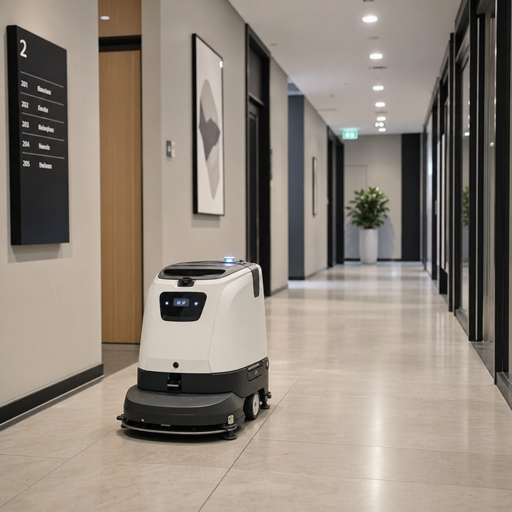
Robots that clean floors, inspect corridors, monitor supplies, and report issues are becoming a practical part of modern building operations. For facility leaders, autonomous facility maintenance robots are not just about replacing repetitive tasks; they are about making daily service more consistent, visible, and easier to manage. Used well, they support staff, reduce missed work, and give teams better information about the condition of the spaces they maintain.
What are autonomous facility maintenance robots?
Autonomous facility maintenance robots are machines designed to perform routine building-care tasks with limited human direction. They may clean floors, patrol assigned routes, scan for spills or obstructions, capture condition data, or assist with basic logistics inside a facility. The value comes from combining physical work with sensors, navigation, and software, so the robot can follow a plan, adapt to its environment, and report what happened.
In a traditional maintenance model, supervisors often rely on checklists, radio calls, and manual inspections to understand whether work has been completed. Robots add another layer of operational visibility. They can log where they went, how long a task took, whether an area was blocked, and when human attention is needed.
That does not make human teams less important. In most environments, robots handle predictable, repeatable work while people focus on exceptions, customer-facing service, detailed cleaning, repairs, safety decisions, and judgment-based tasks.
The shift toward smart facility management
Smart facility management is the broader movement behind this technology. Instead of treating buildings as static spaces that are checked manually, smart systems use connected tools, automation, and data to help teams respond faster and plan better. Robots can become one piece of that connected operating model.
For example, an intelligent cleaning robot may complete a scheduled route overnight and send a status report when it finishes. If it encounters a blocked hallway, the software can flag the missed area so a person can follow up. Over time, the facility team may see patterns: certain entrances get dirty faster, certain routes are frequently obstructed, or certain areas need service at different times than expected.
That insight is often as useful as the cleaning itself. When maintenance leaders know what is happening across a property, they can adjust staffing, schedules, supply placement, and inspection routines with more confidence.
Why facilities are adopting intelligent cleaning robots
The most common entry point for robotics in building operations is cleaning. Floors, hallways, lobbies, warehouses, airports, campuses, hospitals, and retail spaces often require repetitive coverage across large areas. Intelligent cleaning robots are well suited to this kind of structured, repeatable work.
They are especially useful when teams face labor shortages, high turnover, expanding square footage, or rising expectations for cleanliness. A robot can take on time-consuming floor care while staff members focus on restrooms, touchpoints, detail work, guest needs, and quality checks.
Key benefits may include:
- More consistent coverage: Robots can follow assigned routes the same way each time, reducing skipped areas when schedules are busy.
- Better use of staff time: Employees can spend less time on repetitive floor passes and more time on work that requires skill and judgment.
- Operational reporting: Many systems can provide logs that show completed routes, run time, coverage, interruptions, and exceptions.
- Flexible scheduling: Robots may operate during off-hours, low-traffic periods, or alongside staff when conditions allow.
- Improved accountability: Digital records make it easier to review what was completed and where follow-up is needed.
The practical benefit is not simply “automation.” It is a cleaner, more predictable workflow that helps managers see both performance and gaps.
Robots support people, not just processes
A common mistake is to frame robotics as a pure cost-cutting tool. In real facilities, maintenance work is too varied for that view to hold up. People still handle spills in crowded areas, interact with occupants, solve access issues, manage supplies, respond to urgent calls, and make decisions when conditions change.
The better approach is to assign robots the work they can do reliably and give people the work that benefits from human attention. This can make jobs less physically repetitive and more focused on quality, safety, and service. It can also help supervisors build clearer routines because the robot’s route and the human team’s responsibilities can be planned together.
A balanced workflow might look like this:
- The robot completes routine floor cleaning in open corridors or large common areas.
- Staff handle edges, corners, restrooms, stairs, elevators, and detailed cleaning.
- Supervisors review robot reports for missed zones, blocked routes, or unusual interruptions.
- The team adjusts schedules based on traffic patterns, events, weather, or occupancy.
- Human workers perform final checks and handle anything that requires judgment.
This division of work keeps automation useful without expecting it to solve every maintenance challenge.
Which tasks can these robots handle?
Autonomous facility maintenance robots can handle tasks that are repetitive, route-based, measurable, and safe to perform in a shared environment. Floor scrubbing and vacuuming are common examples, but the category is expanding to include inspection, delivery, monitoring, and support functions. The best use cases are usually those with clear boundaries and predictable conditions.
Cleaning and floor care
Cleaning robots may vacuum carpets, scrub hard floors, or sweep large spaces. They are often used in corridors, warehouses, lobbies, stores, schools, and transportation hubs. Their effectiveness depends on the layout, floor type, traffic level, obstacle management, and the quality of the setup.
Inspection and monitoring
Some robots are designed to move through a facility and collect information. They may capture images, detect open doors, identify temperature anomalies, monitor equipment areas, or flag hazards for review. These systems are not a replacement for expert inspection, but they can help teams notice conditions sooner.
Material movement and support
In some settings, robots can move supplies, linens, tools, parts, or waste between defined locations. This can reduce time spent walking long distances and help staff stay focused on service tasks. Clear routes and reliable handoff points are essential for this use case.
Data collection for planning
Robots can also act as mobile data collectors. Their activity logs may help managers understand which areas require more attention, which routes are inefficient, and where recurring obstacles slow the team down. This supports smarter planning instead of relying only on memory or manual notes.
Planning a successful deployment
Robotics projects work best when they begin with a clear operational problem. Buying technology first and searching for a use case later often leads to frustration. Facility teams should start by identifying the tasks that are repetitive, hard to staff, easy to measure, and important enough to improve.
A practical deployment checklist includes:
- Map the environment: Identify floor types, slopes, elevators, doorways, congested areas, narrow paths, and spaces with frequent layout changes.
- Define the task: Decide exactly what the robot should do, where it should operate, and what success looks like.
- Assign human ownership: Name who will start, stop, clean, charge, inspect, maintain, and monitor the robot.
- Plan for exceptions: Decide what happens when a route is blocked, a sensor needs cleaning, or the robot cannot complete an area.
- Train the team: Explain how the robot works, what it can and cannot do, and how employees should report issues.
- Measure performance: Review completion reports, staff feedback, quality checks, and occupant comments before expanding use.
The goal is not to force the facility to fit the machine. The goal is to choose the right machine, configure it thoughtfully, and make it part of a workflow people understand.
Common challenges to address early
Even the best robot will struggle if the environment is not ready. Cluttered routes, unclear storage practices, inconsistent charging routines, and poor staff communication can reduce the value of the system. Many problems are preventable with planning.
Teams should also set realistic expectations. A robot may clean open floor space very well but still need human help with tight edges, stairs, cords, unusual debris, or delicate areas. It may produce useful reports, but managers still need to review them and act on what they show.
Change management matters too. Employees may worry about job security or feel frustrated if they are not trained properly. Leaders should explain that autonomous facility maintenance robots are tools within the maintenance program, not a substitute for the knowledge and responsiveness of the team.
How to evaluate the right solution
Choosing a robotics solution should involve operations, safety, IT, cleaning teams, and the people who manage the space every day. A demo can be helpful, but a real evaluation should test the robot in the actual environment where it will work. Smooth performance in a showroom does not always predict performance in a crowded building.
Look closely at:
- Navigation quality: Can the robot move safely through real traffic and common obstacles?
- Task performance: Does it clean, inspect, or transport at the level your facility requires?
- Ease of use: Can staff operate it without complex steps or constant troubleshooting?
- Reporting tools: Are logs clear enough to support smart facility management decisions?
- Maintenance needs: How often does the robot need cleaning, charging, service, or replacement parts?
- Integration fit: Does it work with existing routines, building rules, security policies, and shift schedules?
- Support model: Is help available when the team needs training, updates, or repairs?
The right choice is not always the most advanced robot. It is the one that solves a meaningful problem reliably in your specific facility.
A practical future for facility teams
The future of facility maintenance is likely to be more connected, more data-informed, and more collaborative between people and machines. Robots will not remove the need for skilled staff, but they can reduce repetitive workload and make routine service more visible. That combination is valuable in buildings where cleanliness, safety, efficiency, and occupant experience all matter.
For many organizations, the best next step is a focused pilot. Choose one task, one area, and one measurable goal. Learn how the robot performs, how the team responds, and what changes are needed before expanding.
Autonomous facility maintenance robots are most effective when they are treated as part of a larger operating strategy. Paired with clear workflows, trained employees, and thoughtful smart facility management practices, they can help buildings run cleaner, safer, and more predictably—without losing the human judgment that good maintenance still depends on.